Tag: applemusic

  • What next for Spotify?

    What next for Spotify?

    We are now one month on from Spotify’s IPO. The IPO was unique – a direct listing whereby the company sold its shares to the public without an intermediary. This is usually an approach taken by smaller, ‘lower profile’ organisations looking to trade publicly. Notably, Spotify was not looking to raise capital as part of the IPO with its co-founder Daniel Ek pointing to business as usual despite the IPO: “Spotify is not raising capital, and our shareholders and employees have been free to buy and sell our stock for years“. The opening market capitalisation of ~$30Bn has since cooled to ~$28Bn as I write this after going as low as $26Bn in the first week after IPO. Analysts believe it is trading lower because of concerns about its business model and the longer term economics of the music industry.

    Certainly, Spotify’s IPO now generates greater scrutiny for Spotify’s ‘freemium’ business model – listeners can access a version of the service for free with advertising or a premium service at with a monthly subscription for ~$10/month. This is the same model employed by other music streaming services like Pandora or RDIO (RIP) which have had limited success. As yet, Spotify has not turned a profit despite earning ~$5Bn a year in revenue. It pays out over 75% of this in royalties to labels, producers, songwriters and artists all of which are controlled influenced or controlled by the 3 big labels Universal, Sony and Warner. Also, these payments are linked to its growth – the more listens, the more its pays out.

    The other major concern for Spotify is competition for its ~70M paid subscribers and ~159M total listeners . The likes of Apple Music (~30M subscribers), Amazon Prime Music (~16M subscribers) and YouTube Red/Google Play (~7M subscribers) are all reporting growing numbers of subscribers. The problem for Spotify is that these services do not rely on the business of music to make money. Instead music streaming in these businesses is used to generate user ‘stickiness’ or in the case of Google’s service to supplement its advertising and AI businesses.

    So what then for Spotify as it stares down uncertainty in its business model and some aggressive competition from rivals who can make money in other ways? This post explores a few options for its core business and considers what the future of music streaming and subscriptions may hold.

    Convert ‘free users’ to paying subscribers

    The most obvious move Spotify can make. Under its current business model, only 10% of its $5Bn annual revenue is generated by advertising with the rest being generated from its premium subscription service. However, less than 50% of Spotify users are paying for the premium service. On one hand, it is a good sign as there is a large pipeline of potential premium subscribers to be converted, on the other there are barriers to conversion which are not easily overcome. One barrier is price – at ~$120/year a music subscription is still a luxury for many households which in conjunction with the other popular subscriptions like Netflix, cable TV or sports would mean a total of >$300/year on media subscriptions. However, Deloitte’s TMT Predictions 2018 highlights that subscription numbers are growing. It is expected that media subscription numbers will double between now and 2020 in developed countries as people value the quality of the service and subscriptions become a norm. We have not hit ‘peak subscription’ yet.

    To remove the barrier for subscribing to Spotify’s streaming service, Spotify could lower its subscription, introduce an intermediate subscription tier or reduce the quality of its ad-funded service. As subscriber growth begins to slow we might expect to see one or two of these tactics or others employed.

    Improve advertising revenues for its ‘free service’

    There is still ‘money on the table’ in the growing segment of digital audio related advertising. According to IAB, digital audio advertising revenue reached $603 million in the first half of 2017 which was compared to 2016’s total of $1.1 billion. Add to this the growing number of hours that listeners (in the US) are spending on digital audio (32 hours in 2017 compared to 26 hours in 2016 and 24 hours in 2015) according to Nielsen. The opportunity for Spotify is to increase the impact of advertising on its platform without ruining the experience for users. A challenge that YouTube has faced with the introduction of YouTube Red. This may mean, creating search advertising as listeners look for music, adding video content in the stream feed or increasing the pass through rates through new interfaces like voice. For those without the premium service, expect to see Spotify ramp up advertising tactics to take advantage of the growth in digital audio spend.

    Introduce a premium-premium offer

    What would the iPhone X of Spotify look like? Of the 70M paying subscribers on Spotify’s platform a high portion of these are likely to be ‘music enthusiasts’ who can afford to pay a little more for a differentiated experience. What might this look like? Firstly, Spotify could target this user group based on their listening habits (e.g. more back catalogue vs today’s pop) and offer increased music quality, data/insights into music or new music experiences (e.g. live streaming concerts, ‘first listens’, behind the scenes look at music development process). This is a strategic imperative for Spotify as it considers its ‘how to win’ strategy for the future. It should expect competition from the likes of Apple and Amazon who will be able to offer hardware or cross-product/service experiences in a way Spotify cannot. For example, it is rumoured Apple’s Airpod 2 due for launch this year may offer more ‘integrated experiences’ into Apple Music – stay tuned.

    Decouple its revenue model from rights and music labels

    The business of legally streaming music requires Spotify to cut deals with record labels to ensure their artists’ music is on their platforms. The interesting thing about music is that back-catalogue (which is owned by the big labels) is as valuable as anything newly produced. Also, music rights are expensive. Since there are only a few major record labels, and a number of competing streaming services Spotify has limited negotiating power. It has been estimated that if it doesn’t cut a deal with the 3 big labels it would lose a third of its library or ~87% of its streams.

    Spotify has publicly stated it would like to get to 35% margin for its services but this would mean renegotiating the contracts with major labels. Longer term it has stated its intentions to directly sign artists to its platforms thus cutting out the labels – this would be one form of decoupling the other would be generating revenue from different means outside of streaming music be that concert tickets, live events, merchandise, data services, curation/collaboration or music related products and services. This second form of decoupling would require a move to an aspiration of being a ‘one stop shop’ for all things music – online and offline, a leap it is perhaps not yet ready for.

    The future of streaming music – Spotify is the bellwether

    The future of streaming music is really exciting (think more explosive heavy metal vs drone of bagpipes :)). The music industry is a poignant example of the change from traditional ‘value chain’ or linear industry thinking to a more ecosystem or value-web approach. Spotify’s rise has been prolific, it has in some ways saved the music labels and given insights into the listeners that were previously not available under physical distribution or iTunes. The big labels have also invested in the streaming service (~15% in total) and cut deals with its competitors as they look to hedge their position in the possible futures that play out. Spotify’s success post IPO will act as a bellwether for the health of the music ‘ecosystem’. If Spotify fails, expect a new era of music dominated by the large aggregators (Amazon and Google) to replace the vacuum it leaves behind.
  • Music streaming: Future business models

    Music streaming: Future business models

    This past week saw RDIO, Spotify’s major rival in streaming music, file for bankruptcy. RDIO was arguably a superior service to Spotify in terms of user experience and music catalog but has failed to capture the market in the way Spotify (20M paying subscribers), Apple Music (6.5M subscribers) and Pandora (81.5M active listeners in 2014) have. The latter has been reported to be acquiring the ‘key assets’ of RDIO for $75M allowing Pandora to build a stronger, ad-supported radio service experience. Pandora’s management believes: “The result will be the industry’s best combination of streaming radio and subscription songs on demand.”

    So…another music streaming service bites the dust. This despite streaming becoming the fastest growing segment of the music industry and the form that most industry leaders and pundits believe is the future of listening. Despite the popularity of the concept (renting, not owning music), it is clear that the business model of streaming is still in its infancy.

    RDIO’s departure could be the first of many for streaming platforms. If this is the case, what is to become of streaming music as a business model? This post explores some of the possibilities for streaming business models and highlights those players best placed to capitalise on growth in streaming service demand.

    Windowing – streaming as a secondary market

    The current and most well known services like Spotify, RDIO (RIP), Apple Music and Google Play take a one-size fits all approach to music. You pay a subscription (~$10/mth) to have the privilege of listening to whatever you want in a catalog of (hundreds of) millions of tracks. One of the problems here is that music is treated like a commodity – all music is the same. For subscribers, there is no discretion regarding to which artist your $10 is paid (the majority may go to artists you don’t listen to) and for artists the rewards are small. The business model of pure streaming as evidenced by RDIO’s bankruptcy and Spotify’s inability to turn a profit is on shaky ground.

    Windowing, a common practice with movies, allows artists to release their new albums to a market that is willing to pay for it directly (>$10) then after a period the music reverts to a streaming service for listeners on subscriptions. Arguably, Apple Music is best placed to capitalise on this model – with iTunes/Apple Music integration. A number of major artists are already beginning to use this strategy – Taylor Swift, Beyonce and this week Adele.

    Enforcing scarcity on infinitely copyable media is a difficult task but not an impossible one. Swift, Adele and the other artists successfully employing a windowing strategy are already big. These artists don’t need to worry about selling out their concerts or reaching new listeners. However, it is a different situation altogether for musicians starting out, and the situation is particularly nuanced for artists in the middle for which windowing may be better. Those looking to get bigger could adopt streaming for free as a primary approach.

    Niche/Exclusive streaming – streaming of niche content for enthusiasts

    The ‘all you can eat’ streaming model has the downside of not being particularly attractive to artists and squeezing the profits of the streaming service and label. Niche services that specialise in a genre (e.g. classic, jazz, hip-hop) or a label (e.g. Blue Note, Columbia) which contain a deeper but smaller catalog of music may emerge as a profitable and viable alternative for many music lovers.

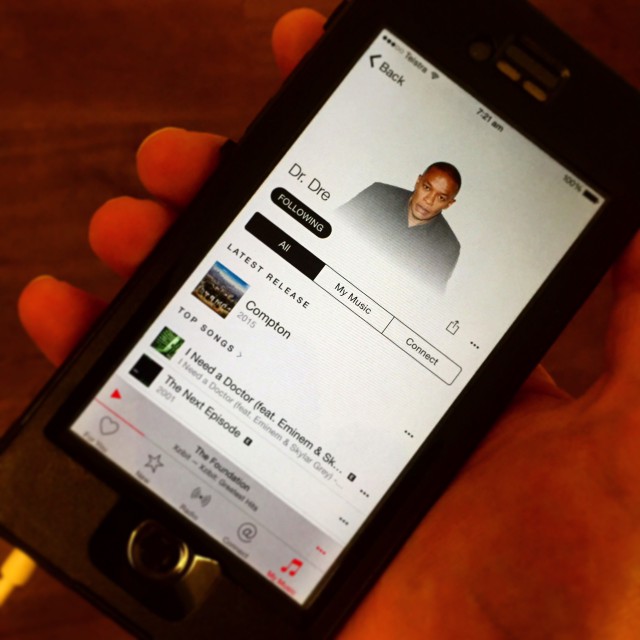
    Equally, video streaming services (e.g. Netflix) offer clues for exclusivity in streaming. Apple has already begun to dabble in ‘exclusive’ content with Dr. Dre’s new album launching exclusively on the service and “Beats radio” and curated stations offering a compelling reason to join or pay a premium in the future.

    Music plus – streaming as a bolt on

    Access to music as part of a subscription to something else has yet to see huge success but there is potential in this model. Amazon Prime is the best example of this but other companies like DropBox, Ebay or Facebook could offer streaming music in this way.

    Amazon Prime affords Amazon customers same-day delivery on all products, e-book rentals, cloud storage on photos etc. Bundling music into this service helps to create stickiness for Prime also offsetting the profitability issues seen by the major streaming services. Currently Prime members get access to 1 million tracks, which would not be considered a serious proposition for music lovers. Whilst this model is potentially more profitable, it is still treating music as a commodity and without the variety and depth of tracks probably best suited to the casual listener.

    Multimedia streaming – cross-media streaming

    Bundling of different content (e.g. music, video, live entertainment) is emerging as a new business model and potentially a very dominant one. As discussed in my last post, Google is uniquely placed to provide a multimedia proposition through YouTube Red. Although currently limited to U.S. users, YouTube Red includes unlimited access to Google Play Music and its supply of 35 million tracks. Google Play plus YouTube Red could make a phenomenal proposition for streaming overall.

    We are at an inflection point for music streaming. Streaming as a concept has won the format battle but the business models that began the new form of music delivery are starting to feel the pressure from subscribers, labels and artists. New business models which balance the demand for music with artists’ needs (e.g. exclusivity, reach) as well as users’ preferences (e.g. niche, ‘all you can eat’, casual) or which smartly package music with other services or media offer new sustainable options for music streaming. The question is which streaming services will win the war.

  • Apple: Strategy vs. Original programming

    Apple: Strategy vs. Original programming

    Dr. Dre hasn’t released an album in 15 years, and Apple knows it. Coinciding with the launch of Apple Music last month, the hip hop veteran (whose ‘Beats’ electronics and music service were bought by Apple last year for $3Bn) released his new album ‘Compton’ exclusively on the new music service. Add this to the ‘Beats 1’ radio channel and ‘curated’ playlists (which are actually very good, if you are a music buff) and you have the start of something that looks like original or exclusive programming. This week in Variety there were reports of a larger foray into content. Apple has been rumoured to be doing the rounds of Hollywood studios and even put a bid in for the Top Gear team who eventually went to Amazon for $250M (could have been a nice content synergy for the Apple car release?…).

    Although these may just be rumours,  they represent more substantial content ventures for Apple. This begs an interesting question – how does Apple producing original content work with Apple’s strategy of designing and selling hardware with integrated software?

    In the aftermath of Apple’s developer conference (WWDC), where the Apple Music service was launched, I wrote a post describing the challenge of aligning a music streaming service (largely undifferentiated) with Apple’s strategy. Apple’s strategy and business model is designing and selling ‘ever more personal’ devices with integrated software. In that post I explored the idea that Apple’s problem space is shrinking (i.e. how many more devices can you make ever more personal?) so moving into platforms, cloud and possibly content are new ways for Apple to grow its bottom line. Like music streaming however, original content development has its own strategic challenges and here are 2 ways to view this:

    1. Apple wants to create original content to increase Apple device sales

    It is possible that Apple is exploring content creation in very much the same way companies like Amazon or Facebook have been exploring ‘proprietary’ hardware sales (e.g. Amazon Fire and Facebook Phone) to support their underlying business model. Original content could be a way to drive their underlying business model of selling devices at a high premium. Apple’s products already command a significant mark up through integrated software, customer/user experience and hardware design but content would add another element of differentiation – high quality video. If the Top Gear rumour is true, it fits well within this context. A show with the popularity of Top Gear in a very defined demographic (Male: 18-50) could contribute significant sales to IDevices and AppleTV.

    This is an optimistic view. If the Amazon and Facebook analogies are anything to go by, then there is a bad precedent. That said, if anyone can give it a shot (Apple has the funds to do so) Apple probably can.

    2. Apple wants to take on Netflix et al in their own patch

    This scenario looks very similar to Apple Music. In a scenario where Apple creates their own content (Movies, TV) and serves it up through an Apple Music (type) platform they are getting into the realm of taking on Netflix on their own turf.  Apple Music walked right into a crowded and established music streaming market (e.g. Spotify, Rdio, Pandora, Soundcloud, Tidal etc.) with a relatively undifferentiated service (bar Radio 1 and curated playlists).  This strategy would do little to further Apples business model and may leave them with a low margin undifferentiated SVOD platform.

    Looking at these views side-by-side, 1. Apple creating original content to sell devices or 2. Apple creating content to take on the Netflix platform, it is hard to like either option strategically. The first may help to differentiate devices but content will be subsidized by the hardware it is differentiating. For this to work Apple will need to beat HBO and Netflix etc. in attracting the best talent to create their original programming which is likely to be difficult for a device and software maker (Amazon has the same problem with Hardware Engineers).  The second just feels like Apple would be doing it because they can. This unfortunately may mean they won’t be magically better than their competitors in an already crowded (and sticky) market for SVOD.

    An original programming strategy is interesting for Apple but it is challenging when compared to its current strategy and business model. In many ways this is the strategic challenge for all Technology, Media and Telecommunications incumbents as convergence continues to push the boundaries of their traditional core competencies and competitive advantage. Apple may be better placed to capitalise on the fact that they are already a platform of sorts (a device and software one not a Netflix/Spotify one). By taking an approach that allows HBO, Netflix, Spotify, Rdio and other players in the streaming services market to offer the best service they can on Apple devices creates differentiation and utilises Apples core competencies.

  • Where was Strategy at Google I/O and Apple WWDC?

    Where was Strategy at Google I/O and Apple WWDC?

    Much has been written about the outcomes from both Google I/O and Apple WWDC, the companies’ respective developer conferences held in the last 2 weeks. There were many interesting developments including Google Now updates (on tap!), the release of new android software ‘M’, Google’s ‘Moonshots‘ or from Apple new insight into iOS9, OSX, updates to the watch experience and the launch of Apple’s music streaming service – Apple Music.

    Through all the displays of gadgetry and keynote pageantry I watched both events with an eye on the strategy of these two companies and here are my thoughts:

    Mission: Just do everything for everyone… that’s what big companies do

    Google I/O: Organise information…but do everything else for everyone too

    In terms of mission as a foundation for strategy, Google’s developer conference was a tale of 2 halves. The first half could be neatly described as ‘Google serving everyone with everything’. Google showcased a full-sized buffet of features and programs that seemed to exist simply because a company of Google’s size ought to do them: Android Pay, an operating system for the home, an IOT language etc. None of these appeared to have a unifying vision – just a sense that Google ought to do them because they’re a big company that ought to do big things.

    The second half was redeeming. Sundar Pichai’s demo of Google’s natural language processing power brought it right back to Google’s mission: ‘Organize the World’s Information and Make it Universally Accessible and Useful‘. The ability to search photos (tree frogs!) through speech recognition is exactly what Google was created to do and its business model of Cloud + Software + Advertising and software capabilities helps them to continue to do this very well.

    Apple WWDC: Sell integrated hardware and software… and other things like music

    For Apple the event was the opposite way around to I/O. The first 90 minutes were very tight around Apple’s purpose of ‘making the personal computer ever more personal‘. Displays of the improved search on iOS9 and OSX, and Ipad and Watch updates speak to the sleek integration between software and hardware that Apple brings vs Google’s more horizontal approach as a Cloud/Software company. This reinforces Tim Cook’s and Steve Job’s mantra which Cook spoke to at the Goldman Sachs Technology and Internet Conference earlier this year:

    We are the most focused company that I know of, or have read of, or have any knowledge of. We say no to good ideas every day. We say no to great ideas in order to keep the amount of things we focus on very small in number, so that we can put enormous energy behind the ones we do choose, so that we can deliver the best products in the world…

    The second half then focused on Apple Music. Despite dominating music for a relatively brief period of time through iTunes and the iPod, Apple’s launch of a new music streaming service is about 5 years too late and runs somewhat counter to its mission (perhaps a reason it is 5 years late). And like Google, this feels like a case of offering everything to everyone because they can. There is streaming music and curated lists and BeatsOne radio and Connect and all with no cogent thread to tie them together beyond the assumption that Apple must do a music service because that is what they do…and that’s what big companies do.

    Strategic choices: The difference between Cloud+Software and Hardware

    Starting a business today… would you rather be a cloud+software company or a hardware company? There would be arguments for both (e.g. differentiated hardware is still very profitable) but increasingly the lure of being a hardware focused organisation like Apple (monetising primarily through sales of devices) is less attractive. As hardware interfaces become a smaller part of user engagement and as intelligence becomes more important it is cloud+software that brings new possibilities not hardware – and Google I/O did a very good job at highlighting this (see Now on Tap).

    Apple’s core problem space is shrinking

    Apple has some tough choices to make in the coming years like – where next to apply its core capability of making integrated hardware and software? The watch was a further personalisation and it has been rumoured that the car may be next. The caution here though is where is the car going in the future? – Driver-less, not user-owned, not personal. The problem set by which Apple can apply its how to win (integrated software/hardware) aligned to its unifying ambition is diminishing it would seem.

    Photos are the new lock-in factor – Google knows it

    Both Google I/O and Apple WWDC highlighted the shift in platform ‘lock in’ that has taken place in the last few years. With the advent of music streaming services music is longer the ‘lock-in’ factor it once was (e.g. purchased songs/albums) although Apple perhaps still sees some promise in Apple Music. Google’s advanced search with Google Photos has unveiled a new reason to use Google/Android products. As photos are large in size and organised according to Google’s software it will be increasingly hard for users of Google Photos to switch photo service providers (many Terra-Bytes to move, customised photo information). Apple will need to choose whether to strengthen its iCloud photo capability/software to compete – possibly a better choice than Apple Music.

    The privacy dilemma for Apple

    From comments made in the lead up to WWDC, Apple is clearly teetering on making a distinct choice on privacy for users of its hardware – in stark contrast to Google and others. At EPIC’s Champions of Freedom event, Tim Cook was honored for his commitment to privacy. His speech included quotes like this one:

    Like many of you, we at Apple reject the idea that our customers should have to make tradeoffs between privacy and security…You might like these so-called free services, but we don’t think they’re worth having your email, your search history and now even your family photos data mined and sold off…

    Cook’s speech is getting a lot of praise around the web. Whilst Apple’s current business model does not survive on collecting, mining and ‘selling’ user data, it relies on user data to refine software/hardware to make it more personal and offer cloud services. Apple needs to choose which side of the privacy fence it sits on. A sufficiently narrow view of privacy could see hardware like the Watch (which requires the cloud) becoming a very poor second cousin to Android’s predictive Google Now features as showcased at I/O.