Tag: artificial intelligence

  • Voice control + AI platform: The future of the Internet

    Voice control + AI platform: The future of the Internet

    Smartphones are great devices, but not for everything. There are often times when having a device on you is the last thing you need, particularly if you are not using the screen. Amazon, Google and Apple are all betting that screen-less, intelligent, voice interaction will play a large role the future of the internet at least in the home (if not the office, the car etc.). This article looks at some of the trends and recent announcements that suggest that voice control interfaces linked to artificial intelligence (AI) is the future of the internet.

    There were two major milestones in the technology calendar this week. Firstly, Recode’s ‘Code Conference’ featuring Amazon’s Jeff Bezos and Tesla/Space X ‘s Elon Musk in fascinating interviews. Bezos spoke candidly about the company’s Alexa AI platform, the Echo and the future of retail. Also this week, Mary Meeker (from VC firm KPBC) released her yearly Internet Trends report which covers everything from device usage and sales to the uptake of ride-sharing globally. If you add in announcements from Google’s I/O developer conference last month about its voice assistant ‘Google Home’ and Tensor Flow AI platform, there are a number of points supporting the growing role of voice control and AI in the future of the internet.

    Smartphone growth and innovation cools off in 2016

    One of the interesting stats in the Mary Meeker report was the slowdown in the growth of smartphones globally. The device now has over 2.5BN users worldwide but usage and shipments slowed in 2016 – usage (’15 31% YOY vs. ’16 21% YOY) and shipments (’15 28% YOY vs. ’16 10% YOY). This is partly related to reaching a critical mass (particularly in mature markets) but it is also related to innovation of the form factor. At the Mobile World Congress this year it was evident that smartphone innovation has reached a peak. With the exception of LG’s G5 modular design there were only tweaks to speed, screens and cameras in phones. As physical form factor peaks we are set to see software and in particular voice recognition play a bigger role in device innovation.

    Touch is ‘tapped out’ – voice as the interface

    Voice control has a number of benefits over touch as a user interface. For most it is faster to speak than type and easier to do so. Voice is also more likely to be context driven and ‘in the moment’ as opposed to having to type into a small screen, or sit down at a PC to converse. There are also a number of unique qualities to voice control. Firstly, for queries it provides random access to a database as opposed to the user having to search for the website (e.g. Google, Yahoo) and then query – the interface takes care of that. Secondly, it is lower cost for the user as it is screen-less and can be smaller (i.e. it only requires, microphone, connectivity, processor). Finally, it requires natural language processing which has an application in textual inquiry but a broader application for voice. It is advancements in voice recognition and natural language processing that are driving greater adoption of voice as the interface.

    Advancements in voice recognition and voice assistant devices

    The Internet Trends report has some interesting information on the growing accuracy of voice recognition as well as the adoption rate. The report suggests that voice automation technology is “still [in] early innings.” That said, voice-controlled assistants like Apple’s Siri and Microsoft’s Cortana saw big jumps in use, from just 30 percent of its respondents in 2013 to 65 percent in 2015. Word accuracy is also improving with 90% accuracy being reported by Google and Biadu assistance which equates to ~10 million words recognised by machine.

    The growing popularity of voice assistant devices like Amazon’s Echo or Google Home is likely to speed up improvements in voice recognition over time. Since launch in November 2014, Amazon has sold 4 million Echo units with ~1 million shipments in Q1 2016 alone. This is a significant head start on Google and Apple with Google Home set for launch in US Autumn 2016. Amazon and arguably Apple are likely to have an advantage over the Google Home device in their ability to create a ‘command and control’ ec0-system around voice recognition. Google on the other hand is likely to be a very strong competitor to the Amazon and Apple as an AI platform supporting voice. There are a two major advantages – Google has the ability to scale globally (across languages) and Google has a huge advantage in Natural Language Processing based on its data platform (e.g. years of search queries, OK Google etc.)

    Improvements in AI platforms and developer kits supporting voice

    The AI platform supporting voice is a crucial to the success of voice as an interface. At the moment, the Amazon Echo has a lead over Google and Apple thanks to the surge in companies like Spotify, Uber and Domino’s Pizza  integrating their services or “skills” to Echo’s computer interface, which is named Alexa. Recent reports show that within nine months from September 2015 to May 2016, the skills that Alexa learned jumped from 14 to over 1,000. Amazon’s Jeff Bezos at the Recod Code Conference made some interesting comments about Alexa that show why the platform is so important:

    We expose two different SDK’s for Alexa. One is the Alexa Voice Service which lets you through a set of APIs embed Alexa in your own device or app and do with it what you want. So you could make an alarm clock and you could embed Alexa Voice Service in it. And then we have the Alexa Skill Kit which lets you teach Alexa new skills, and those two things work together.

    The point is… The Echo is the first, best customer of Alexa. Longer term, it appears the goal is to have Alexa everywhere. Like all of Amazon’s other businesses that get better with scale (e.g. AWS), Alexa — as is the case for all of these machine-learning based assistants — will only get better the bigger and more widespread it is. The question of competition against Google is whether Google’s vast AI Platform will catch Alexa – time will tell.

    The future is voice

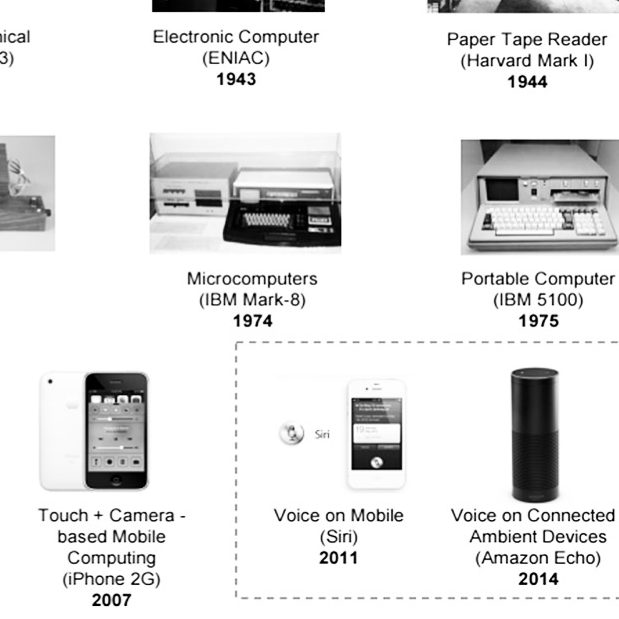
    Touch as the primary interface for computing and the internet has gone through many generations – cards, keyboard, joystick, mouse and smartphone touch. Touch will continue to remain relevant for many years even as Moore’s Law plays out – it is a very useful interface but not for everything. Voice on the other hand offers huge potential as a widely used interface particularly as word recognition, devices, device ecosystems and supporting platforms improve.

    Picture Credit: Mary Meeker Internet Trends Report

  • Strategy in the age of ‘robotic content’

    Strategy in the age of ‘robotic content’

    We live in a world of information abundance. The ability to create, produce, market and distribute content in almost any form has becoming very easy. So easy that a shocking amount of what we’re reading is created not by humans, but by computer algorithms – perhaps even this post ;).

    In the most recent post on strategy4telcomediatech I highlighted the need to consider the role that ‘bots’ play particularly in automating conversational commerce – ‘sales and service’. In this post I take a look at the use of ‘bots’ or algorithmic content in digital media, how it is shaping our consumption habits, content creation and some of the capabilities required in both traditional and new media organisations.

    What is robotic content?

    Algorithms and natural language generators have been around for a while. However, recent developments in computing power and increased access to big data have meant that they are getting better and faster. The sheer volume and complexity of the big data we generate calls for artificial rather than human intelligence to derive meaning from it all.

    Robotic content is content that is produced and distributed by artificial intelligence. Examples include Associated Press’s (AP)  Automated Insight’s Wordsmith platform or Narrative Science’s Quill platform which is used by Forbes publishing sites. According to reports, AP is creating more than 3,000 AI-led stories per quarter which includes everything from quarterly earnings updates to sports reports and weather. Robotic content however goes beyond news – there are books, edited videos and websites being produced by robots – rounding  out a good portion of the content we might view.

    The other aspect to robotic content that is important to understand is how it (and other content forms) are being distributed and consumed.

    Media consumption and robotic content

    Many people have moved on from linear viewing of content (e.g. Broadcast TV shows, Print news/magazines)  into on-demand (e.g. SVOD, SMOD) and increasingly on mobile devices. The places we now go to for content (e.g. Netflix, Twitter, Facebook, YouTube etc.) are even a step further from ‘on demand’ – they are ‘algorithmic on demand’ and offer the ‘next thing’ to watch or read based on your profile, friends, likes and dislikes. These algorithms help to find content to keep consumers on their platforms longer.  This makes sense in a world where there is so much information available – but it has some consequences.

    Last week there was a lot of press from a Gizmodo article about Facebook’s trending news feed. Facebook’s relationship with publishers continues to evolve. With more than a billion people on the platform and many using Facebook daily, Mark Zuckerberg wants Facebook Instant Articles to be the primary news experience for people to have. The controversy in the Gizmodo article was probably a little overstated (who reads the ‘trending news’ section of Facebook?) but it did highlight that Facebook (more than other platforms or publishers) is an extraordinarily powerful media gate-way and yes…algorithms aren’t neutral even if the ‘appearance’ of the platform is (ask yourself: ‘is Facebook conservative or liberal?’). Evidence of the power of the platform could be seen when earlier this year Facebook prioritised video in its feed which saw a drop in referrals to other media websites.

    We are well on our way to a world where a lot of content is created by robot and served up to us based on an algorithm. So what does this mean for publishers and content creators?

    AI-first content = AI-first capabilities

    Publishing and content creation has been transformed in many ways already – machines and automation already play a large role in modern media. However, as with a ‘bot strategy’ in e-commerce, taking an AI-first approach to media signals the need for new publishing and content creation capabilities. To maintain relevance and economic viability, publishers and creators should look to augment their content creation process with robotic content (increasing productivity), create content that is searchable by algorithms, manage alliances with platforms (e.g. mobile, hardware platforms) or create unique algorithms that serve up compelling content in new ways for viewers and readers in the mobile eco-system.

    An interesting example of a traditional digital media publisher going ‘AI-first’ is Quartz’s news app. Quartz is a news service (not unlike any other) but in March this year launched a mobile app for its content. The content in the app is served up like an mobile chat back and forth with a friend – a conversational style. This indicates a few things – its mobile, its a differentiated experience for the reader (aimed mostly at millennials), it is short snippets of content (probably robotic) and first and foremost it is learning what people like and don’t like – training an algorithm. It is possible that Quartz could run its whole service with a bot and algorithm it refines through the app.

    Narrative Sciences co-founder believes 90 percent of news could be algorithmically generated by the mid-2020s. This is just an indication of the kind of change to take place in publishing and content creation. Out of the change though, I hope that content becomes more relevant, interesting and we begin to see new innovative forms created.

  • Do we need a bot strategy?

    Do we need a bot strategy?

    Just last week a leader of a corporate digital function asked me:

    ‘Do we need a bot strategy?’

    Two things struck me about this question. Firstly, ‘bots’ have been around for sometime… why now? and secondly, is the ‘bot’ movement important enough to warrant a strategy for a large corporate? Before looking at these questions I want to clarify exactly what is meant by a bot.

    What is a bot?

    A bot in its most generic form is software that performs an automated function or task – think repetitive tasks but increasingly more complex ones. Bots, in the context of the question above, are used to do things like – add an appointment, take an order or make a reservation. These are tasks which can be automated by a bot and which are now appearing in the messaging apps that many people around the world use on a daily basis (e.g. Whatsapp, FB Messenger, WeChat etc.). This use of a bot is closely aligned to the rise of a movement called ‘Conversational Commerce’ which changes the dynamic of purchasing goods or services from a static ‘page based’ web experience to a ‘question and answer’ experience. These bots live inside your messaging apps and are designed to feel like you are chatting back and forth with a human.

    A relatively recent example of a bot is Amy from X.ai which is a personal assistant that can be used to manage the to and fro that occurs when trying to book a meeting. To the ‘untrained eye’ it feels like a conversation with a personal assistant. Although bots like Amy are relatively new, they have been around for some time. Twitter has had bots since its launch in 2006. For example – there are bots that tweets about weather or earthquake warnings. Recently Microsoft launched ‘Tay’ a ‘chatterbot’ supposed to mirror the tweets of a 19 year-old American girl. Unfortunately, Tay turned out to be (at least initially) racist, sexist and well just inappropriate as it used the feeds of tweets directed at it to develop its personality.

    Despite the many applications, commerce is most interesting. Bot integration into the digital customer experience can be a powerful enabler to reduce ‘cost to serve’ but also improve customer experience. Working with a messenger service and a large consumer business at ways to service customers through a third party messaging platform, a bot experience excels. A bot is able to handle a relatively large range of queries in the messenger where as previously, you might be directed out of the messenger into a mobile web-page or an app, thus breaking the flow and potentially losing a sale. Facebook is exploring how to enable this for its major customers but also a community of developers/ startups.

    Why Bots now?

    2016 is the year of the Bot and these are 3 major reasons why Bots (particularly in an e-commerce sense) are of significant important today.

    1. The Facebook effect

    There is no doubt bots are becoming more mainstream particularly in e-commerce sales and service. At Facebook’s recent developer conference F8, the company showcased a number of applications of chatbots on their messenger platform. Bot integration into Messenger is fundamentally driving mainstream adoption given that over 1bn people use the service at least once a day.

    By having bots in Messenger, Facebook is trying a number of things. Firstly it is solving many of the sales and service operations burdens for its customers that result from filling out forms or calling a call centre. Secondly, by bringing bots into Messenger it is allowing Facebook to ‘listen in’ on the conversations between retailers and customer and paint an even better picture of the user and thirdly it is setting itself up to be a commerce platform by stealth. It is not hard to imagine that once Facebook is the interface for all your sales and service queries, it could extend further in the value chain to offer logistics services…watch out Amazon.

    2. The global mobile-ecosystem effect

    Facebook’s announcement about bots is also aligned to its greater global ambitions to be the world’s social platform. In mobile messaging, companies like Tencent’s WeChat in China already have similar ‘bot like’ services through the 10 million brands on the platform that users can interact with to do things like buy food, pay bills, go to the movies or settle a tab. Conversational commerce is necessary to compete with the likes of WeChat or Line in Asian markets.

    3. Alternatives to the mobile app and mobile web

    It is arguable that the web and mobile web are in decline as users are spending more time on mobile devices, and more time in apps instead of web browsers. With this trend, Bots start to own space inside existing apps (e.g. Messenger, Whatsapp, Snapchat) in the mobile eco-system. In turn, they are likely to form the bulk of monetisable internet activity happening in apps. This is giving rise to the concept of ‘bot stores‘ to compliment app stores and an ecosystem of bot creators like Botapps.io.

    Do we need a bot strategy?

    The short answer is yes. We are at an inflection point with regards to machine learning due to advances in data analytics, computer science and the application of AI in business (be that in the customer layer or the operational layers). It is becoming not only a way to interact with customers but infused into products, services and operations delivered digitally. Many incumbents companies/organisations currently working out their response to digital technologies (e.g. cloud, social, mobile and big data) need also to consider how AI (aka cognitive technologies) fits into their strategy. Specifically, if you are an organisation with a mobile presence, developing a ‘bot’ strategy could help maximise value from existing apps (e.g. conversational commerce, operational improvement, customer satisfaction) or presence in a mobile app (e.g. new revenue, new service experiences).

    Finally, Google CEO, Sundar Pichai said recently on Alphabet’s earnings call:

    In the long run, I think we will evolve in computing from a mobile-first to an AI-first world

    …for the most part, I could not agree with him more.

    Picture Credit: botapps.io