2017 has been a big year for the Telecommunications, Media and Technology (TMT) industries – the iPhone’s 10th Anniversary, 5G standard approvals, the Disney and Fox deal, crisis at Uber, growth at Amazon, Snap’s IPO, Google in home and on the go (v.2), iPhone X/Watch 3 and the growth of Chinese Tech – Huawei, Baidu, Alibaba, Tencent. Last year I looked at the 3 most influential ideas of 2016 which were ‘Fake News‘, ‘Everything As A Service‘ and ‘Blockchain‘ (v.2 of the internet). The influence of these ideas continued to make an impact on the the TMT industry, politics and culture in 2017.
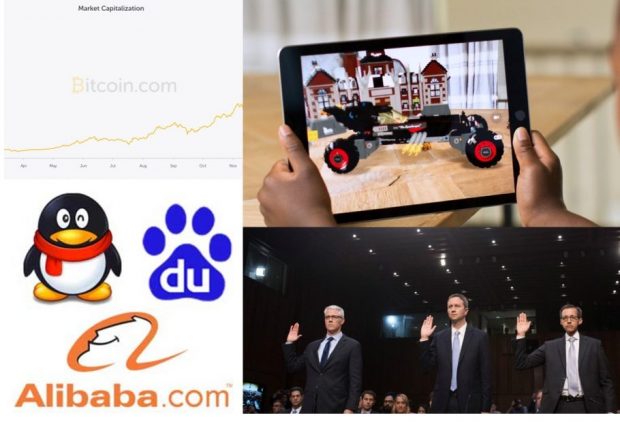
‘Fake News‘ became the frequent catch cry of the US president in an ongoing public battle (on Twitter and in public addresses) against mainstream media. It also led to Facebook, Twitter and Google being brought in front of a US Senate hearing on ‘Fake News’ connected to Russian meddling in the 2016 presidential election and contributed to the growth of news services like ‘All Sides‘ which allow readers to engage in different political angles for the same news stories. ‘Everything As A Service‘ as an idea continues to be extremely influential with TMT organisations looking for new services to provide to their customers. The concept of Artificial Intelligence-As-A-Service in particular has become mainstream in the last 12 months with the larger technology players like Google, IBM, Amazon and Facebook providing algorithms and databases as a service and niche players like Clarifai offering AI-As-A-Service to specific industry verticals. Equally, Blockchain has continued to increase in awareness in 2017. As far as cryptocurrencies go, Bitcoin, Ethereum and Litecoin have increased in market cap (Bitcoin up from $15Bn to $250Bn in 12 months) making people who missed the Mt Gox crash ~2013 who continued to own bitcoin very wealthy (almost overnight). Outside of the Bitcoin buzz, initial coin offerings (ICOs) raised over a billion dollars in funding in 2017 with mixed results – for example, the seemingly fraudulent like Plexcoin or the seemingly legit like EOS. Speculation aside, there are more and more use cases for blockchain being identified now than a year ago and 2018 may see some excellent examples of blockchain implementations.
On to 2017…what were the most influential ideas in TMT in 2017 and why will they continue to shape the industry in 2018 and beyond?
1. Augmented reality
I know what you are thinking… ‘Augmented reality’ (AR) was so 2016, remember Pokemon Go? This is fair, but I believe that AR was a more influential idea in 2017 than 2016 for a few reasons. Firstly, investment in AR this year (leaving aside investments in Magic Leap in 2016) hit an all time high with US$1Bn invested in AR in Q4 2017 alone and over $2.5Bn over the year according to a Digi-capital report. Secondly, Apple, Google and Facebook each released their own AR developer tools (ARKit, ARCore and Camera Effects). The launch of these tools signals the start of opensource AR on the world’s largest operating systems which when paired with advancements in the world’s most powerful mobile hardware (e.g. iPhone X, Pixel 2, Huawei P10, Samsung S8) particularly the camera technology, there is tipped to be an explosion of new AR apps and games. Finally, AR made tangible steps into the workplace in 2017 particularly in the fields of maintenance, engineering and manufacturing. Productivity related AR applications received a large portion of VC investment and the world’s largest engineers like GE and Siemens demonstrated examples of work AR related productivity (e.g. GE technician wiring a wind turbine’s control box using the company’s current process, and then doing the same task while guided by line-of-sight instructions overlaid on the job by an AR headset. The device improved the worker’s performance by 34% on first use).
Why is this influential?
Deloitte TMT predicts that in 2018 1 billion smartphone users will created at least one piece of AR content (e.g. a video, photo or game) and the industry will generate US$100M revenue. Looking a bit further out to 2020, AR is predicted to be a $1Bn industry 10x that of 2018. These figures are not yet counting for the productivity gains more and more businesses (outside of engineering and manufacturing) will experience with AR or the new applications particularly in retail. Get ready for mainstream AR.
2. Asia’s increasing influence on Telecommunications, Media and Tech
As a region, Asia was often in the headlines 2017, mostly due to geopolitical reasons as North Korea and the US traded rhetorical blows, China held its first public test of the Belt and Road Initiative in May and the US signaled a move away from the Trans-Pacific Partnership agreement (a multi-lateral trade deal between Pacific-Rim nations). The TPP is likely to forge ahead (without the US) and Asia’s influence on TMT industries will continue. 2017 was a watershed year for Asia’s influence on TMT globally for a few reasons. Firstly, 2017 was the first year that the top two smartphone manufacturers were from the region. Huawei has now overtaken Apple to join Samsung as the world’s two most popular smartphone brands. To continue growth (and rival Samsung) Huawei will need to break into the US, South Asian and Indian markets. Secondly, VC investment in Asian startups maintained its high from 2016 with >US$12bn invested in both Q2 and Q3 of 2017. Behind the dollars were significant investments in AI particularly Facial Recognition ($410M raised by Chinese company SenseTime) and >US$4Bn invested by SoftBank Vison Fund in Indian Technology companies (e.g. Paytm, FlipKart and Oyo). Finally, in 2017 Asia is now the home to some of the most interesting technology innovations. For example, Japan became the world’s largest Bitcoin market in 2017 and has started to embrace the crypto-currency in regular ecommerce. Chinese Fintech companies like Ant Financial, 2Boss, Qdian and InsuranceBox are all geared at changing banking, insurance and finance with plans to move into overseas markets and smart cities like BSD City Jakarta or Cyberjaya in Malaysia are a first of their kind in supporting ‘digitally enhanced’ lifestyles.
Why is this influential?
The balance of global investment, innovation and new businesses growth is swinging towards the Asian region and this is forecast to continue. As part of this, Asian governments and private investors will continue invest heavily in TMT infrastructure, Asian tech companies will also play an increasing influence and the next global tech hubs will be in the region (e.g. Beijing, Bangalore, Singapore). Get used to hearing about Asian Telco, Media and Tech innovations, business, VCs and policies influencing the rest of the world.
3. Social and political backlash against TMT companies
Social backlash against the TMT industry was an umbrella topic in 2017 and played out in a number of ways. The #metoo (hashtag), started in October 2017 to route out misogynistic behaviour and sexual harassment in the entertainment industry, has led to a number of high profile resignations of men in positions of power. It has also spread to media, tech, government, academia and sadly, it is likely to be wide reaching. There have been some high profile examples of social movements in the TMT industries. The most high profile was the resignation of the CEO of Uber after employee Susan Fowler’s accounts of sexual harassment and inappropriate beaviour at the company. This prompted a social movement #deleteuber calling for boycott of the ride hailing app. Another example was James Danmore’s ‘Google Manifesto’ which was valourised by those that see diversity as ‘bad for business’ and demonised by diversity advocates. Google’s response was to fire Danmore but not before the memo went viral. At the backdrop social backlash on the topics of sexual harassment and anti-diversity has been a leading indicator of a trend towards reducing time spent on smartphones consuming media – the digital detox. Deloitte has identified that in 2017 globally >45% of people worry that they use their smartphones too much and in the coming years will try to limit their usage.
Political backlash against TMT organisations has come from the overarching trend of governments trying to regulate Big Tech (e.g. Apple, Google, Facebook, Amazon, Twitter, Tencent, Baidu, Alibaba). There is a need for government oversight of technology but there is also a risk that political overreach may stifle the industry – so the right regulatory structure will be difficult to settle on. In Europe this year, Google was hit with a US$2.7Bn fine for breaching its antitrust agreement and cloud providers (e.g. Amazon, Google, Apple, Alibaba) will all need to comply with Europe’s new data protection regulations. In the aftermath of the ‘fake news’ incidents related to the 2016 elections governments are looking at how to regulate news/information aggregators like Facebook/Twitter/Google given the control they have over society’s access to information. Ultimately government policy towards tech needs to evolve inline with tech advancements but equally, these powerful organisations may need to think differently about their role in society and their products/services or face further backlash politically and socially.
Why is this influential?
2017 saw TMT companies publicly challenged at a viral scale on the issues of diversity, inclusion and the culture the industry sets for women to succeed. Politically, the question of how best to regulate technology companies, particularly the major platforms was brought to a head in a number of high profile cases. The effects of these events will be long lasting. We should expect TMT organisations to continue to adapt their approach to address the issue of sexual harassment and at the very least promote healthy awareness and debate on issues of diversity and inclusion. Politically, there does not yet exist an adequate regulatory structure that allows TMT businesses (particularly FANG organisations) to benefit from technologies without aggregating power and with it wealth to a monopolistic end. At the same time, industries are unlikely to voluntarily regulate.
2017 has been a challenging year for the TMT industry. The pace of change in the industry is driving the need for a balance of business objectives and social objectives now more than ever.
Thank you for reading strategy4telcomediatech in 2017 and happy new year!