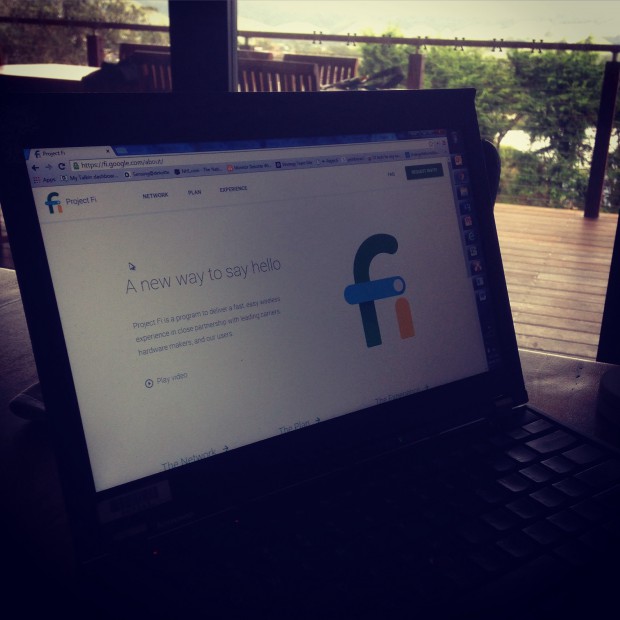

In the last 3 weeks… Google launched Project Fi, Facebook released Instant Articles and an AOL and Verizon merger was announced. Though different on face value, these latest ventures in the Telecommunications, Media and Technology industries represent a new wave of integration between distribution, advertising and content.
Over the past decade internet advertising has been at an inflection point with (ever) increasing ad inventory and commoditised rates for undifferentiated spots. The best response is one that provides better ad placement, measurement and well… better advertising. A new world order.
The transition of the advertising locus: Desktop, Mobile Device, User
Desktop advertising has changed with the use of cookies which make tracking easy. Ad networks (like those that AOL own) set a cookie in the browser of the desktop computer that collects the browsing history of the person(s) who use the computer. This has advanced to the point of creating very precise profiles based on a mix of browsing history and offline data (e.g. other point of sale histories, loyalty data). Advertisers can reach people based on their profiles through automated advertising exchanges that use auction pricing and serve up ads in real-time. This enables advertisers to collect almost real-time campaign feedback, allowing for rapid iteration of the campaign – this is called ‘Programmatic advertising’.
But programmatic advertising is not perfect. It is questionable how well it works in practice and it is particularly difficult to rely on in a Mobile environment where many apps don’t share cookies (how to build a profile?). For mobile to work effectively it needs a unique identifier. 5 years ago it was thought phone unique identifiers could be used but it turned out to be a privacy disaster and Apple and Google banned UDIDs offering IDs that could be reset by users.
The reality is that the focus of tracking and measurement for advertising is actually not a desktop computer nor a mobile device but a user. Someone who uses multiple devices – and Facebook, Google and AOL/Verizon know it.
What does this all mean?
Facebook Instant Articles and Google’s Project Fi
Facebook has a lot of information about you (e.g. name, birthday, history, address, friends, likes) and what you do on your different devices. With the power of this knowledge it prefers to advertise (profitably) off its own platform. This is very much the impetus behind the release of Instant Articles which is removing the publisher (large news houses) from monetising on their sites (with poorer targeting) and bringing their content to a highly targeted and measured environment.
The same can be said for Google. Though different to Facebook (perhaps not as successful at Social), Google has maintains IDs across all its properties which do a very good job at ensuring users are logged in all the time. Project Fi as addition allows Google to begin to collect network data about users allowing for offline and unique identifiers on location and habits. Like Facebook – Google prefers to monetise on its on platform and Fi could be its most targeted and measurable offering yet.
Whilst Facebook and Google have 3rd party advertising offerings they are primarily focused on their own sites. There are a number of fragmented 3rd-party advertisers and ad-tech (e.g. Buddy, Wildfire, Admob, Quattro etc.) but there may now be a very dominant player for advertising on the ‘rest of the web’ in AOL/Verizon.
AOL/Verizon
A merger like this would have seemed unusual in the TMT industry 10 years ago when core competency mattered, companies stuck to their swim lanes and ‘eco-system’ was a buzz word (still is?). But in this day in age it has logic – at its core AOL has a large ad network and owns content from ~300 sites including Huffpost and Techcrunch. Advertising in a mobile age has been hard given that tracking and measurement is unable to be as specific as Facebook or Google putting a cap on potential earnings. Verizon is able to solve this problem.
As paid service Verizon knows a lot of personal information including credit history and social security and as a Telco it knows location – which is useful for serving and tracking effectiveness of advertising. It doesn’t need a cookie identifier to target users as it is an ISP which can set up a ‘super cookie’ to track everything users do online. AOL provides the technology to target individuals instead of content, and Verizon the ability to track those individuals.
A new world order
Describing these three ventures is like looking at the new world order for internet advertising. One that does not include traditional publishers (be that print or TV). Its possible that most pblishers will be increasingly reliant on programmatic offerings that value the sites ability to attract a specific type of user (because of the content) that and advertiser has bid on. This is a fast route to a very miserly existence.