Tag: apple

  • Apple: Strategy vs. Original programming

    Apple: Strategy vs. Original programming

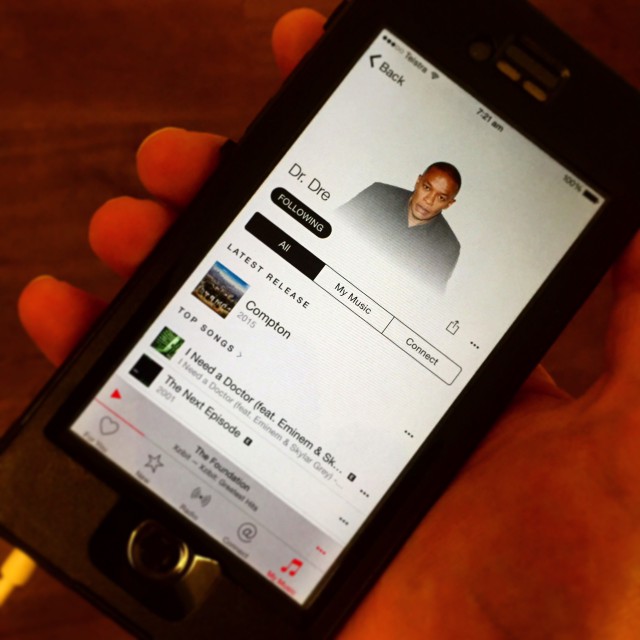
    Dr. Dre hasn’t released an album in 15 years, and Apple knows it. Coinciding with the launch of Apple Music last month, the hip hop veteran (whose ‘Beats’ electronics and music service were bought by Apple last year for $3Bn) released his new album ‘Compton’ exclusively on the new music service. Add this to the ‘Beats 1’ radio channel and ‘curated’ playlists (which are actually very good, if you are a music buff) and you have the start of something that looks like original or exclusive programming. This week in Variety there were reports of a larger foray into content. Apple has been rumoured to be doing the rounds of Hollywood studios and even put a bid in for the Top Gear team who eventually went to Amazon for $250M (could have been a nice content synergy for the Apple car release?…).

    Although these may just be rumours,  they represent more substantial content ventures for Apple. This begs an interesting question – how does Apple producing original content work with Apple’s strategy of designing and selling hardware with integrated software?

    In the aftermath of Apple’s developer conference (WWDC), where the Apple Music service was launched, I wrote a post describing the challenge of aligning a music streaming service (largely undifferentiated) with Apple’s strategy. Apple’s strategy and business model is designing and selling ‘ever more personal’ devices with integrated software. In that post I explored the idea that Apple’s problem space is shrinking (i.e. how many more devices can you make ever more personal?) so moving into platforms, cloud and possibly content are new ways for Apple to grow its bottom line. Like music streaming however, original content development has its own strategic challenges and here are 2 ways to view this:

    1. Apple wants to create original content to increase Apple device sales

    It is possible that Apple is exploring content creation in very much the same way companies like Amazon or Facebook have been exploring ‘proprietary’ hardware sales (e.g. Amazon Fire and Facebook Phone) to support their underlying business model. Original content could be a way to drive their underlying business model of selling devices at a high premium. Apple’s products already command a significant mark up through integrated software, customer/user experience and hardware design but content would add another element of differentiation – high quality video. If the Top Gear rumour is true, it fits well within this context. A show with the popularity of Top Gear in a very defined demographic (Male: 18-50) could contribute significant sales to IDevices and AppleTV.

    This is an optimistic view. If the Amazon and Facebook analogies are anything to go by, then there is a bad precedent. That said, if anyone can give it a shot (Apple has the funds to do so) Apple probably can.

    2. Apple wants to take on Netflix et al in their own patch

    This scenario looks very similar to Apple Music. In a scenario where Apple creates their own content (Movies, TV) and serves it up through an Apple Music (type) platform they are getting into the realm of taking on Netflix on their own turf.  Apple Music walked right into a crowded and established music streaming market (e.g. Spotify, Rdio, Pandora, Soundcloud, Tidal etc.) with a relatively undifferentiated service (bar Radio 1 and curated playlists).  This strategy would do little to further Apples business model and may leave them with a low margin undifferentiated SVOD platform.

    Looking at these views side-by-side, 1. Apple creating original content to sell devices or 2. Apple creating content to take on the Netflix platform, it is hard to like either option strategically. The first may help to differentiate devices but content will be subsidized by the hardware it is differentiating. For this to work Apple will need to beat HBO and Netflix etc. in attracting the best talent to create their original programming which is likely to be difficult for a device and software maker (Amazon has the same problem with Hardware Engineers).  The second just feels like Apple would be doing it because they can. This unfortunately may mean they won’t be magically better than their competitors in an already crowded (and sticky) market for SVOD.

    An original programming strategy is interesting for Apple but it is challenging when compared to its current strategy and business model. In many ways this is the strategic challenge for all Technology, Media and Telecommunications incumbents as convergence continues to push the boundaries of their traditional core competencies and competitive advantage. Apple may be better placed to capitalise on the fact that they are already a platform of sorts (a device and software one not a Netflix/Spotify one). By taking an approach that allows HBO, Netflix, Spotify, Rdio and other players in the streaming services market to offer the best service they can on Apple devices creates differentiation and utilises Apples core competencies.
  • Where was Strategy at Google I/O and Apple WWDC?

    Where was Strategy at Google I/O and Apple WWDC?

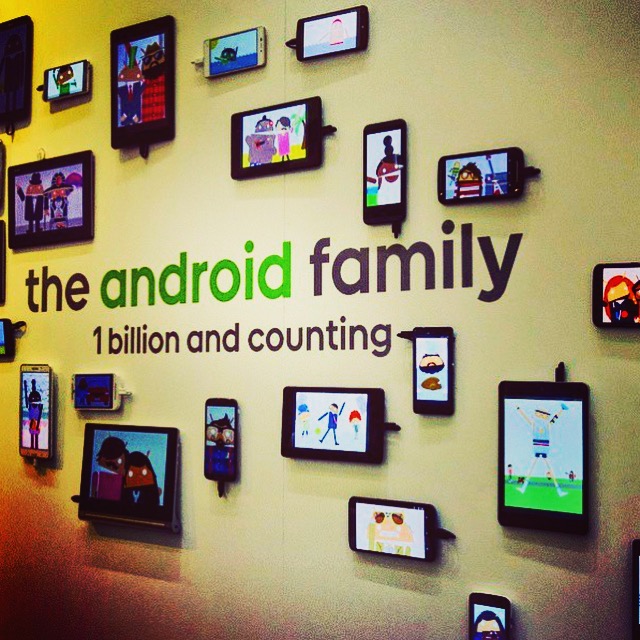
    Much has been written about the outcomes from both Google I/O and Apple WWDC, the companies’ respective developer conferences held in the last 2 weeks. There were many interesting developments including Google Now updates (on tap!), the release of new android software ‘M’, Google’s ‘Moonshots‘ or from Apple new insight into iOS9, OSX, updates to the watch experience and the launch of Apple’s music streaming service – Apple Music.

    Through all the displays of gadgetry and keynote pageantry I watched both events with an eye on the strategy of these two companies and here are my thoughts:

    Mission: Just do everything for everyone… that’s what big companies do

    Google I/O: Organise information…but do everything else for everyone too

    In terms of mission as a foundation for strategy, Google’s developer conference was a tale of 2 halves. The first half could be neatly described as ‘Google serving everyone with everything’. Google showcased a full-sized buffet of features and programs that seemed to exist simply because a company of Google’s size ought to do them: Android Pay, an operating system for the home, an IOT language etc. None of these appeared to have a unifying vision – just a sense that Google ought to do them because they’re a big company that ought to do big things.

    The second half was redeeming. Sundar Pichai’s demo of Google’s natural language processing power brought it right back to Google’s mission: ‘Organize the World’s Information and Make it Universally Accessible and Useful‘. The ability to search photos (tree frogs!) through speech recognition is exactly what Google was created to do and its business model of Cloud + Software + Advertising and software capabilities helps them to continue to do this very well.

    Apple WWDC: Sell integrated hardware and software… and other things like music

    For Apple the event was the opposite way around to I/O. The first 90 minutes were very tight around Apple’s purpose of ‘making the personal computer ever more personal‘. Displays of the improved search on iOS9 and OSX, and Ipad and Watch updates speak to the sleek integration between software and hardware that Apple brings vs Google’s more horizontal approach as a Cloud/Software company. This reinforces Tim Cook’s and Steve Job’s mantra which Cook spoke to at the Goldman Sachs Technology and Internet Conference earlier this year:

    We are the most focused company that I know of, or have read of, or have any knowledge of. We say no to good ideas every day. We say no to great ideas in order to keep the amount of things we focus on very small in number, so that we can put enormous energy behind the ones we do choose, so that we can deliver the best products in the world…

    The second half then focused on Apple Music. Despite dominating music for a relatively brief period of time through iTunes and the iPod, Apple’s launch of a new music streaming service is about 5 years too late and runs somewhat counter to its mission (perhaps a reason it is 5 years late). And like Google, this feels like a case of offering everything to everyone because they can. There is streaming music and curated lists and BeatsOne radio and Connect and all with no cogent thread to tie them together beyond the assumption that Apple must do a music service because that is what they do…and that’s what big companies do.

    Strategic choices: The difference between Cloud+Software and Hardware

    Starting a business today… would you rather be a cloud+software company or a hardware company? There would be arguments for both (e.g. differentiated hardware is still very profitable) but increasingly the lure of being a hardware focused organisation like Apple (monetising primarily through sales of devices) is less attractive. As hardware interfaces become a smaller part of user engagement and as intelligence becomes more important it is cloud+software that brings new possibilities not hardware – and Google I/O did a very good job at highlighting this (see Now on Tap).

    Apple’s core problem space is shrinking

    Apple has some tough choices to make in the coming years like – where next to apply its core capability of making integrated hardware and software? The watch was a further personalisation and it has been rumoured that the car may be next. The caution here though is where is the car going in the future? – Driver-less, not user-owned, not personal. The problem set by which Apple can apply its how to win (integrated software/hardware) aligned to its unifying ambition is diminishing it would seem.

    Photos are the new lock-in factor – Google knows it

    Both Google I/O and Apple WWDC highlighted the shift in platform ‘lock in’ that has taken place in the last few years. With the advent of music streaming services music is longer the ‘lock-in’ factor it once was (e.g. purchased songs/albums) although Apple perhaps still sees some promise in Apple Music. Google’s advanced search with Google Photos has unveiled a new reason to use Google/Android products. As photos are large in size and organised according to Google’s software it will be increasingly hard for users of Google Photos to switch photo service providers (many Terra-Bytes to move, customised photo information). Apple will need to choose whether to strengthen its iCloud photo capability/software to compete – possibly a better choice than Apple Music.

    The privacy dilemma for Apple

    From comments made in the lead up to WWDC, Apple is clearly teetering on making a distinct choice on privacy for users of its hardware – in stark contrast to Google and others. At EPIC’s Champions of Freedom event, Tim Cook was honored for his commitment to privacy. His speech included quotes like this one:

    Like many of you, we at Apple reject the idea that our customers should have to make tradeoffs between privacy and security…You might like these so-called free services, but we don’t think they’re worth having your email, your search history and now even your family photos data mined and sold off…

    Cook’s speech is getting a lot of praise around the web. Whilst Apple’s current business model does not survive on collecting, mining and ‘selling’ user data, it relies on user data to refine software/hardware to make it more personal and offer cloud services. Apple needs to choose which side of the privacy fence it sits on. A sufficiently narrow view of privacy could see hardware like the Watch (which requires the cloud) becoming a very poor second cousin to Android’s predictive Google Now features as showcased at I/O.

  • AOL/Verizon – a new world order in digital advertising

    AOL/Verizon – a new world order in digital advertising

    In the last 3 weeks… Google launched Project Fi, Facebook released Instant Articles and an AOL and Verizon merger was announced. Though different on face value, these latest ventures in the Telecommunications, Media and Technology industries represent a new wave of integration between distribution, advertising and content.


    Over the past decade internet advertising has been at an inflection point with (ever) increasing ad inventory and commoditised rates for undifferentiated spots. The best response is one that provides better ad placement, measurement and well… better advertising. A new world order.

    The transition of the advertising locus: Desktop, Mobile Device, User

    Desktop advertising has changed with the use of cookies which make tracking easy. Ad networks (like those that AOL own) set a cookie in the browser of the desktop computer that collects the browsing history of the person(s) who use the computer. This has advanced to the point of creating very precise profiles based on a mix of browsing history and offline data (e.g. other point of sale histories, loyalty data). Advertisers can reach people based on their profiles through automated advertising exchanges that use auction pricing and serve up ads in real-time. This enables advertisers to collect almost real-time campaign feedback, allowing for rapid iteration of the campaign – this is called ‘Programmatic advertising’.

    But programmatic advertising is not perfect. It is questionable how well it works in practice and it is particularly difficult to rely on in a Mobile environment where many apps don’t share cookies (how to build a profile?). For mobile to work effectively it needs a unique identifier. 5 years ago it was thought phone unique identifiers could be used but it turned out to be a privacy disaster and Apple and Google banned UDIDs offering IDs that could be reset by users.

    The reality is that the focus of tracking and measurement for advertising is actually not a desktop computer nor a mobile device but a user. Someone who uses multiple devices – and Facebook, Google and AOL/Verizon know it.

    What does this all mean?

    Facebook Instant Articles and Google’s Project Fi

    Facebook has a lot of information about you (e.g. name, birthday, history, address, friends, likes) and what you do on your different devices. With the power of this knowledge it prefers to advertise (profitably) off its own platform. This is very much the impetus behind the release of Instant Articles which is removing the publisher (large news houses) from monetising on their sites (with poorer targeting) and bringing their content to a highly targeted and measured environment.

    The same can be said for Google. Though different to Facebook (perhaps not as successful at Social), Google has maintains IDs across all its properties which do a very good job at ensuring users are logged in all the time. Project Fi as addition allows Google to begin to collect network data about users allowing for offline and unique identifiers on location and habits. Like Facebook – Google prefers to monetise on its on platform and Fi could be its most targeted and measurable offering yet.

    Whilst Facebook and Google have 3rd party advertising offerings they are primarily focused on their own sites. There are a number of fragmented 3rd-party advertisers and ad-tech (e.g. Buddy, Wildfire, Admob, Quattro etc.) but there may now be a very dominant player for advertising on the ‘rest of the web’ in AOL/Verizon.


    AOL/Verizon

    A merger like this would have seemed unusual in the TMT industry 10 years ago when core competency mattered, companies stuck to their swim lanes and ‘eco-system’ was a buzz word (still is?). But in this day in age it has logic – at its core AOL has a large ad network and owns content from ~300 sites including Huffpost and Techcrunch. Advertising in a mobile age has been hard given that tracking and measurement is unable to be as specific as Facebook or Google putting a cap on potential earnings. Verizon is able to solve this problem.

    As paid service Verizon knows a lot of personal information including credit history and social security and as a Telco it knows location – which is useful for serving and tracking effectiveness of advertising. It doesn’t need a cookie identifier to target users as it is an ISP which can set up a ‘super cookie’ to track everything users do online. AOL provides the technology to target individuals instead of content, and Verizon the ability to track those individuals.

    A new world order

    Describing these three ventures is like looking at the new world order for internet advertising. One that does not include traditional publishers (be that print or TV). Its possible that most pblishers will be increasingly reliant on programmatic offerings that value the sites ability to attract a specific type of user (because of the content) that and advertiser has bid on. This is a fast route to a very miserly existence.

  • The Internet of Things value chain – who will win?

    The Internet of Things value chain – who will win?

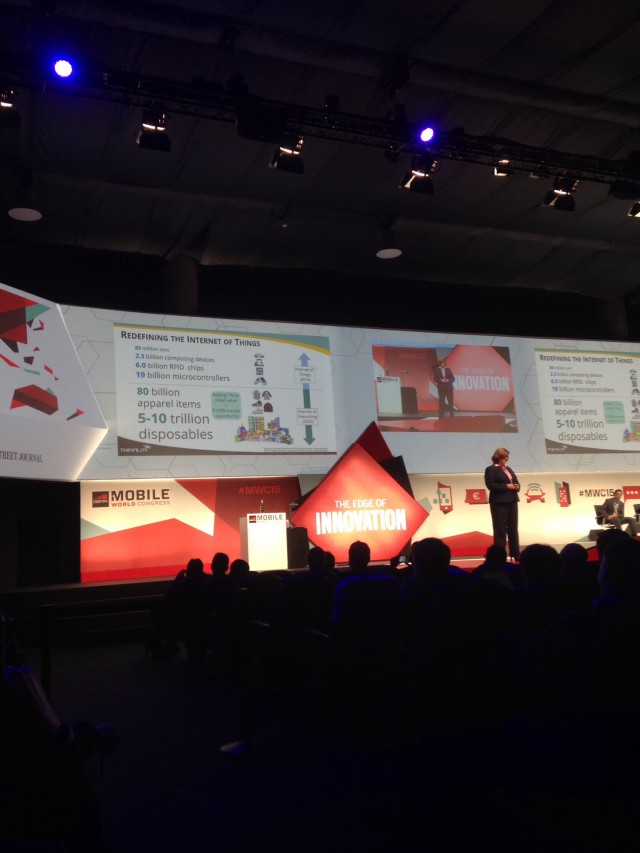
    One of the main topics at the Mobile World Congress (MWC15) in Barcelona last week was the ‘Internet of Things’ (IOT). By no means a new concept but certainly one that is evolving in its form as well as the business models that support it. According to Gartner, there will be 26bn devices on IOT by 2020 which is expected to contribute between $600bn to $1.3 trillion to the US economy by 2025. It’s big. Simply described, the value chain of the Internet of Things has four basic components:

    1. Objects (nodes, devices, controllers)

    2. Networks (connection between devices, connection to a network of devices, connection to cloud)

    3. Cloud (data storage, analytics, security, privacy)

    4. Services and APIs (cloud interfaces for software development using the data, service provision etc.)

    Whilst the players are settling in and business models are still forming in each of these components it was clear from the presentations from a number of representatives in each component at the MWC that some are likely to do better than others. Here are 5 insights from MWC which speak to how the value chain is evolving and who may win in the longer term.

    1. Object makers are turning commoditised products into value service interfaces

    IOT has helped makers of commoditised items bring new product value. Take for example the humble lightbulb which you can buy for $2. Philips is making connected light bulbs (Bluetooth, wifi and sensor enabled) which can now be sold for $60. These bulbs can be controlled from your smartphone and act as a direct service interface opening up Philips to provide security, fire protection or beacon-like marketing services. Another example is Nest, which follows the Internet of ‘Unsexy’ Things turning thermostats, drop cams, smoke alarms and CO monitors into desirable, connected devices. In January last year Google acquired Nest for $3.2bn which is an attempt to strengthen Google’s household presence through web-connected appliances thus opening up other parts of the IOT value chain.

    There is certainly an advantage to being the the maker of the nodes, and players like ThinFilm, who are creating low cost smart labels to attach to consumable items, are likely to create very profitable businesses from being the gateway into IOT from value-added product features and where possible obtaining some margin from service provision.

    2. The network providers that can connect the most devices, securely and without downgrading device performance will win network value but are also best positioned for downstream value

    One of the hurdles for IOT is connecting many devices (from different makers, systems etc.) freely and easily. This requires a simple, secure and scalable solution which can combine wifi forms, bluetooth and other connections and allow devices to talk to one another. Threadgroup is helping to do this by offering a mesh network that can connect devices with different connectivity characteristics to a single network which then connects to cloud and other mobile devices. Consumer take up of IOT inparticular is predicated partly on the ease of connecting multiple devices.

    For enterprise and industrial IOT companies seem to be taking an industry specific approach to network. Take Cisco who have solutions for ‘connected’: transportation, healthcare, mining etc. they like others see industry bespoke solutions as a means to providing network but also specific cloud and service solutions thus converting values in the downstream parts of the value chain.

    3. One controller to control them all – maybe

    The smart home control experience like the network is about the ability to add then control multiple devices regardless of make, model and manufacturer. Thiru and Bala from Peel are looking to provide that control point in their product Peel – which eliminates the need to have multiple remote controls. They are doing very well so far with over 100M users worldwide, 7Bn remote commands and deals with many TV manufacturers. What is special about a single control point is that it is that it can also become an ecommerce and service channel for the connected home where you could order new lights, smoke alarms or a pest inspection.

    Although Peel looks well placed, it’s clear the mobile manufacturers are not going to let the control point go. Take Xaiomi who’s smart phone controls a network of proprietary smart home devices. There is a significant amount to be gained by being the focal point of the smart home, but will there be only one?

    4. No one provider has an end to end IOT solution yet – partner or perish

    Providing an end to end IOT solution does not yet seem to be the model but there are companies well placed to do so – e.g. Apple. Partnerships will be important as object makers partner with network or cloud providers and visa versa to ensure they are not left out of the IOT ecosystem.

    5. Incumbent CSPs and mobile network providers become further commoditised

    The importance of partnering is most clear for incumbent CSPs who have relationships with clients but are not the makers of objects, do not provide mesh networks for connecting multiple devices and who don’t have robust cloud offerings. In this state a CSP provides just the pipe connection to the cloud. IOT will drive greater data usage but stands to be commoditised as a ‘non-value’ add component of the value chain.

    Some parts of the IOT value chain will attract more of the trillions of dollars that are predicted to be made through the Internet of Things than others. My take is that at the outset object makers will generate significant value from conversion of non-connected to connected objects but longer term those who provide services related to those objects – security, fire, well being etc. may attract larger recurring value. The control point stands to be at the centre of the smart home and opens up a new channel for products and services. Network providers won’t be able to do it alone but greatest value will be placed on ease of use/connectivity, security and privacy. Cloud will have minimal value with out API revenue which is likely to be split between and service provider/software developers who use the data to save enterprises/consumers money, time or resources.

  • Apple and Android software is glitchier than ever…but that’s how the business model works

    Apple and Android software is glitchier than ever…but that’s how the business model works

    Having recently updated an iPhone 5 and MacBook with Apple’s latest IOS (8.1.2) and OSX (Yosemite) software I am experiencing a number of bugs. Buttons don’t work, screens freeze, thumbnails do not update… the list goes on. This was also a similar experience when updating the iPhone 4 with IOS 7 and OSX Mavericks on MacBook. It points to a documented cycle where Apple or Google (with Android) releases new software (often around the time of a new hardware release), the new software becomes buggy, bugs are fixed, stability is restored temporarily then another update brings a new set of bugs. If you have experienced this and are not annoyed by it as a user you should at least be concerned by it. For companies that are so focused on user experience as Apple and Google, this suggests an area of improvement… except that it is also integral to their business model in selling hardware.

    The factors driving this cycle appear to be widening the software/hardware gap:

    Platform integration:

    Apple and Google are selling, and customers expect, an experience that that works across all hardware products (mobile, tablet and PC…possibly other hardware in the future). This includes continuity of experience where starting a message on one device can be finalized and sent on another. It is not just the complexity of this new software but the fact that all devices require updates to maintain compatibility – basically a large amount of software needs to be updated.

    Complexity of features and openness:

    There are increasingly a large number of features for users and developers. This is what Apple and Google markets to customers – ‘feature innovation’. But with so many new features the likelihood that everything works perfectly is decreasing. Apple in particular is also starting to support more and more third party applications and hardware which adds to the complexity and decreases the chance that everything works perfectly.

    Competition:

    Competition between Apple IOS and Android has increased. So fierce is this competition that the need to differentiate has created a ‘software race’ of sorts as the two giants try to outdo each other in features and functionality.

    The hardware cycle:

    New Apple and Android based phones, tablets and PCs (e.g. Samsung) are released release on roughly a yearly cycle. With each hardware update and new software update is provided. The software release often matches the new hardware but becomes incompatible (to a certain extent) for the old hardware.

    It is this last factor that is very tightly related to the business model. In 2015 it is predicted that 1 billion mobile phones and about half as many tablets and PCs will be sold in global markets. A portion of these will be from wear and tear and some because of new exciting features. The majority, I believe, will be related to the gap between hardware an software performance.

    Apple and Google ask customers to update to the newer version of software (through software alert) on their older device, rather than suggesting the optimized version for their particular device, which perpetuates this gap causing customers to seek an upgrade to the latest hardware. This is their business model and a version of ‘planned obsolescence’ and I believe Apple and Google sell significantly more devices as a result.

    So what is the appropriate gap between hardware and software performance? Is it unreasonable to expect an iPhone 5 to work perfectly with iOS 8? The answer for a consumer is probably no particularly as the iPhone 5 is less than 2 years old (the length of a standard phone contract). It is possible that Apple and Google’s software strategy will in the future consider performance impacts on hardware and provide hardware specific updates thus decreasing the performance gap and improving experience for all customers…But don’t hold your breath as this will only come with major business model change or a decrease in hardware sales.


  • ‘Are you all in or all out?’: Telecommunications and media strategy in an age of context

    ‘Are you all in or all out?’: Telecommunications and media strategy in an age of context

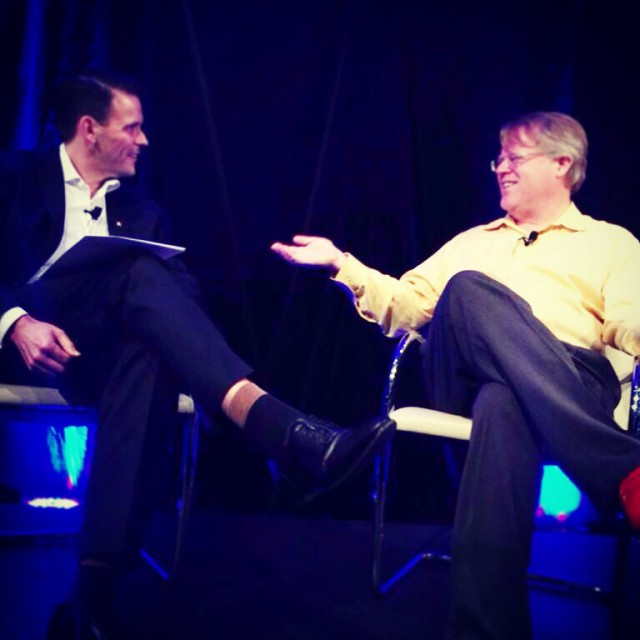
    Last week I had the pleasure of hearing Robert Scoble (Scobleizer) speak at a Telstra sponsored event. His talk focused on the ‘age of context’ trends (Sensors, Wearables, Location, Social, Data) which are covered in his 2013 book of the same name. There were also numerous references to the ‘freaky line’ in regards to the pervasiveness of digital products and services in our lives. Scoble encouraged the audience to consider whether they were ‘all in or all out’ with regard to data shared online – Scoble is ‘all in’. He also implored that as connected technology continues to become a bigger part of the way we live it is inevitable that we will have to ‘give Mark Zuckerberg the data he wants’.

    Whilst contextual trends continue to mature with the recently announced Apple Watch (and other wearables like it) which is likely to capture many hearts and minds (I’m undecided) and increasing use of apps like Google Now and Tapingo (which offers you products and services based on your habits), many companies will need to consider how to incorporate these into their strategy and business models. For Telecommunications and Media companies context can lead to 1) new ways of communicating and contextual content, 2) offering greater value to customers, consumers and advertisers from existing products and services and 3) improving the way companies operate. In each case however, for context to be successful as part of a strategy, policy (e.g. privacy regulation, company policy, workplace relations) and cultural (e.g. ‘are you all in or all out’, sharing data with people) change needs to be addressed as an enabler to not only the enterprise benefits but the social benefits of context.


    1. New ways of communicating and contextual content

    For telecommunications and media companies there are many possibilities to differentiate using context. Context can for example change the way we communicate with each other. The Apple Watch is offering people new ways to communicate through sensors in the band and watch. With this functionality one would have the ability to tap someone, share your heart beat and ‘share a squiggle’. Adding context to traditional messaging could turn SMS messages (with little context) into messages that place both the sender and the recipient in the moment in which they received it. For example, having just finished a marathon a message could be sent with a stat on my location, picture of the medal, video of the finish line or a time lapse of the whole race and the pulse of my (resting) heartbeat. With the addition of context to communication people will be able to experience (see, feel, and smell – see Scentee) each other’s lives in a whole new way.

    For media companies, adding context can lead to new types of content. Sports, which equates to the lion’s share of advertising revenue for media companies in Australia and globally could in the near future change to more contextual based content. For example, Australian company Catapult Sports which is the world leader in elite sports analytics, could turn its analysis into content which provides context (real-time) about how the game is being played and what the winning factors are. Like context in communication, new contextual-based content will deepen the meaning and engagement for audiences providing new forms of ‘reality’ viewing.


    2. Contextual services and contextual advertising

    There has been much written about adding context to services. UBER cabs is a classic example of providing context to a the traditional cab ride. Not only can a customer see where the cab is and when it will arrive, the use of ‘surge pricing’ when cabs are in high demand provides context to the market for transport. Telecommunications companies could add context to their existing services through the use of mobility and tracking. For example, setting up communications services in a dwelling can be difficult for many customers. Providing contextual troubleshooting, which could be triggered from a QR code on a router via mobile, supported by a video link to a problem solving technician video could reduce the need to send an expensive technician. In the case where a technician is required in person, their job could be made quicker and more user friendly by receiving contextual information on the fault before being deployed.

    Contextual advertising works in a similar way. Based on the context of a particular consumer, advertisements can be placed (by mobile or on billboards) to attract a purchase response from a consumer. Tapingo is an excellent example of this in that it learns your routine and offers goods and services based on your routines. It applies to content related advertising as well. Armed with knowledge of the context in which someone is engaging content (with family & friends, in bed, on the couch, at home or at a pub) advertising can be even more targeted.


    3. Improving the way companies operate

    Ever wondered why some people stay later in the office than others? Are they actually more or as productive as the person who comes in at 9am and leaves at 5pm. Contextual tracking of employees could provide these answers and help to influence the positive working behaviours of staff. The same could be applied to assets. Traditional telecommunications and media companies are asset intensive (network infrastructure, broadcasting stations, print press) which means that low utilisation of assets or poor maintenance can lead to lower return on capital. Adding contextual analysis and data to these assets has the ability to improve utilisation (e.g. where is the best location for a new network tower?) customer experience (e.g. where are our customers or our competitors experiencing drop-outs?) and maintenance (e.g. which location is likely to lead to the most wear and tear?). These are just a few examples of context as it could apply to improving the way companies operate – there are many more.


    We are at the dawn of ‘the age of context’ as Robert Scoble tells us. There are many opportunities for telecommunications and media companies to create new ways of engaging customers, servicing their needs and operating more efficiently. Standing in the way however are some very tough policy hurdles (e.g. workplace agreements on employee tracking) and entrenched cultural patterns including skepticism surrounding the use of personal data. Giving away your context as a customer, consumer or employee comes with Orwellian connotations (and possibly consequences) and should not be taken lightly. It does seem though that a tipping point will be reached as the proliferation of context ready devices (e.g. sensors, wearables) reaches common use and more people are compelled to be ‘all in’ than ‘all out’.