Tag: mobile

  • The case for ‘place as a platform’

    The case for ‘place as a platform’

    Platforms have grabbed unprecedented attention in the digital era. This can be partially attributed to the hype surrounding internet-enabled platforms in every realm of commerce. A deeper reason that platforms have lately captured the attention and imaginations of business leaders is that they enable a “pull-based” approach to serving customers profitably. The opposite to this is a “push based” approach which requires anticipating customer demand and bringing the right resources and people to produce the right quantity of a good or service at the right time. This approach is efficient if the forecast is right… but this is a big ‘if’ – particularly in the industries that have a fixed physical space or place as the cornerstone of their business.

    In recent times, pubs and restaurants in Sydney have experienced rising property, labour and supply costs compounded by increased competition and enforcement of ‘lock out’ laws (no new patrons after 130am). To illustrate the impact of these factors on hospitality, there was news recently of the sudden collapse of Sydney food and pub group Keystone, which runs the Australian franchise of Jamie Oliver’s Jamie’s Italian. The news article points to a simple story: “overreach in the competitive world of food and beverage and too much debt.” But, there is something more to it…The world has fundamentally changed since many of today’s venues (around the world) were established. How and where people choose to spend their time and money has fundamentally changed and the network of suppliers that support venues are now more digitally savvy than ever.

    This post looks at the case for ‘place’ as a platform – or said another way:

    The opportunity created for venues or physical spaces by the convergence of the digital and physical worlds providing layers of capabilities and standards that other players in that market can tap into and use.

    To illustrate, the post will briefly run through four different characteristics of place as a platform. Before this, it is hard to talk about ‘place as a platform’ without mentioning the recent phenomena of Pokemon Go. Not to dwell on the features of the augmented reality game (as it has been covered in numerous blogs) but it demonstrates how the concept of ‘place’ is changing. Pokestops, lures and hosting Pokemon gyms in a venue (e.g. restaurants, museums, parks) is an example of how the physical and digital are melding together to create new uses for space and new ‘pull factors’ for venues characteristic of platforms.

    Four characteristics of place as a platform

    Pop-up vs Permanent

    Many venues are founded with the intent of becoming permanent fixtures. This is best suited to a traditional world where people have a favourite place to go to or where affinity with patrons is created mostly by proximity to a venue. It is aligned to the “push model” of customer acquisition. Platforms however need not be permanent – by their very nature they are fluid in the way they bring new players (customers and suppliers) together to create value that is decoupled from a permanent fixture or focus. The growing trend in the retail industry towards short-term leasing and pop-up stores is an example. Pop-up stores aim to test new and alternative retail offerings with customers, maximising their returns in a short period of time. Large retail property companies like Westfield are embracing this trend creating space for short term leasing in their malls. The opportunity is to do the same in hospitality creating the conditions to maximise value in a short period of time through scarcity, exclusivity and test and learn principles.

    On-demand vs Linear

    Closely related to the concept of a pop-up venue is that of a venue on-demand. The ‘physical world’ has a lot to learn from the trend in media to on-demand content and ‘binge watching’. Traditional venues have opening hours, waitlists and queues. Platform venues are transparent, opening up their schedules, seating plans, customer details and menus. They are democratised by allowing customers to choose when they should open and what they should offer. They are also variablised – staffing up and stocking up based on demand rather than ‘potential demand’. To enable this, the economics of the venue need to be determined using on-demand principles (e.g. What is the number of people required to open the venue on Sunday at break-even or higher).

    Participants vs Patrons

    Participation is a common requirement for many internet-enabled platform businesses (e.g. iTunes, Airbnb). This can be in the form of membership to the platform or participation as a developer building on the platform. Membership helps to create stickiness and orients the platform around the pull vs. push mechanism for customer acquisition. It also supports the customer experience and alignment with the venue’s success. For places to become platforms, membership is likely to be a core enabler. This is not a new concept in hospitality, in fact is is very similar to many ‘clubs’ in the world. Consequently, membership allows for governance of the place as platform. Members agree to the terms of the platform and the experience is then fixed around those principles. Place as a platform will require a base level of membership but the opportunity to monetise off non-members (e.g. pay-per-use, extensions of place (e.g. food delivery from the kitchen)) then exists.

    Then there are other participants outside of members – ‘the developers’. Companies like Deputy which helps businesses manage bespoke work forces or accounting software like Xero are ‘plugins’ into the venue. Place as a platform will allow many participants to ‘play’ in the physical space not just patrons.

    Scale vs Single use 

    Platforms are scalable which is almost the exact opposite of how most venues are set up. Many hospitality businesses ‘fixed to place’ with the exception of franchise models which are formulas that can scale out across multiple places (e.g. McDonalds, KFC etc.). Redefining place as a platform requires a level of modularisation of the experience, products or services from the venue. Where possible these aspects should be digitised to allow for distribution and replication. For example, the sign-in/booking process and software, the member notification services or even the menu could be adopted by other venues.

    There will always be a place for traditional venues – not every successful business is a ‘platform’. But the case for place as a platform is becoming clearer. The divide between digital and physical is closing which opens up new opportunities for places to interact with venue goers and suppliers in a platformatised, pull-based way. The venues that adapt by offering pop-up concepts, on-demand to participants (rather than patrons) and at scale, will be best place to capture value in a digital+physical world.


  • Facebook’s strategy: Live and Connected

    Facebook’s strategy: Live and Connected

    There were two announcements at Facebook’s F8 conference back in April that tell us a lot about Facebook’s strategy. As a social media platform it has traditionally been a a digital ‘destination’. I’ve written previously about how platforms like YouTube and Facebook are winning your ‘boredom’ time (e.g. on the bus, in a queue). However, Facebook is moving well and truly pass just being a destination – it wants to be the internet.

    The company’s goal (under its purpose of connecting the world) appears to be that when you connect to the digital world you do it with Facebook whether through its platform (including commerce/bots), its mobile apps (Whatsapp, Instagram), virtual reality, instant articles (for news), Facebook Live for live events or further down the stack into connectivity assets (Terragraph, ARIES). It is these last two ‘where to play’ and ‘how to win’ choices that signify the change from destination to a full service ‘connectivity’ provider. This post looks at the strategy behind Facebook Live and Facebook’s connectivity assets and the potential impact to  the media and telecommunications industries.

    Facebook Live

    Facebook Live and relevance

    As far as live video goes, Snapchat, Twitter (to a certain extent) and YouTube were into live video streaming well before Facebook. Facebook Live, which allows you to view live feeds from your friends as well as celebrities and news organisations, is a response ‘me too’ offering in its basic form (it even looks and feels like Snapchat). Where Snapchat has been successful with ‘millennial’ audiences, Facebook is also trying to appeal to the next generations by adding this live video feature. In Mark Zuckerberg’s own words: “support whatever the most personal and emotional and raw and visceral ways people want to communicate are as time goes on”. Facebook needs to continue to be relevant to the next generations so expect more acquisitions or ‘me too’ products that appeal to next generations (e.g. a Facebook response to Pokemon Go!?).

    Facebook Live and the news

    Despite it being a ‘me too’ product, Facebook Live represents much more than this particularly when it is considered in concert with its publishing product Instant Articles. As part of its move from being a destination to being a provider of connectivity, Facebook is aiming to control more of the ways people experience the news. The destination websites of the past (e.g. publishers) are now being encouraged by Facebook to present their stories wholly inside the platform.

    There was recent news that Facebook is paying media outlets like HuffPost, BuzzFeed and publisher Condé Nast to post live video. It is also likely to get into creating content of its own. This presents an interesting relationship between Facebook’s business model and ‘impartiality’ in news. The risk is that Facebook’s control over what people see online (particularly news) is becoming increasingly strong. Before Live, Facebook could claim to be neutral simply by serving up 3rd party content. Now with live video, and users (and Facebook’s) ability to create content, it is no longer just 3rd party content it is serving up Facebook starts to become the news.  This is a strong challenge to Facebook’s impartiality in journalism.

    Facebook’s connectivity assets

    Google is building fibre assets and connectivity balloons and Facebook’s response is small cell wireless technology, antennas and satellites. For both companies these ventures represent attempts to own the ‘last mile’ of connectivity to users from high speed (>1GB speed) internet to the applications used on mobile devices (Facebook’s attempt at a phone was as successful as the Google’s Nexus). Let’s look at Facebook’s plans.

    Terragraph and ARIES

    According to Facebook Engineering VP Jay Parikh, the Terragraph system is a “multi-node wireless system focused on bringing high-speed (~2Gbps) internet connectivity to dense urban areas…(it is) a distribution network to replace fiber in these dense urban areas.” Terragraph transmits data in the millimeter wave spectrum based on the WiGig open standard. This allows third-party hardware to be built with Terragraph-friendly antennae (this could include cars and phones). Facebook is currently running tests with the technology (which requires line of sight to work) in San Jose along with its ARIES antennae. ARIES is a single-base station with 96 different directional antennae. It is able to pick up 24 different devices on each band of spectrum by eliminating noise. The implication is that it will be able to transmit far greater amounts of data on spectrum than current antennae.

    Connectivity asset implications

    Facebook’s connectivity assets have two major implications on connectivity markets. Firstly, if deployed strategically with broadband connectivity they could be disruptive in connectivity markets like Australia or emerging markets where GB speed internet is relatively uncommon or unheard of. Secondly, by being the ‘last mile’ it could subsidise connection to the higher speed by locking people into the platform for their connectivity needs – literally a ‘Facebook RSP/MVNO’. The one thing stopping GB speed internet from being in high demand is a high demand use case. Demand for GB speed internet has not hit fever pitch but the ‘killer’ use cases are likely to be in Facebook’s sweet spot including mainstream virtual reality (Oculus) and 8K video (Facebook Live). Facebook is positioning itself to be an enabler of these use cases in terms of connectivity and platform.

    Facebook’s strategy has moved well and truly beyond being just a digital destination. It is fast becoming a connectivity ‘one-stop-shop’ for the future. Its Facebook Live product and connectivity asset strategy set it up to not only own the ecosystem on your mobile but to be the news creator and aggregator (for your friends and the world) as well as the last mile of high-speed connectivity.

  • Strategy in the age of ‘robotic content’

    Strategy in the age of ‘robotic content’

    We live in a world of information abundance. The ability to create, produce, market and distribute content in almost any form has becoming very easy. So easy that a shocking amount of what we’re reading is created not by humans, but by computer algorithms – perhaps even this post ;).

    In the most recent post on strategy4telcomediatech I highlighted the need to consider the role that ‘bots’ play particularly in automating conversational commerce – ‘sales and service’. In this post I take a look at the use of ‘bots’ or algorithmic content in digital media, how it is shaping our consumption habits, content creation and some of the capabilities required in both traditional and new media organisations.

    What is robotic content?

    Algorithms and natural language generators have been around for a while. However, recent developments in computing power and increased access to big data have meant that they are getting better and faster. The sheer volume and complexity of the big data we generate calls for artificial rather than human intelligence to derive meaning from it all.

    Robotic content is content that is produced and distributed by artificial intelligence. Examples include Associated Press’s (AP)  Automated Insight’s Wordsmith platform or Narrative Science’s Quill platform which is used by Forbes publishing sites. According to reports, AP is creating more than 3,000 AI-led stories per quarter which includes everything from quarterly earnings updates to sports reports and weather. Robotic content however goes beyond news – there are books, edited videos and websites being produced by robots – rounding  out a good portion of the content we might view.

    The other aspect to robotic content that is important to understand is how it (and other content forms) are being distributed and consumed.

    Media consumption and robotic content

    Many people have moved on from linear viewing of content (e.g. Broadcast TV shows, Print news/magazines)  into on-demand (e.g. SVOD, SMOD) and increasingly on mobile devices. The places we now go to for content (e.g. Netflix, Twitter, Facebook, YouTube etc.) are even a step further from ‘on demand’ – they are ‘algorithmic on demand’ and offer the ‘next thing’ to watch or read based on your profile, friends, likes and dislikes. These algorithms help to find content to keep consumers on their platforms longer.  This makes sense in a world where there is so much information available – but it has some consequences.

    Last week there was a lot of press from a Gizmodo article about Facebook’s trending news feed. Facebook’s relationship with publishers continues to evolve. With more than a billion people on the platform and many using Facebook daily, Mark Zuckerberg wants Facebook Instant Articles to be the primary news experience for people to have. The controversy in the Gizmodo article was probably a little overstated (who reads the ‘trending news’ section of Facebook?) but it did highlight that Facebook (more than other platforms or publishers) is an extraordinarily powerful media gate-way and yes…algorithms aren’t neutral even if the ‘appearance’ of the platform is (ask yourself: ‘is Facebook conservative or liberal?’). Evidence of the power of the platform could be seen when earlier this year Facebook prioritised video in its feed which saw a drop in referrals to other media websites.

    We are well on our way to a world where a lot of content is created by robot and served up to us based on an algorithm. So what does this mean for publishers and content creators?

    AI-first content = AI-first capabilities

    Publishing and content creation has been transformed in many ways already – machines and automation already play a large role in modern media. However, as with a ‘bot strategy’ in e-commerce, taking an AI-first approach to media signals the need for new publishing and content creation capabilities. To maintain relevance and economic viability, publishers and creators should look to augment their content creation process with robotic content (increasing productivity), create content that is searchable by algorithms, manage alliances with platforms (e.g. mobile, hardware platforms) or create unique algorithms that serve up compelling content in new ways for viewers and readers in the mobile eco-system.

    An interesting example of a traditional digital media publisher going ‘AI-first’ is Quartz’s news app. Quartz is a news service (not unlike any other) but in March this year launched a mobile app for its content. The content in the app is served up like an mobile chat back and forth with a friend – a conversational style. This indicates a few things – its mobile, its a differentiated experience for the reader (aimed mostly at millennials), it is short snippets of content (probably robotic) and first and foremost it is learning what people like and don’t like – training an algorithm. It is possible that Quartz could run its whole service with a bot and algorithm it refines through the app.

    Narrative Sciences co-founder believes 90 percent of news could be algorithmically generated by the mid-2020s. This is just an indication of the kind of change to take place in publishing and content creation. Out of the change though, I hope that content becomes more relevant, interesting and we begin to see new innovative forms created.

  • Do we need a bot strategy?

    Do we need a bot strategy?

    Just last week a leader of a corporate digital function asked me:

    ‘Do we need a bot strategy?’

    Two things struck me about this question. Firstly, ‘bots’ have been around for sometime… why now? and secondly, is the ‘bot’ movement important enough to warrant a strategy for a large corporate? Before looking at these questions I want to clarify exactly what is meant by a bot.

    What is a bot?

    A bot in its most generic form is software that performs an automated function or task – think repetitive tasks but increasingly more complex ones. Bots, in the context of the question above, are used to do things like – add an appointment, take an order or make a reservation. These are tasks which can be automated by a bot and which are now appearing in the messaging apps that many people around the world use on a daily basis (e.g. Whatsapp, FB Messenger, WeChat etc.). This use of a bot is closely aligned to the rise of a movement called ‘Conversational Commerce’ which changes the dynamic of purchasing goods or services from a static ‘page based’ web experience to a ‘question and answer’ experience. These bots live inside your messaging apps and are designed to feel like you are chatting back and forth with a human.

    A relatively recent example of a bot is Amy from X.ai which is a personal assistant that can be used to manage the to and fro that occurs when trying to book a meeting. To the ‘untrained eye’ it feels like a conversation with a personal assistant. Although bots like Amy are relatively new, they have been around for some time. Twitter has had bots since its launch in 2006. For example – there are bots that tweets about weather or earthquake warnings. Recently Microsoft launched ‘Tay’ a ‘chatterbot’ supposed to mirror the tweets of a 19 year-old American girl. Unfortunately, Tay turned out to be (at least initially) racist, sexist and well just inappropriate as it used the feeds of tweets directed at it to develop its personality.

    Despite the many applications, commerce is most interesting. Bot integration into the digital customer experience can be a powerful enabler to reduce ‘cost to serve’ but also improve customer experience. Working with a messenger service and a large consumer business at ways to service customers through a third party messaging platform, a bot experience excels. A bot is able to handle a relatively large range of queries in the messenger where as previously, you might be directed out of the messenger into a mobile web-page or an app, thus breaking the flow and potentially losing a sale. Facebook is exploring how to enable this for its major customers but also a community of developers/ startups.

    Why Bots now?

    2016 is the year of the Bot and these are 3 major reasons why Bots (particularly in an e-commerce sense) are of significant important today.

    1. The Facebook effect

    There is no doubt bots are becoming more mainstream particularly in e-commerce sales and service. At Facebook’s recent developer conference F8, the company showcased a number of applications of chatbots on their messenger platform. Bot integration into Messenger is fundamentally driving mainstream adoption given that over 1bn people use the service at least once a day.

    By having bots in Messenger, Facebook is trying a number of things. Firstly it is solving many of the sales and service operations burdens for its customers that result from filling out forms or calling a call centre. Secondly, by bringing bots into Messenger it is allowing Facebook to ‘listen in’ on the conversations between retailers and customer and paint an even better picture of the user and thirdly it is setting itself up to be a commerce platform by stealth. It is not hard to imagine that once Facebook is the interface for all your sales and service queries, it could extend further in the value chain to offer logistics services…watch out Amazon.

    2. The global mobile-ecosystem effect

    Facebook’s announcement about bots is also aligned to its greater global ambitions to be the world’s social platform. In mobile messaging, companies like Tencent’s WeChat in China already have similar ‘bot like’ services through the 10 million brands on the platform that users can interact with to do things like buy food, pay bills, go to the movies or settle a tab. Conversational commerce is necessary to compete with the likes of WeChat or Line in Asian markets.

    3. Alternatives to the mobile app and mobile web

    It is arguable that the web and mobile web are in decline as users are spending more time on mobile devices, and more time in apps instead of web browsers. With this trend, Bots start to own space inside existing apps (e.g. Messenger, Whatsapp, Snapchat) in the mobile eco-system. In turn, they are likely to form the bulk of monetisable internet activity happening in apps. This is giving rise to the concept of ‘bot stores‘ to compliment app stores and an ecosystem of bot creators like Botapps.io.

    Do we need a bot strategy?

    The short answer is yes. We are at an inflection point with regards to machine learning due to advances in data analytics, computer science and the application of AI in business (be that in the customer layer or the operational layers). It is becoming not only a way to interact with customers but infused into products, services and operations delivered digitally. Many incumbents companies/organisations currently working out their response to digital technologies (e.g. cloud, social, mobile and big data) need also to consider how AI (aka cognitive technologies) fits into their strategy. Specifically, if you are an organisation with a mobile presence, developing a ‘bot’ strategy could help maximise value from existing apps (e.g. conversational commerce, operational improvement, customer satisfaction) or presence in a mobile app (e.g. new revenue, new service experiences).

    Finally, Google CEO, Sundar Pichai said recently on Alphabet’s earnings call:

    In the long run, I think we will evolve in computing from a mobile-first to an AI-first world

    …for the most part, I could not agree with him more.

    Picture Credit: botapps.io

  • The iPhone SE Strategy

    The iPhone SE Strategy

    This past week Apple launched the iPhone SE as well as an updated version of the iPad Pro. Both devices are interesting in their design and construction – the iPhone SE has the smaller design of the iPhone 5 (4″ screen) with the components of the 6S whilst the new iPad has a smaller 9.7” display compared to its predecessor (12.3”), half the RAM and a smaller processor (probably for cost reasons). Design choices aside, the strategic rationale for both devices in particular the iPhone SE was not clear from the launch event. This post will explore the strategic rationale (where to play and how to win choices) and what it tells us about Apple’s approach to the global smartphone market.

    Apple has previously launched ‘scaled down’ and cheaper versions of its iPhone – the iPhone 5C is a case in point. It is tempting to compare the SE to the 5C but it is different…subtle as it may seem on first appearances. The SE is a high-end phone in a slimmed down design for a cheaper price whilst the 5C was an old design (unapologetically plastic) with year-old components for a cheaper price. In fact, Apple published this quote on its website to distinguish the SE from its other smartphones:

    “To create it [the iPhone SE], we started with a beloved design, then reinvented it from the inside out.”

    This description is important to have in mind when making sense of the strategic rationale and the SE’s place in the global smartphone market.

    Today’s global smartphone market

    If you were following the news from the Mobile World Congress recently you would have seen and heard about a number of smartphone manufacturers developing relatively sophisticated devices at a very competitive prices. Xioami’s Mi5 ($550 AUD), targeted at the Chinese domestic market, uses commoditised components to achieve a lower price point for the millions buying a smartphone for the first time. Similarly, UK smartphone startup Wileyfox is offering affordable smartphones for ~$500 AUD reducing the upfront cost for a device which in turn allows consumers to avoid the need for a 2-year lock-in contract with their carrier. These are the offerings defining the ‘low-end‘ of the smartphone market…which is growing and innovating.

    At the ‘high-end‘, Samsung and Apple enjoy healthy competition in almost every major market in the world. In Australia, over 70% of smartphones are either Apple (41%) or Samsung (32%) – this is a very large market for high-end phones driven by carrier subsidies and lock-in contract models. Globally, what sets these two giants apart however is status. Apple, particularly as the brand relates to China’s growing middle-class, is considered a luxury brand (along the same lines as Hermes, LV, Chanel etc.). To own an Apple is on par with owning a $2000 LV handbag (better value if you ask me :)). But what about the ‘mid-market’?

    Extending the high-end

    A misconception that people will have about the iPhone SE is that is targeted at the ‘mid-market’. However, if you believe status is a major driver, particularly in emerging markets such as China and India, then it is better to think of the SE as an extension of the high-end. The quote (above) from the Apple website gives some clues as to Apple’s intentions – ‘a beloved design’ (it looks like an Apple phone people know and love) ‘reinvented from the inside out’ (with the latest technology features). Unlike the 5C the SE is objectively a high-end smartphone with a price tag of $399 USD – an extension of the high-end.

    So who is the market for the iPhone SE?

    The smaller 4″ screen will attract some smartphone users, although I suspect there are many who people who are now used to the larger screen size of the 6 and 6S. I don’t believe this is Apple’s target market – why give away margin to people who are likely to buy an iPhone anyway? Conversely, I think the market for the SE is two-fold:

    1) Late-stage adopters in developed markets: People in developed markets who are buying their first smartphone or their first Apple device. This market is concerned with their device ‘just working’ (much more that early adopters – who will forgive glitches for the latest technology) and almost certainly more price sensitive than early-adopters. The cheaper an iPhone is, the more people there will be willing to pay for it.

    2) Tech enthusiasts in developing countries: Probably a larger market than the first category, this comprises of people who simply don’t have the funds to purchase a 6 or 6S…but want the latest Apple smartphone. This group also doesn’t want hand-me-down phones, they want the best, they just need to be able to afford it.

    The iPhone SE with its attractive price, industrial design and top-of-the line components is aimed squarely at the tech-savvy in China and India. It is still expensive and will not compete with the Xiaomi or Micromax models, but it is an iPhone and one that is likely to expand Apple’s presence in these huge markets.

    As Apple extends its ‘high-end’, the response in developing markets from the ‘low-end’ device manufacturers will be something to keep an eye on  – the question is how far will either side go to capture the markets that are buying their first smartphone?

  • Mobile World Congress update – Wednesday and Thursday

    Mobile World Congress update – Wednesday and Thursday

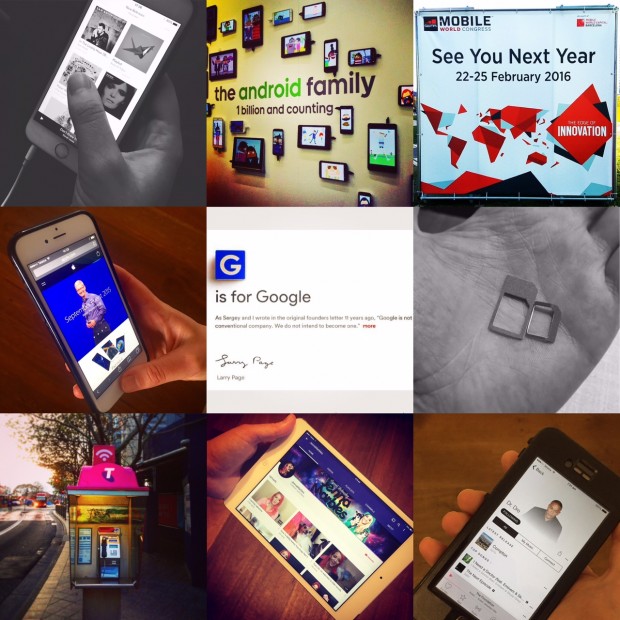
    MWC is almost over – 94,000 people walked the exhibition halls, wore VR headsets, made deals, met clients and listened to thought leaders of the mobile industry. After the excitement of ‘Media Tuesday’, Wednesday and Thursday offered a look at some different aspects of mobility – in particular mobility in emerging markets and ‘cognitive technologies’ applied to mobility.

    Mobility in emerging markets

    Chinese start up Xiaomi launched the Mi5 the new and much-awaited flagship smartphone on Wednesday. The Mi5 is the company’s attempt to turnaround handset performance after missing target by 12% in 2015. The new model will be targeted at the Chinese domestic market which continues to grow, as well as international markets – India was called out specifically. Key features of the Mi5 include the 820 Snapdragon Chipset from Qualcomm, lighter weight than the iPhone 6s and a better screen to body ratio. The neatest user functionality of the Mi5 is the optical image stabilisation which reduces blur when taking photos. The phone’s proposition is unique for emerging markets boasting the latest design elements, technology hardware and for 1/3 the price of the iPhone or Galaxy.

    Companies like Xiaomi continue to impress with their design and ability to put commoditised components together at a cheap price. Looking at the growth still to occur in emerging markets for smartphones it is easy to see why they have been so focused on China and India. For Australians (and the US/UK for that matter…) don’t expect to see a Xiaomi available anytime soon.

    Another company addressing mobility needs in emerging markets is payments company Stripe. Patrick Collinson CEO of Stripe used his keynote on Wednesday to speak about Atlas, a beta product designed to help entrepreneurs based in developing markets “gain access to the same business infrastructure enjoyed by tech companies in Europe and the US.” All in all, Atlas allows companies in emerging markets that can’t access a bank accounting, legal advice, cloud storage etc. to sign up to Stripe and its partner group allowing them to accept payments in a matter of days. This will allow companies to charge customers from anywhere in the world making e-commerce universal.

    Cognitive technology @ MWC

    An area which I am currently working in was on display at MWC Thursday morning – namely applying cognitive technology to mobility. Cognitive technologies include things like machine learning, speech recognition, robotics and natural language processing.  This last technology (Natural Language Processing) was on display with a keynote address from Swiftkey, who had previously won most innovative app at MWC in 2012.

    Swiftkey provides processing of human textual interactions and predicts characters and words based on how you type. John Reynolds, Swiftkey’s CEO, spoke about his ambition to eliminate the need for a keyboard and how mobile devices of the future will be intelligent enough to predict communications based on touch or movement alone. Laying out the path for Swiftkey, he sees their mission as moving from character prediction, to word to whole concepts.

    That’s the wrap from coverage of MWC keynotes. I will be providing a summary of the major topics from MWC shortly. Hasta Luego!

  • Untitled post 331

    What a fantastic first day at the Mobile World Congress! This was a day when many leaders in mobile technology, telecommunications and media took to the stage to share their views on mobile connectivity, disruption resulting from mobile and connectivity innovation and mobile and the media. I will cover two major themes here but you can watch all the action via Mobile World Live.

    Mobile Connectivity

    Facebook founder Mark Zuckerberg took the stage late Monday afternoon for the 3rd year in a row to update the world on his plans to connect 4Bn unconnected people (through Internet.org). As I write this, the number of people who are connected in 2o15 is ~3bn and this has grown by about 200M. If we are to make greater leaps a catalyst like Internet.org or Project Loon is needed but on what terms? Zuckerberg addressed recent setbacks for his project telling the audience that “Facebook isn’t a company that hits a roadblock and gives up…We take the hits that we get and try to learn from them and just do better.” He also address the industry fixated on connecting ‘things’ to consider ‘connecting humans’ first. I would say the same thing if I were the leader of a media company the size of Facebook.

    Zuckerberg offered up two new pieces of information. Firstly Internet.org is going the way of Project Loon but in stead of balloons they looking to use solar-powered drones with laser technology to provide internet access.  Secondly, he announced the Telecom Infra Project, a newly-launched engineering initiative designed to bring  operators, infrastructure providers, system integrators and other tech companies together to develop new approaches to infrastructure. This second announcement is interesting in that it is Facebook’s response to “slow moving” telecommunications carriers. The founding members include Deutsche Telekom, EE, Globe Telecom, Intel, Nokia and SK Telecom and together may come up with some disruptive innovations. I suspect we will continue to see more partnership models like this one set around defined ecosystems (in this case Telecommunications Infrastructure) where the problem is to big to solve for one organisation.

    Mobile Innovation

    Product innovation in mobile is a theme year in and year out. For smartphones, 2016 may be the year that innovation has slowed. The industry as a whole is dealing with the dual objectives of mass commoditisation on the one hand and device innovation on the other. As such, the tier 1 players are all trying to add new bells and whistles while the low end of the market learn how to mass produce them. In panel discussions on Monday with tier 1 and low-end players including Samsung, Motorola/Lenovo and Wileyfox,  chipset maker Qualcomm, Cyanogen, and mobile operator Telefonica innovation was discussed in a number of contexts. For some VR is where mobile innovation is heading and for others like Stephane Maes, VP of product management and planning at Motorola, building features that meet customer needs (like an unbreakable screen) superbly is of highest priority.

    UK smartphone startup Wileyfox provided an interesting perspective arguing that business model innovation not product innovation is where smartphones are headed. Wileyfox is offering affordable smartphones, using cheaper, commoditised components, which allow consumers to avoid the need for a 2-year lock-in contract. CEO Nick Muir said on the panel:

    “More and more people are beginning to see the cracks in the standard model – and that standard model being you have to pay for a two year contract to be able to afford the device you want… I know that the bill of materials allows us to be able to sell the device at a reasonable price and the reason we can do that is not enormous scale, it’s not just tier one components, it’s around the fact that we don’t have any sporting contracts, we don’t have legacy pensions, we don’t have glass offices, we all travel by EasyJet and we stay in Airbnb. We are a low cost organization and that low cost gets passed on to the consumer – and that’s part of it.”

    That is lean start up at its best…

    The Australian market for smartphones is still dominated by Tier 1 devices – Apple and Samsung. However, going with Muir’s philosophy and extending it to the broader trend of commodity vs innovation, it is possible to see MVNOs like Amaysim start to offer ‘reasonable quality’, low cost devices attached to larger data plans with no-lock-in to go head to head with traditional mobile business models.

    That’s my take on two major themes from Monday at MWC. Day 2 will showcase mobile security, mobile and the media, industrial IOT and a topic I have recently written about – diversity and inclusion. Enjoy!

  • Mobile World Congress update – Sunday

    Mobile World Congress update – Sunday

    In its 15th year, the Mobile World Congress kicked-off in Barcelona yesterday with a flourish of announcements. This year the event is expected to pull 94,000 people from telecommunications, media and technology industries and their adjacencies. Over the next 3 days I will cover off the major topics discussed each day and identify implications for the Australian market.

    Before outlining the major news from Sunday, there a few articles worth reading to get you up to speed on mobile:

    1) What happened at MWC last year?

    2) Ben Evans history of mobile and the industry/market assumptions that could not have been predicted…without hindsight

    3) The Economists 2015 articles on “Planet of the Phones” and “Telecoms and Society”

    4) Deloittes 2016 TMT predictions

    5) Mobile World Live – which provides live streaming of the event including keynotes

    On to the news from the pre-event… There was one major topic from events on Sunday at MWC – New devices…

    Samsung – Samsung again put forward a claim for the smartphone crown launching its Galaxy S7 and larger sized Galaxy S7 Edge. The key features of the new smartphone include a more advanced camera, ‘always on display mode’ for a ‘zero-touch experience’ and a hybrid SIM card tray for dual SIM and extra storage. The devices will be available mid-march and will perhaps be indicative of the technology we will see from Apple with the iPhone7 launch later this year.

    LG – Not to be outdone by Samsung, LG gave its G5 smartphone a big push yesterday. CEO Juno Cho showed off the device saying in his address ‘Is the era of the smartphone over? We think the best days are still ahead.’ LG has designed the G5 to be modular in its hardware design allowing for battery exchange and the ability to attach accessories (like a VR head set and a rolling bot… yes a robot that can monitor your home, take pictures and play with your pet.)

    Huawei – Huawei launched the Mac… no… MateBook (which should have appeal in Australia…) targeting enterprise users. It smells like a Surface Pro running Windows 10 and rivals an iPad Pro for looks. It includes fingerprint encryption, MatePen (a high precision stylus) and 29 hours of battery life.

    Day 1 (Monday) will see a number of keynote addresses from leaders in mobile technology including one from Mark Zuckerberg. It will be interesting to hear how he addresses recent criticism of Facebook’s Internet.org a perennial topic for the Facebook boss at MWC. There will also be discussion on 5G technology (from carriers and technology companies), IOT (expect automotive to play a role), Security, Identity and Media.

    Stay tuned for tomorrow’s update!

  • Top 5 stories in Telco, Media & Tech in 2015

    Top 5 stories in Telco, Media & Tech in 2015

    It is that time of the year – a time to reflect on what has been a fascinating year in the world of Telecommunications, Media and Technology (TMT). 2015 was a year in which the digital era technologies (cloud, social, mobile, big data) matured a little further with growth of wearable tech, messaging apps and unicorns appeared (and died). Equally, exponential technologies (AI, IOT, 3D printing, Blockchain, Connected cars etc.) have come to the fore with more and more (viable) use cases being explored than in any other year such as cognitive automation, drone technology, Tesla’s power wall and more examples of smart cities. In a breakthrough year, what were the most interesting news stories from the world of TMT and why?

    Smartwatch revolution and Apple Watch

    This was the year of the ‘smartwatch’ as the new form of wearable technology. Fitbit evolved, Pebble grew up, Garmin stepped into device syncing and a number of companies released low-connectivity watch/fashion pieces. And then there was the Apple Watch. The ‘Watch’ represents a new chapter for Apple as it starts to plan an exit from the narrowly-defined smartphone market into playing an increasingly important role in every aspect of consumers’ lives.

    There was (is) so much commentary on the Apple Watch – What will it look like? Will anyone buy it? Have Apple tried to do too much? Have they not developed it enough? As the dust settles from the Watch’s introduction I believe the continued success of this product and other smartwatches depends on three things: the physical design, the interaction model with the user, and how it interacts with its environment. The verdict? The Apple Watch is probably on track.

    Ad-blocking, instant articles and the death of publishing sites

    Ad-blocking is not new but 2015 was a year that apps like ‘AdBlock’ received a significant amount of attention. One European Telco was even reported to be creating its own ad-blocker for its customers to use against sites like Google or publishers. The reason for the focus this year has been ad-blocking’s threat on traditional web-publishing sites (e.g. Newspapers, specialty content) as they struggle to maintain and grow their share of advertising dollars.  At the same time Facebook advanced its platform through Instant Articles which for advertisers offers a much more targeted and cookie independent way to reach their intended audiences.

    This will continue to be an important topic for the next year to 18 months. Mergers like the one between Verizon (Telco) and AOL (owner of many publishing sites) announced this year provide a glimpse into what is to come for publishing sites as their business model is disrupted by social media on the one hand and ad-blocking on the other. Expect more deals like AOL/Verizon, expect more news on ad-blocking and expect a lot more noise from publishers as they try to evolve to these market conditions.

    The rebirth of Google as Alphabet

    Google announced the creation of its parent company Alphabet in an attempt to reduce the strategic confusion between its moonshot businesses and its core business of ‘organising the world’s information’. Larry and Sergey, the founders of Google, put out a characteristically ‘Google’ statement about the intent of Alphabet  highlighting that Google does not intend to become a conventional company.

    This story is significant in many ways – it is a moment of strategic clarification for Google who had been receiving criticism from Wall St for their ‘shotgun’ approach to their investments, it is allowing room for new Google businesses to flourish outside the core and it also represents the start of Google’s business transformation. Google needs a new cash cow as search advertising plateaus – Larry and Sergey are betting on it coming from one of their moonshots or a refocused core. 2016 will be an interesting year (again) for Google.

    Convergence continues: Project Fi, Google Fiber, Apple Care

    This year media and device companies continued their quest for greater power in the content delivery value chain with offers that attempt to relegate broadband providers into obscurity. Project Fi (an MVNO) is Google’s attempt to offer a mobile product to users of its Nexus hardware and Android software and Google Fiber is Google’s own cable broadband service available in several US towns. Apple recently launched Apple Care which is a financing service for Apple Users who want the latest devices but don’t want to deal with their mobile carrier.

    The moves by Apple and Google continue to put pressure on the business models of incumbent telecommunication’s operators. Apple Care is effectively ‘unbundling’ carriers’ mobile plans and Google Fiber and Project Fi are removing the reliance on a carrier all together. The next 18 months will continue to see mounting pressure on the incumbent telecommunications market particularly as ‘e-SIM’ devices are launched and become mainstream.

    The Death of 90’s internet: Internet Explorer and Yahoo

    2015 may be the year the ‘dinosaurs’ of the internet finally die. Microsoft announced that it would be discontinuing its Internet Explorer brand and Yahoo at the turn of the new year has a very uncertain future. The driving force behind this is the continued plateau of search related advertising spend as smartphones begin to dominate the world and the ‘internet of old’ (PC/browser driven usage) gives way to mobile-centric, app-based use. Yahoo’s core business (e.g. Yahoo Mail and news/sports sites) which is based in the ‘old internet’ is likely to attract private equity firms or perhaps a Telco like Verizon.

    The mobile internet is here to stay for the time being and 2016 will reveal more winners and losers. The TMT organisations best attuned to the mobile eco-system stand the best chance of prospering from the growth in the new ‘mobile’ internet.

    That’s a wrap on 2015…What a year! Thank you to all who have read, liked, commented and shared my posts from strategy4telcomediatech in the last 12 months. Hope you have a fun and fulfilling 2016.

  • Music streaming: Future business models

    Music streaming: Future business models

    This past week saw RDIO, Spotify’s major rival in streaming music, file for bankruptcy. RDIO was arguably a superior service to Spotify in terms of user experience and music catalog but has failed to capture the market in the way Spotify (20M paying subscribers), Apple Music (6.5M subscribers) and Pandora (81.5M active listeners in 2014) have. The latter has been reported to be acquiring the ‘key assets’ of RDIO for $75M allowing Pandora to build a stronger, ad-supported radio service experience. Pandora’s management believes: “The result will be the industry’s best combination of streaming radio and subscription songs on demand.”

    So…another music streaming service bites the dust. This despite streaming becoming the fastest growing segment of the music industry and the form that most industry leaders and pundits believe is the future of listening. Despite the popularity of the concept (renting, not owning music), it is clear that the business model of streaming is still in its infancy.

    RDIO’s departure could be the first of many for streaming platforms. If this is the case, what is to become of streaming music as a business model? This post explores some of the possibilities for streaming business models and highlights those players best placed to capitalise on growth in streaming service demand.

    Windowing – streaming as a secondary market

    The current and most well known services like Spotify, RDIO (RIP), Apple Music and Google Play take a one-size fits all approach to music. You pay a subscription (~$10/mth) to have the privilege of listening to whatever you want in a catalog of (hundreds of) millions of tracks. One of the problems here is that music is treated like a commodity – all music is the same. For subscribers, there is no discretion regarding to which artist your $10 is paid (the majority may go to artists you don’t listen to) and for artists the rewards are small. The business model of pure streaming as evidenced by RDIO’s bankruptcy and Spotify’s inability to turn a profit is on shaky ground.

    Windowing, a common practice with movies, allows artists to release their new albums to a market that is willing to pay for it directly (>$10) then after a period the music reverts to a streaming service for listeners on subscriptions. Arguably, Apple Music is best placed to capitalise on this model – with iTunes/Apple Music integration. A number of major artists are already beginning to use this strategy – Taylor Swift, Beyonce and this week Adele.

    Enforcing scarcity on infinitely copyable media is a difficult task but not an impossible one. Swift, Adele and the other artists successfully employing a windowing strategy are already big. These artists don’t need to worry about selling out their concerts or reaching new listeners. However, it is a different situation altogether for musicians starting out, and the situation is particularly nuanced for artists in the middle for which windowing may be better. Those looking to get bigger could adopt streaming for free as a primary approach.

    Niche/Exclusive streaming – streaming of niche content for enthusiasts

    The ‘all you can eat’ streaming model has the downside of not being particularly attractive to artists and squeezing the profits of the streaming service and label. Niche services that specialise in a genre (e.g. classic, jazz, hip-hop) or a label (e.g. Blue Note, Columbia) which contain a deeper but smaller catalog of music may emerge as a profitable and viable alternative for many music lovers.

    Equally, video streaming services (e.g. Netflix) offer clues for exclusivity in streaming. Apple has already begun to dabble in ‘exclusive’ content with Dr. Dre’s new album launching exclusively on the service and “Beats radio” and curated stations offering a compelling reason to join or pay a premium in the future.

    Music plus – streaming as a bolt on

    Access to music as part of a subscription to something else has yet to see huge success but there is potential in this model. Amazon Prime is the best example of this but other companies like DropBox, Ebay or Facebook could offer streaming music in this way.

    Amazon Prime affords Amazon customers same-day delivery on all products, e-book rentals, cloud storage on photos etc. Bundling music into this service helps to create stickiness for Prime also offsetting the profitability issues seen by the major streaming services. Currently Prime members get access to 1 million tracks, which would not be considered a serious proposition for music lovers. Whilst this model is potentially more profitable, it is still treating music as a commodity and without the variety and depth of tracks probably best suited to the casual listener.

    Multimedia streaming – cross-media streaming

    Bundling of different content (e.g. music, video, live entertainment) is emerging as a new business model and potentially a very dominant one. As discussed in my last post, Google is uniquely placed to provide a multimedia proposition through YouTube Red. Although currently limited to U.S. users, YouTube Red includes unlimited access to Google Play Music and its supply of 35 million tracks. Google Play plus YouTube Red could make a phenomenal proposition for streaming overall.

    We are at an inflection point for music streaming. Streaming as a concept has won the format battle but the business models that began the new form of music delivery are starting to feel the pressure from subscribers, labels and artists. New business models which balance the demand for music with artists’ needs (e.g. exclusivity, reach) as well as users’ preferences (e.g. niche, ‘all you can eat’, casual) or which smartly package music with other services or media offer new sustainable options for music streaming. The question is which streaming services will win the war.