Tag: mobile

  • Why people will pay for YouTube

    Why people will pay for YouTube

    YouTube, Facebook, Snapchat, Vine (etc.) have one undeniable thing in common – these are the places on the internet (particularly mobile internet) that people go to when they are bored. However, at $120 per year ($9.99 US per month) being YouTube Red bored comes at a price.

    YouTube Red (Red) is YouTube’s new ‘pay-to-remove advertising’ business model which simply promises no ads for the same YouTube videos. This proposition raises many strategic questions like – why would YouTube, who generate billions from advertising, seek to cannibalise their main revenue stream? or how will YouTube compete with other subscription services vying for peoples ‘spare time’? These questions are worth posts on their own. However, the most interesting question to address is – Will people pay for YouTube?  

    Reasons why people will pay for YouTube

    1. The rise in popularity of YouTube stars

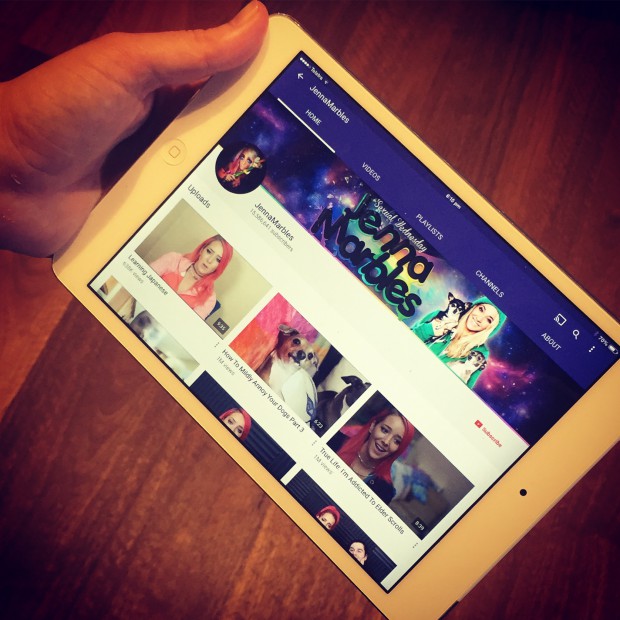
    YouTube is incredibly popular owning in part to the rise of self-made YouTube stars. These include stars like gamer/commentator PewDiePie (40M subscribers), comedian Jenna Marbles (15M subscribers), pranksters BFvsGF (7M subscribers) and Minecraft guru StampyLonghead (7M subscribers) who have risen from obscurity to virality to be household names. In relativity, these stars in a YouTube sense are ‘bigger than Bieber’ and are exclusive to YouTube. They have most appeal with millenials (who are arguably the advertisers’ target audience – particularly brand advertisers…) and loyal fans could be expected to pay a fee to get ad-free access to their stars’ regular content updates. The strategic juxtaposition here is that the people who are most likely to be willing to pay to remove ads are predominantly same people advertisers most want to reach. This fact alone could bring YouTube undone.

    2. Online video advertising is immature and annoying

    Let’s face it… YouTube advertising is annoying. YouTube is the ‘Free to Air’ (FTA) TV of the internet but unlike FTA advertising has yet to evolve much beyond 30sec-5min video-advertising before a clip starts, ‘skip’ options, poorly integrated in-content video advertising and pop-up links. FTA TV has matured over time to seamless advertising in-content and perfectly timed ad-breaks (e.g. prior to suspenseful moment) to ensure viewers resist channel surfing. The hindrance of YouTube advertising alone could be a reason to sign up for YouTube Red but if advances such as greater content integration of advertising or product placement mature, the FTA option may still appeal to the majority of viewers.

    3. New exclusive content and the rise of YouTube as a destination site

    YouTube Red appears to offer the same videos for a price but Red could become much more. The appeal of YouTube is that it is an excellent mobile product (one of Google’s best) and therefore in its current form is more suited to short-form video to fill in downtime (on a bus etc.). The future of Red could be to compete in longform with Netflix et al., in music with Spotify/RDIO including offline content, in live video against Periscope/Meerkat or as a live sports destination. It could be the killer app for all-round media consumption. In this way YouTube Red represents more than a new business model ‘having a go’ at subscription pricing –  it is a full scale transformation of YouTube as a destination site.

    Reasons why people won’t pay for YouTube

    1. YouTube is the Free to Air TV of the internet

    YouTube is so compelling as a free product that paying a substantial fee of $120 per year is likely to be on the expensive side for a good number of the viewer base.  Many viewers are probably already paying for cable, Netflix, Spotify etc. – another subscription may mean some viewers are paying $100+ per month for entertainment. In press releases surrounding the Red announcement, YouTube has openly said it still believes in its advertising business and so its free content should still remain compelling. With UX improvements to support advertising and free content there may be little impetus for the average user to pay – ever.

    2. You wouldn’t pay for Facebook…would you?

    The scenario I opened with (paying for something you use to stem boredom) is a not-insignificant factor in the appeal of YouTube Red. For many YouTubers watching a clip here and there could be substituted with a Facebook update, a Vine binge, a SnapChat, a Yik Yak, a Tweet-storm etc. Would you pay any significant amount for any of these boredom breakers? Arguably, Facebook rates highest for many in the boredom breaker category but competition for this type of attention is so hot that a premium boredom breaker would need something differentiated.

    The online media industry will be watching with great interest (particularly players like Facebook, Spotify, Netflix) to see how YouTube Red performs. At best, a strong take up of subscriptions could transform YouTube into an ‘all-round media’ destination. A bad outcome could be leave YouTube with a less attractive advertising platform by virtue of the most attractive customers having self-selected out of ads, but not enough of them taking up Red to make up the difference. The worst outcome for YouTube would be that in trying grow both the subscription-based and advertising-based business model simultaneous could lead YouTube to being inferior at both.
  • Competition & Innovation in a Platform World

    Competition & Innovation in a Platform World

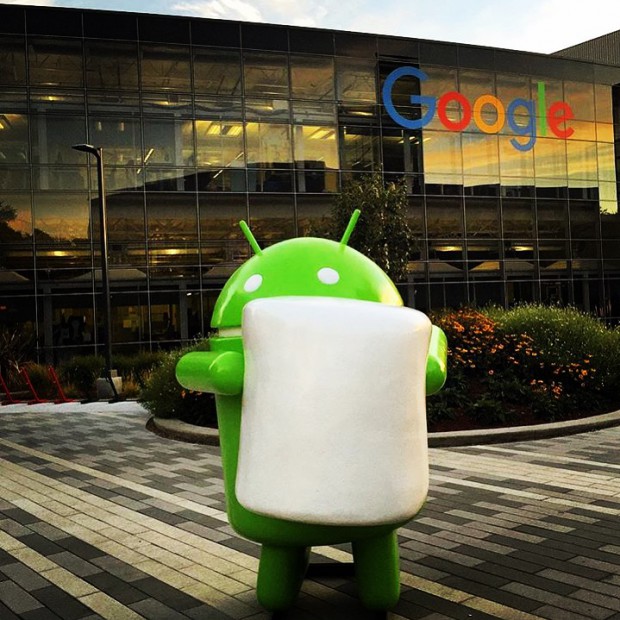
    It was reported this week that Google is yet again under the competition microscope, this time in the USA. The claim that the tech giant is stifling competitors’ access to its Android mobile-operating system was neatly covered in this Bloomberg article. This is only the latest claim in a string of many against Google regarding anti-competitive behaviour.  You may recall the leaked allegations in Europe against Google’s Shop search or in India, all of which point to Google ‘abusing its dominant position in search’.

    There are definitely interesting views on both sides of this debate. Google is not the only search tool, but it is by far the most dominant. It provides billions with access to information every day and it makes money from associated advertising. In an unregulated environment it has a lot of power and from a consumer’s perspective… other search engines are just not as good. So should it be penalised? Many commentators believe so. I believe there needs to be more thought for how platforms with monopolistic dominance, like Google, are regulated. The competition laws from the ‘physical’ world may not apply to an era of open innovation, rapid innovation cycles and technological change.

    Below are some considerations about monopolies and competition in a world where ‘software is eating…everything’ and platforms are becoming the norm.

    1) Monopolies are uniquely constrained in their actions

    Peter Thiel’s core thesis in his book ‘Zero to One’ is that entrepreneurs should seek out niches and monopolies, not heavily competitive markets, as they are most profitable and relatively easy to defend. This is true but equally, as a monopoly, you are uniquely constrained in how you act. If you own the market, agency over the whole market is difficult because you need to cater for consumer needs, government regulation etc. A company like Apple, who is in a highly competitive market, conversely can exert as much control on its own platform as it likes. The allegations lodged against Google are a response to the company trying to control its platform more tightly. If these allegations are found to be true – they will have a large effect on Google’s business both financially but also in how it defends it business model in the long term.

    2) Antitrust action and remedies tend to be backward looking and expensive 

    In Microsoft’s famous antitrust case (1989-2002), action was taken against the company for preferring their search engine over others on new computers with Windows software. The cost of the case has been estimated in the hundreds of millions and provided for a competition remedy which was backward looking. Microsoft had to include alternate browsers in Europe. The question is – for the amount spent on allegations and defence of the case, what difference did it really make?…Not much. The change that brought Microsoft down a peg was actually the growth of the internet as a software distribution channel and mobile as a dominant device…innovation.

    3) Innovation is the friend of competition and the enemy of monopolies

    EU competition commissioner Margrethe Vestager has said of the action against Google:

    What we’re aiming for has nothing to do with Google as such — it has to do with the market allowing innovation

    Google’s dominance in search is inevitable no matter how the Federal Trade Commission or the European Commission may or may not act. The thing that will disrupt Google’s dominance is exactly as Vestager says – innovation. This could come in the form of platforms that overtake Google’s share of revenue or new devices like the Apple Watch or disintermediation by services like Siri, IBM Watson or vertical search engines like Trip Advisor or Yelp. Microsoft found itself in trouble with the FTC because the incentives driving their business model (computer on every desk with Microsoft software on it) perpetuated a monopoly. The same could be said of Google (the structural change to Alphabet is perhaps an acknowledgement of this). The interesting strategic conundrum for Google and Microsoft is that those same  incentives are ones that ill-equip monopolies for the future (i.e. miss out on the future by focusing on the present).

    There is definitely a place for regulation of monopolistic behaviour, in fact it is essential. But, in a world where innovation cycles are shorter and shorter the best regulation of monopolies may in fact be the funding for and promotion of innovation – as opposed to investing millions defending backward-looking penalties and remedies.

  • Apple’s iPhone Upgrades: Unbundling Mobile Carriers

    Apple’s iPhone Upgrades: Unbundling Mobile Carriers

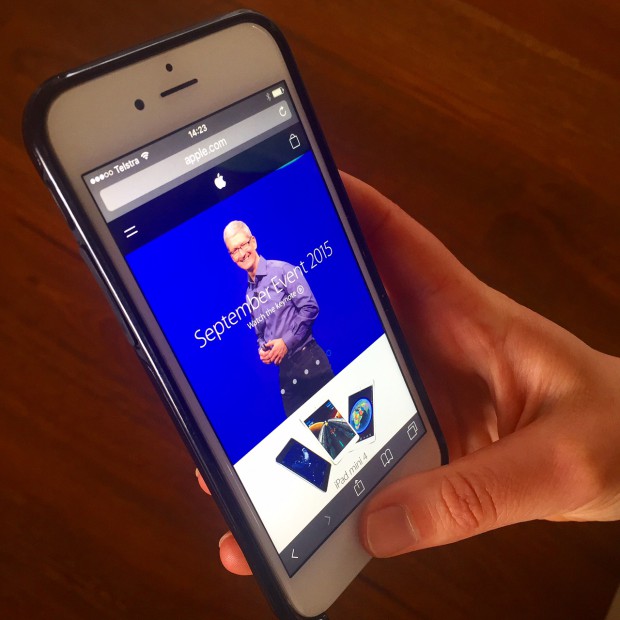
    Apple is officially entering the market for smartphone finance with the announcement of its iPhone upgrade scheme last week. The iPhone upgrade premise is simple – pay a monthly fee ($32 USD or~$45 AUD) for a new iPhone each year which is unlocked (so you can choose your carrier) and includes Apple’s insurance service ‘Apple Care’. This comes at a time when the narrative of ending subsidies has been pitched against device makers mainly because of the high up-front cost for consumers. There are strong indications that lower upfront costs are indeed driving high-end smartphone sales.  For carriers, though, it is device makers like Apple entering into financing and ‘rapid upgrades’ that puts at risk the lock-in, contract-based business model carriers have been seeking to maintain.

    Handset subsidies as a business model are as old as the history of handsets themselves. These are prevalent in most Western markets. In Australia, all major mobile carriers offer some sort of subsidy which can be up to $400 off the price of a top end smartphone, with some like Telstra offering a 1 year exchange (rapid upgrade plan) for a new phone (‘New Phone Feeling‘).  However, this latest announcement from Apple, in line with advancements toward a virtual SIM, start to paint the end-game for the mobile device value chain and the evolution of new business models.

    This post explores the major strategic implications to device makers (e.g. Apple, Android etc.) and carriers of device makers moving into smartphone financing+upgrade offerings bundled with device sales. 

    Device Makers

    Device makers have much to gain from bundling device sales, finance and upgrades. Here are the major strategic implications.

    Increased brand loyalty/reduced churn of smartphone provider

    Apple experiences less ‘device churn‘ than other device makers and many people who own an Apple device are fiercely loyal. However, under the current subsidy/24 month contract models there is a re-contract moment that gives a consumer the choice to switch device. For a mobile carrier, installment and rapid upgrade plans are a way to prevent churn off the network, for device makers they are a way to stop churn from iPhone to Android. In the former your next ‘free’ smartphone might be an Android or an iPhone. Under an Apple subscription, it will be an iPhone – a new level of loyalty and elasticity.

    Second-hand, emerging market opportunities

    What happens to all the rapid upgrade phones? They are typically refurbished and sold in second-hand markets. As device makers take on refurbishment and resale as part of offering financing and upgrades they are likely to end up competing with new devices in mature markets. This opens the door to selling in emerging markets. Whilst the lower-cost iPhone 5C has not had success in these markets a 1 year old, refurbished second-hand high-end iPhone 6 may – market entry by stealth. It could be expected that emerging markets will have a higher portion of second-hand older devices than brand new devices (per capita) thus representing a growth in market size for Apple.

    Value added services at the device not the carrier

    Like Google’s Project Fi, offering subsidies and upgrades is another case of device makers moving into the carrier’s domain. Apple has been rumoured to be looking at setting up an MVNO (like Google) – this article makes a pretty interesting case for why it should. But it’s not just the possibility of being an MVNO or access provider, there are other value added services in the carrier’s wheelhouse that device makers could offer like professional installation, entertainment packages and adjacent service offerings (e.g. health, fitness).

    Mobile Carriers

    The implications for mobile carriers are bleak. As noted, subsidies+upgrades from device makers are yet another case of the diminishing influence carriers have over their customers.

    Carriers left with nothing but access and service

    Previously, Apple sold the device while the carriers bundled financing and service; now Apple is bundling financing and the device leaving the carriers nothing but service. Add to this virtual SIMs, like the Apple SIM, and Apple is exerting total dominance over carriers. Granted, this is not an overnight conclusion but the road is mapped.

    Reduced customer reliance on carriers

    By eliminating re-contracting at the carrier, one more contact point between customer and carrier is taken away. Customers will have to choose which carrier to access but in a virtual SIM world (carriers will have to be open to this) this will be done through software on the device. Even as part of the iPhone upgrade plan, the iPhone is unlocked allowing conscientious users to access their carriers of choice or use multiple SIM cards. The future will be much simpler for users and carriers will need to rethink the value they add at each customer contact because there will be fewer.

    These changes will not happen overnight. We are still at least 12 to 24 months from the Apple SIM or standardised virtual SIM and people adopting it could take months or years after. As for financing and upgrades, most people will still buy from carriers for several years to come, and anyone already on an installment plan from their carrier will find it challenging to switch. However, the market power shift from carriers to devices continues (as it has done since the first iPhone release 8 years ago), unbundling carriers’ offerings piece by piece.

  • ‘WiFi First’ – Just Thin Air?

    ‘WiFi First’ – Just Thin Air?

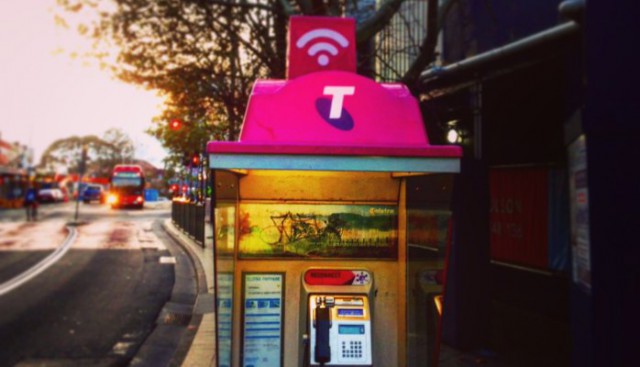
    In the week after Telstra launched ‘TelstraAir’ – Telstra’s venture into shared WiFi for its customers and the public – it is perhaps appropriate to look at the concept of ‘WiFi First’. Going “Wi-Fi first” was pioneered in 2012 by French mobile operator Free to fill the gaps in its cellular network. The idea has since been advanced by three American start-ups: Republic Wireless, Scratch Wireless and FreedomPop who have received increasing attention of the news media and incumbent communications companies. FreedomPop raised $30m in financing last month with plans to move into Europe and signup its first customers in Britain this month. A big part of the hype around FreedomPop has been its technology which allows it to keep continuity between WiFi networks. As the signal of one network diminishes, FreedomPop’s technology finds another network and transfer’s the call to it seamlessly. So how does WiFi first compare to Cellular first?

    ‘Cellular first’ vs ‘WiFi first’

    A WiFi first approach relegates the cellular network to backup or cuts it out altogether. To do this successfully requires a proliferation of WiFi hotspots and the technology to switch between them. This approach has not been possible until now but as user habits move to using WiFi ‘on the move’, infrastructure is set up (like TelstraAir or Fon) and security of public networks is improved WiFi is gaining in relevance.

    For the traditional mobile business model tied to cellular plans this changes the cost dynamic. Cellular infrastructure comes with ongoing maintenance cost (so will WiFi first networks) but with customers opening up their own household or business WiFi connections as hotspots there is the potential to remove fixed costs to providing coverage and access.  Freedompop et. al are able to offer a single plan at a fraction of the cost of regular cellular plan in exchange for less coverage flexibility outside hotspot areas.

    The drawbacks of WiFi First

    There have been a number of cited drawbacks of going to WiFi first. As TelstraAir matures it will be interesting to read into customer feedback of the service in these areas:

    Coverage

    Obviously, coverage is a drawback of WiFi first and in a country like Australia where the tyranny of distance reigns. A pure WiFi only offering is unlikely to be as popular as it is for the city dwellers of Manhattan or Sydney. How Telstra and other Air-like providers price Cellular back up services will support the use case for a combine Cellular WiFi offering.

    Dropped connections and battery life

    In reviewing FreedomPop feedback, some users have grumbled about dropped connections and bad customer service. In both cases subscribers need to keep their handsets’ Wi-Fi connections permanently switched on, which is a drain on the devices’ batteries. Battery-life of devices and power required to connect to WiFi signals is likely to improve in the next 2-3 years but until then this is an impediment to an experience on par with cellular first mobile.

    Competing with low-cost Cellular first providers

    Wi-Fi-first subscriptions appear to be tough sell particularly if you compare to services like Amaysim or Dodo in Australia.  Rates are already low with generous monthly packages from around $20 that a lower cost WiFi only provider may not add much value beyond this. A more fundamental problem may be that Wi-Fi-first startups, like all MVNOs, depend on the willingness of incumbent carriers to let them use their networks as stopgaps at an acceptable price which is likely to taper off as the startups grow. Sprint (America’s third largest operator) supports both Freedompop and Republic … but for how long.

    Where does WiFi first go from here?

    With the possibility of 5G networks on the near horizon, the notion of WiFi first may only be a blip in the lifetime of access trends. Boasting features like very high speed, lower latency and reduced strain on battery life 5G may even eclipse the efforts of the NBN in its ability to enable trends such as Internet of Things.

    Before 5G arrives, I am interested to see how WiFi first evolves. It has the capability to spawn new revenue and business models opportunities  including supporting wearable technology and pioneering new ‘share-telco‘ constructs.

    This post is currently featured on Strategy4TelcoMediaTech.com.

  • Who owns the internet now? Ad-blocking and Net Neutrality

    Who owns the internet now? Ad-blocking and Net Neutrality

    The news last week that Telecommunications companies in Europe are looking to activate ‘ad-blocking’ software for customers on an opt-in basis has serious implications for digital media that monetise from advertising. It also presents a challenge to the concept of ‘net neutrality’ as a carrier could determine what a user does and does not see (e.g. strip out advertising from 3rd party/publishers and replace with their own).

    ‘Net neutrality’ what is it and why is it a big deal?

    ‘Net neutrality’ refers to the idea that all internet traffic should be treated equally by service providers (Telcos) and that there should not be any ‘fast lanes’ or other biases that give preferential treatment to paid or other types of content. The two sides of the debate include content and application providers (e.g. Google, Amazon, Apple) who are in favour of net neutrality and communications service providers/operators claim that they have invested massive capital into their broadband networks and that they should be allowed to recoup that investment by offering some form of prioritisation to their customers – and accuse content providers of seeking a ‘free lunch’ at their expense. In the US context, the proposed ad-blocking measures by operators in Europe would be considered a violation of FCC regulation which mandate that broadband providers may not:

    1) “block access to legal content, applications, services, or non-harmful devices,”

    2) “impair or degrade lawful Internet traffic on the basis of content, applications, services, or non-harmful devices,” including throttling

    3) engage in paid prioritization, where they “favor some lawful Internet traffic over other lawful traffic in exchange for consideration.”

    But these formal regulations do not exist (yet) in most European countries or other parts of the world.

    The European context

    In Europe, both electronic communications providers and end-users face inconsistent rules on net neutrality. This leads to uneven levels of protection and a variety of diverging rules in different Member States. The European commission has written:

    There are no clear rules on net neutrality today at EU level, leaving 96% of Europeans without legal protection for their right to access the full open internet.

    In this environment, ad-blocking measures by telcos could be effective without any legal ramification. If wholesale ad-blocking measures are taken by operators it is likely to have the effect of bringing ‘net neutrality’ to the top of European regulation agenda.

    The Netherlands has already instigated its own changes to net-neutrality laws with minimal impact on consumers, media or operators. The Dutch rules also allow for some premium deals between operators and services like Netflix. These agreements are supposed to be tightly restricted under the new FCC regulations in the US. One of the factors called out in studies of the ‘Netherlands experience’ is the competitive nature of the operators that serve the broadband market. This competition, more than ‘net neutrality’, has forced companies to compete solely on price and speed — and not on which services that come bundled with monthly cellphone or broadband packages.

    Implications in Australia

    In the Australian context, ‘net neutrality’ has some nuances that don’t exist in other parts of the world (e.g. Europe). For example there exists a wholesale pricing mechanism, transparency of network traffic due to the NBN/Telstra wholesale arrangements, consistent consumer protection laws and higher levels of competition. This is not to say that the concept of ‘net neutrality’ won’t be tested. And in reality… it already has.

    There are many examples of ‘Zero Rating‘ in Australia where Telcos offer free data for certain sites (e.g. ABC iView) which is a form of preferential treatment of content. In recent times, Optus and Iinet have allowed customers to gain 6 months access to Netflix for free subsequent to Optus (Australia’s second largest carrier) considering offering OTT players like Netflix preferrential treatment on their network for a fee to ensure higher quality standards for the Netflix content.

    These ‘Zero Rating’ measures push the edges of ‘net neutrality’. Wholesale ad-blocking by Australian carriers will no doubt ask similar questions of the stance on ‘net-neutrality’ by the government and consumers.

    Who owns the internet now? 

    The answer in Australia is that it is precariously neutral (for now) – a delicate balance between users, content providers and content distributors. In an ‘ad-blocking’, content deal and ‘zero rating’ world, neutrality is likely to swing in favour of operators (the distributors). If this is best for users and for innovation net neutrality protection and regulation may take sideline to outcomes driven by competition and user demands.

  • Telco ‘ad-blocking’: New business models for digital media required

    Telco ‘ad-blocking’: New business models for digital media required

    It is difficult to remember the internet without advertising – probably because it has never been that way. The news out of Europe this week that several mobile operators plan to block advertising on their networks is setting the stage for a battle between carriers and digital media companies like AOL, Yahoo and Google or publishers who depend on advertising revenue (mobile advertising spending is set to more than double in the next 5 years from $69bn to $195bn) to monetise their content (think Mumbrella in Australia). This comes in the wake of news last week of AOL and Verizon’s merger which is for the most part driven by the desire to more succinctly target users on AOL’s publisher sites and compete with the likes of Google (Project Fi) and Facebook (Instant Articles) for digital advertising dollars.

    What is ad-blocking?

    Ad-blocking is not new – there are some 144 million active ad blocker users around the world (predominantly on desktop), a number that grew 70% between 2013 and 2014. There are numerous software products available to install on your browser to block advertisements on the sites you visit and these have been around for years.

    So why all the fuss now? The FT reports that one European wireless carrier has installed blocking software (Shine) in its data centres and has plans to turn it on by the end of 2015. Shine believes that users will opt-in to ad-blocking services in their millions if they are offered by their mobile carriers.

    Who wins and what is to be gained?

    Communications service providers have the most to gain from offering ad-blocking services:

    1. Advertising has an impact on mobile infrastructure by producing background signalling. Advertisements from a standard app or website ping antennas up to 50 times a minute. A reduction in background signalling could lead to noticeable increases in bandwidth, which is an expensive component of infrastructure.
    2. Carriers are likely to ask for a share in advertising revenue from digital media companies like Google in return for allowing advertising to pass through to consumers. One carrier is considering the tactic of an ad-blocking ‘bomb’ to bring media to the negotiation table. This sounds absurd but there is already a precedent where Google, Amazon, Microsoft and Taboola paid the German company behind Ad-Block plus software (the most popular ad-block software in the world) to allow advertising on their sites.

    Consumers are also set to gain from the ad-free services:

    1. It has been argued that advertising can use up to 10% of a users’ monthly data allowance in pinging mobile infrastructure. Ad-blocking would reduce this ‘wasted’ data usage not to mention precious battery life.
    2. Ad-blocking would arguably improve the user experience on the sites and apps visited.

    Whilst I believe there is much to be gained from a user perspective, I am also hesitant. The advertising-content business model is fundamental to the quality of content and innovation in digital media and other digital services. Google and much smaller publisher sites are well-placed to argue that the services that consumers use require significant investment on their behalf and only exist because of advertising. Without advertising, they may not exist in the future.

    So are there other business models for digital media?

    In the event that ad-blocking becomes the norm there are other business models that digital media companies can turn to in order to monetise. Some clues exist already in media companies like Live Nation or Spotify. Monetising through paid content, subscriptions or services such as paid research, consulting and conferences are notable alternatives. Perhaps these will be more lucrative for niche or industry-specific verticals where broad-based media and news are likely to be less successful. For broad-based media, Facebook’s Instant Articles comes to the fore. Shine and other ad-blockers are not able to block advertising that is native to the app or website because this sits within the CMS not a third party.

    It is possible, in the event of an ‘ad-blocked internet’, that Instant Articles becomes not only an inevitable option but an invaluable one for many publishers, particularly broad-based digital news and media.

  • Project Fi: Just another MVNO?

    Project Fi: Just another MVNO?

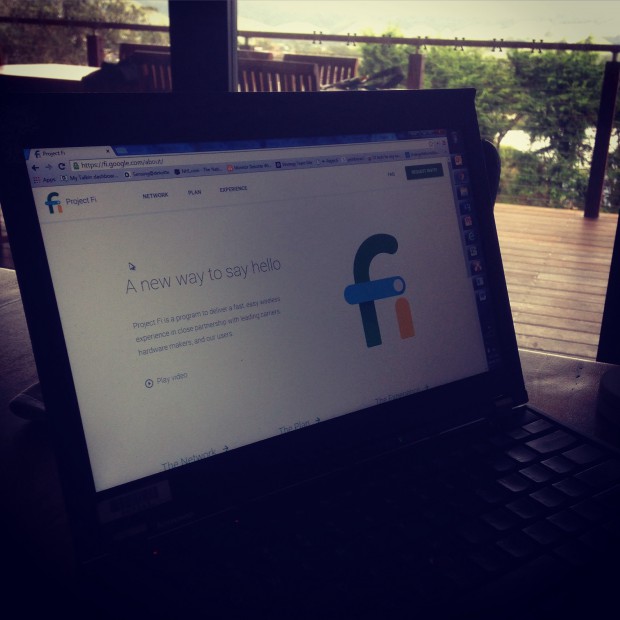
    This week Google announced the launch of Project Fi. I have written about Google’s plans to launch as a mobile virtual network operator (MVNO) and the implications for Australia – this is the realisation (v.1) of that concept. Google’s description gives some clues into their strategy centred around their nexus hardware offering, android software and partnerships with MNOs to change the connectivity experience:

    ‘That’s why today we’re introducing Project Fi, a program to explore this opportunity by introducing new ideas through a fast and easy wireless experience. Similar to our Nexus hardware program, Project Fi enables us to work in close partnership with leading carriers, hardware makers, and all of you to push the boundaries of what’s possible. By designing across hardware, software and connectivity, we can more fully explore new ways for people to connect and communicate.’

    What is the offering?

    The Project Fi value proposition has some interesting features:

    • Automatic transfer between the T-mobile, Sprint networks and over a million hotspots
    • Simplified pricing: $20 for service, $10 for every GB of data – data is prepaid and unused data rolls over to the following month
    • A cloud-based phone number that enables talk and text from any laptop, tablet or phone

    This last feature is a reincarnation of ‘Google Voice’. Voice from the beginning has been a cloud-based phone number that works across devices. Paradoxically the worst part of Google Voice has been its poor integration with your actual mobile phone; the latter has always been developed with the assumption that a phone number and an actual phone are for all intents and purposes the same thing. Project Fi explicitly unbundles them.

    How is it different from other MVNOs?

    MVNOs exist because the mobile network operators (MNOs), whose networks MVNOs sit over are unable to reach profitable market segments the MNO cannot. While it is the same as other MVNOs in this respect, in other ways it is very different.

    1. Unbundling device from carrier: As with Google Voice which is unbundling the phone from the phone number, Project Fi is unbundling the device from the carrier. The ‘automatic transfer’ makes T-Mobile, Sprint and Wi-Fi mere implementation details which are hidden from the user. In addition, Project Fi users (at the moment) can only connect through a Nexus phone seemingly allowing Google to control the connectivity experience and the preference between WiFi/Network. This, of course, makes connectivity a commodity – literally a ‘dumb pipe’.
    2. Google is a media company: Extending Project Fi further there are other differentiating features. Google clearly wants to incentivise usage of Google’s services and thereby capture more information about its users, improving its algorithm. One could see Google offering free data for streaming on ‘Google Play’ or bundling other Google services like Google cloud or Nest. The more people it connects to the internet (take note, voice is less important here), the better. Simply… other MVNOs are not as interested user’s data as they don’t sell advertising.

    How is it similar?

    Despite these differences there are at least two main similarities which are also limitations of MVNOs:

    1. Pricing: Project Fi is not that much cheaper than other plans. A comparison of similar plans shows that if you use a lot of data you typically pay significantly more than the major carriers and with a number of conditions. The reason is that MNVOs are dependent on the MNOs they operate on and the MNO has little interest in allowing an MVNO to undercut it on price.
    2. Network Coverage: MVNOs are only as good as the networks they are on. Project Fi runs on T-mobile and Sprint which are the smallest of the US carriers and despite the alternating technology coverage is still likely to be limited.

    Will it succeed?

    I’m sceptical about Project Fi having a meaningful impact on the US or global market in the near term – I don’t think Australia is a priority market (high iPhone penetration a major barrier). MNOs have big budgets for advertising and retail distribution which is not Google’s competency. This may be why the launch has received little fanfare from Google and is also called ‘Project’. I am more interested in their Fibre offering or if they were to buy T-mobile as these strategies indicate real ‘skin in the communications game’.

  • Twitter’s strategy: a ‘systems thinking’ analysis

    Twitter’s strategy: a ‘systems thinking’ analysis

    Twitter’s future has received a lot of press in recent times. From its convoluted ‘strategy statement’ released late last year to acquisition rumours ,with Google as an acquirer, this year. What is going on with this social media platform which currently has over 288M monthly active users, 500M tweets per day and a market cap of +$30bn? The answer may lie in an analysis of the system Twitter inhabits and the changing influence it has this system.

    The history of Twitter is similar to other social/search sites like Facebook and Google in that it was built for web but has matured into a mobile product making use of contextual and ‘real time’ functions like geo-location, messaging and ‘Live Events’. But it’s move into mobile wasn’t on its own. In fact, many 3rd-party developer apps (e.g. Twitteriffic, Tweetdeck, Tweetbot, Tweetie) set up as mobile Twitter clients shortly after the iPhone launch bringing the web experience to mobile and pioneering functionality that Twitter would later use on its own mobile platform. It is worth analysing this point – the interplay between 3rd party apps, mobile and Twitter – using a ‘systems thinking’ approach to shed light on what could be the future strategic direction of Twitter and potentially other social media properties.

    What is ‘systems thinking’?

    Simply put – it is the understanding of how things (objects, animals, businesses etc.), as parts of a system, influence one another within a whole. A good example is understanding an eco-system like a rainforest by analysing the plants, birds, bugs, weather etc. in the forest and how they influence each other. In business, it is akin to understanding the value chain, the actors in it and the influence they have on one another as they aspire to create value. For Twitter, the core ‘parts of the system’ (social media advertising) are businesses and consumers, social media platforms, 3rd party developers, advertisers and content 

    The Twitter system: Once open – now closed

    As outlined above, Twitter’s move to mobile was on the back of creations by 3rd-party developers. Since then however, the pressure to monetise and create shareholder value (post IPO) from its platform has led to a strategy of closing out parts of the system. There are 4 events that show this:

    1. In 2010 Twitter launched promoted tweets on its platform as a way to monetise. This is not dissimilar to other social media profit models that use advertising in the main social feed to attract users to products.
    2. To succeed in advertising it restricted 3rd- party apps (the same ones that had led it to mobile) to 100k user tokens which limited their ability grow and to control Twitter content in their apps, thus growing the propriety properties.
    3. Acquisition of MoPub in 2013 which is a hosted ad-serving business for mobile publishes. Its functionality allows app developers to serve up targeted advertising across mobile applications.
    4. Cutting off Meerkat: During SXSW last month, Meerkat a ‘one to many’ streaming video application launched which used Twitter APIs to promote live streams to your Twitter followers. Twitter had recently acquire Periscope (a similar offering to Meerkat) – justifiable in that sense but another sign to 3rd-party apps that Twitter wants to protect its 3rd-party platform – keeping engagement (and revenue) local.

    These events are logical given the pressure to monetise but it is possible to think of an alternate outcome for this system – one that is more open to other parts and for which Twitter could potentially generate significant longer term value.

    An alternate Twitter system: Once closed – now open

    Twitter like other social media platforms has a privileged asset – a unique understanding about its users’ identity (e.g. @petecorbett). It knows what users like and what their interests are by analysing who they follow and what they tweet about and this is powerful (Facebook only knows ‘who you are and who you know’ and Google knows ‘what you are searching for and when’). 

    Therefore, the thing that makes Twitter the company valuable in its system is not the features on the Twitter platform, the app or anything to do with the digital product (e.g. the 140 characters, #, @usernames) – rather, it is the knowledge of its user base. More specifically, it is the Twitter identities and the understanding that can be gleaned from how those identities are used and how they interact that matters.

    With this understanding (Twitter’s value is its users’ ‘interest graph’ and not the functionality and ability to monetise on its platform) it could play to win with a much more open approach to its system:

    1. Make the Twitter Identity central: The choice to increase advertising on the Twitter timeline should be replaced by ensuring as many people as possible have and use a Twitter identity (on the Twitter app or on 3rd party-apps).
    2. Open the identities up to 3rd parties to get people to build out their Twitter identity: 3rd-parties should build all kinds of apps that have a need to connect people with common interests, publishers would be an obvious candidate and maybe even an app that streams live video or allows people to share podcasts, live music – just about anything to get more people using the Twitter identity and building their interests related to their profile.
    3. Serve up advertising on 3rd-party platforms: Utilising Twitter’s MoPub business, serve up advertising off the Twitter platform, thus making Twitter ‘cleaner’ and increasing scope and scale for new types of monetisation.

    An approach like this is analgous to other platforms like Uber and Airbnb. Twitter could, if it chooses a different strategy in its system, be the world’s largest social media advertiser…with no advertising on its platform.

  • Mobile World Congress 2015: 5 trends you need to know about and their implications for Australia

    Mobile World Congress 2015: 5 trends you need to know about and their implications for Australia

    During the Mobile a World Congress in Barcelona last month I highlighted in two linkedin posts the main themes from the events, exhibits and speakers I attended. A month on, I thought I would cover off the 5 major trends outlined at the event and their implications for Australia.

    1. 5G is still just a concept

    Possibly the most talked about topic of the conference was 5G, what can be expected and when. The reason for the excitement is that many players in the mobile ecosystem are looking to better network coverage, bandwidth, spectrum utilization, lower latency and power use to support increasingly larger numbers of devices and connected objects. Whatever 5G becomes the hope is it will address these challenges and create new business opportunities for traditional TMT companies and emerging players developing internet of things/M2M offerings.

    In Australia, 4G was rolled out in 2011 and the trend has been that a G is added every year. Given that Australia is 4 years in to 4G it could be sometime before 5G is deployed. That said, at MWC Telstra announced plans to partner with Ericsson to develop 5G which could be commercial by 2020.

    2. The concept of a ‘connected life’ is very (very) real…and coming to your life soon

    Companies manufacturing devices are now going well beyond smartphones and mobile connectivity. Many of the seminars at the MWC highlighted products of different form factors, particularly wearables, with mobile lifestyle at their core. On display were Ford’s smart bike, Will I Am’s connected fashion bracelets, smart furniture and smart toothbrushes which were just some examples of non-technology type brands moving into mobile technology. At the Innovation City pavilion connectivity of all types were on display including connected cars, connected infrastructure and devices that connect in and out of home.


    In Australia, many of these technologies will begin to appear in households, businesses and public spaces in the next few years – connected homes and cars in particular. And they will be connected by intelligent connectivity like Thread or other software defined network solutions. As a result there will be significant opportunities in the Australian market for data analytics, analysis and artificial intelligence to create meaningful linkages.


    3. Smart cities are of major interest to vendors but will require joint action from both public and private sectors


    Sustainable citywide connectivity was the topic of discussion at a number of MWC booths – connected roads, transport, water supply, sewerage, energy, waste management, lighting and public safety solutions were all on display. For many exhibitors, the smart city conversation focuses on scalability and the interoperability of IoT solutions across metropolitan systems. The question is, can cities afford these solutions? There was quite a bit of discussion about requirements for connected cities’ core infrastructure with new technology offerings and the associated cost/benefit.


    As has been pointed out in the Australian media – Australian cities are in no hurry to become smart and the smart waste/water solutions exhibited at MWC and other IOT conferences are at sot probably at the bottom of the list. Adelaide (Australia’s 5th largest city) intends to establish an innovation hub with support from CISCO focusing on smart transport, education and utility solutions. One of the key success factors in this deal is that there is no added financial outlay for the government. Like many things related to the IOT things including solutions across the value chain, partnerships are core to their success.


    4. Security and privacy are gaining prominence quickly…and there is no turning back


    With IoT a major trend, there was a noticeable uptick in security and privacy vendors at MWC. The key message being that as more items are connected and more of our information is in a virtual worl there is a greater need for security and privacy measures. Despite this very real risk and the pain it could cause there is too much value in the virtual world to turn back.

    One example on show was the Silent Circle Blackphone 2 smartphone and Blackphone+ tablet. Both run PrivatOS 1.1, an Android O/S that allows IT administrators to manage, lock and wipe devices. The Blackphone 2 also comes with the “Silent Suite,” which encrypts VoIP video and voice calls, along with encrypted messaging and an encrypted address book. These products are examples of the world we are moving toward where security and privacy are an added feature, a necessity and to some extent a luxury good.


    Data retention laws passed in Australia last week which will force telecommunications providers to keep phone and internet records for two years effectively standardising data retention across the industry. In parallel Telstra is offering customers new access to their metadata for a fee. These are changes to privacy laws which aim to make data retention consistent. What these companies and government do with the data is still not discussed but at the very least a level of transparency surfaced. Australia will need to further beef up security and privacy laws when things like driverless cars become commonplace.


    5. Social media companies are bringing internet to the rest of the world which may disrupt industries in new ways


    Mark Zuckerberg’s keynote at MWC focused specifically on Internet.org and the partnerships Facebook, Google and other the social media behemoths are entering in with telecom carriers – or potentially become carriers themselves. The full market impact is still to be realized, but if these deals begin to gel, there could potentially be a huge, disruptive transition in the way telecommunications services are managed and offered.


    Living in Sydney or Melbourne it would be hard not to have noticed a bus shelter or TV advertisement for Facebook’s Internet.org. Why advertise Internet.org in a country that has a reported internet penetration rate of 94%? I believe the other 6% need access to the internet but this is limited to the most remote areas of Australia. The other view of this is that Facebook is garnering support for its plans to be the internet provider for the ‘rest of the world’, the 68% that have no internet. They will need support not just because of this massive undertaking but because the opposition they may face as an advertising company providing internet access.


  • Mobile vs traditional strategy signals in earnings updates – Facebook, Google and Microsoft

    Mobile vs traditional strategy signals in earnings updates – Facebook, Google and Microsoft

    The past two weeks have been full of earnings announcements from the world’s largest publicly listed media and tech companies. In this post i explore the key strategy elements that came out of Facebook, Google and Microsoft’s earnings calls. The two key themes that arose in each of the earnings calls have been – mobile vs desktop advertising and positioning core business models in growing a portfolio of new products.

    Facebook – Reveals just how deep its mobile strategy runs

    Facebook, like Twitter and other social media stalwarts aren’t signing up new users at the rate they once did. They are however, generating more revenue per user which is credit to the revenue/monetization side of both businesses. Facebook’s fourth-quarter earnings grew 34%, to $701 million, propelled by a 49% increase in revenue, to $3.58 billion. Its focus on mobile advertising revenue was a major driver and has led closing the gap between FB and Google in this revenue stream.

    What was most interesting about the earnings call was CEO Mark Zuckerberg’s articulation of FB’s strategy as well as the operating structure of the company:

    “In terms of the product developments that we do here, we have four major groups inside of the company. This is kind of how our company is organized. We have one which is focused on growing the community, one which is focused on kind of increasing content consumption and people’s engagement, another which is focused on kind of efficiency and helping people to get the most value out of each moment that they’re spending in Facebook. And then the fourth group is our core business, which is focused on helping people to see the best ads and basically make the most money per moment that people are spending at the lowest cost in most efficiency in terms of serving people.”

    Strategically this articulation is very sound. Firstly there is a clear cycle their products run through – 1. Acquire users, 2. Increase Engagement 3. Increase user value (stickiness) 4. Monetise. This cycle is then reflected in the structure of the organization as articulated in Zuckerberg’s statement above. Finally, FB has the discipline and the funding (thanks to their great results) to ensure their products go through each of these phases. This will be the approach they follow for FB’s other major non-monetized products like Instagram, WhatsApp and Messenger. Investors may be impatient now, but Zuckerberg i feel has the company focused on the longevity of its offerings and revenue streams.

    Google – A mobile giant with a transactional desktop product

    The most interesting strategic discussion on Google’s report was slowing search queries on personal computers versus growth in mobile advertising. WSJ summary after call was quick to point out that Google doesn’t break out the revenue from mobile devices in the same way that Facebook does. Google’s lack of transparency here could suggest that it is still predominantly a desktop company where Facebook which started out on desktop approached mobile with a no-holes barred attitude and their earnings call shows this.

    Google is no doubt a very importantly player in mobile particularly for Android enabled devices. Omid Kordestani, interim Chief Business Officer, sought to redefine mobile on the call:

    “We continue to evolve the foundation of Google’s advertising business to reflect a multi-screen constantly connected world. Mobile is now a behavior, not a device, and it has a variety of unique characteristics.”

    And this is where Facebook is so strong. Facebook has a portfolio of products that capture attention and drive mobile behaviour. The mobile platform is intended for advertising and not just to drive an immediate transaction, but instead to change your preferences (based on friends suggestions). Google is is a desktop product which is transaction focused. As offerings like Google Now strengthen in user value we are likely to see a greater shift of focus to mobile advertising in these earnings calls.

    Microsoft – Windows to take a back seat in a new services model

    Microsoft’s earnings announcement was jam packed with interesting insights into their strategy. Their age old aspiration of ‘Windows on every computer’ has copped quite some criticism in recent times and has been seen as the thing holding back their innovation and to some extent their revenue. Satya Nadella, a year into his new role, is being tripped up in overseas markets as a slump in China and Japan and a stronger U.S. dollar curbed sales of business-software licenses. There was talk about the XP upgrade cycle, Problems in Japan and China, Improving cloud margins and probably most interesting the balance of Microsoft’s all-device strategy with its core Windows offering. Nadella noted:

    “At the highest level, our strategy here is to make sure that the Microsoft Services i.e. cloud services be it Azure, Office 365, CRM Online or Enterprise Mobility suite are covering all the devices out there in the marketplace. So that way we maximize the opportunity we have for each of these subscription and capacity based services. So that’s the core rational for why we are doing cross platform…the uniqueness of Windows comes because we don’t think of these services and their application end points as apps, but fundamentally core to the Windows experience. So we are building them natively into windows.”

    Here Nadella is saying that Microsoft will make money on services (e.g. Cloud, Office 365) and offer Windows as a way to differentiate those services leaving you free to use other operating systems like IOS to access those services. This is different from the old Microsoft and relegates Windows to the a background role in its strategy. This will be tough culturally for Microsoft.

    The shift to mobile and building an ecosystem around it is on for Facebook, Google and Microsoft. The choices they are having to make about their core desktop based products will be interesting to watch as culturally, particularly for Microsoft, this may mean the decrease in importance of its most popular product ‘Windows’ in its suite of services.