
Blog

  • What next for Spotify?

    What next for Spotify?

    We are now one month on from Spotify’s IPO. The IPO was unique – a direct listing whereby the company sold its shares to the public without an intermediary. This is usually an approach taken by smaller, ‘lower profile’ organisations looking to trade publicly. Notably, Spotify was not looking to raise capital as part of the IPO with its co-founder Daniel Ek pointing to business as usual despite the IPO: “Spotify is not raising capital, and our shareholders and employees have been free to buy and sell our stock for years“. The opening market capitalisation of ~$30Bn has since cooled to ~$28Bn as I write this after going as low as $26Bn in the first week after IPO. Analysts believe it is trading lower because of concerns about its business model and the longer term economics of the music industry.

    Certainly, Spotify’s IPO now generates greater scrutiny for Spotify’s ‘freemium’ business model – listeners can access a version of the service for free with advertising or a premium service at with a monthly subscription for ~$10/month. This is the same model employed by other music streaming services like Pandora or RDIO (RIP) which have had limited success. As yet, Spotify has not turned a profit despite earning ~$5Bn a year in revenue. It pays out over 75% of this in royalties to labels, producers, songwriters and artists all of which are controlled influenced or controlled by the 3 big labels Universal, Sony and Warner. Also, these payments are linked to its growth – the more listens, the more its pays out.

    The other major concern for Spotify is competition for its ~70M paid subscribers and ~159M total listeners . The likes of Apple Music (~30M subscribers), Amazon Prime Music (~16M subscribers) and YouTube Red/Google Play (~7M subscribers) are all reporting growing numbers of subscribers. The problem for Spotify is that these services do not rely on the business of music to make money. Instead music streaming in these businesses is used to generate user ‘stickiness’ or in the case of Google’s service to supplement its advertising and AI businesses.

    So what then for Spotify as it stares down uncertainty in its business model and some aggressive competition from rivals who can make money in other ways? This post explores a few options for its core business and considers what the future of music streaming and subscriptions may hold.

    Convert ‘free users’ to paying subscribers

    The most obvious move Spotify can make. Under its current business model, only 10% of its $5Bn annual revenue is generated by advertising with the rest being generated from its premium subscription service. However, less than 50% of Spotify users are paying for the premium service. On one hand, it is a good sign as there is a large pipeline of potential premium subscribers to be converted, on the other there are barriers to conversion which are not easily overcome. One barrier is price – at ~$120/year a music subscription is still a luxury for many households which in conjunction with the other popular subscriptions like Netflix, cable TV or sports would mean a total of >$300/year on media subscriptions. However, Deloitte’s TMT Predictions 2018 highlights that subscription numbers are growing. It is expected that media subscription numbers will double between now and 2020 in developed countries as people value the quality of the service and subscriptions become a norm. We have not hit ‘peak subscription’ yet.

    To remove the barrier for subscribing to Spotify’s streaming service, Spotify could lower its subscription, introduce an intermediate subscription tier or reduce the quality of its ad-funded service. As subscriber growth begins to slow we might expect to see one or two of these tactics or others employed.

    Improve advertising revenues for its ‘free service’

    There is still ‘money on the table’ in the growing segment of digital audio related advertising. According to IAB, digital audio advertising revenue reached $603 million in the first half of 2017 which was compared to 2016’s total of $1.1 billion. Add to this the growing number of hours that listeners (in the US) are spending on digital audio (32 hours in 2017 compared to 26 hours in 2016 and 24 hours in 2015) according to Nielsen. The opportunity for Spotify is to increase the impact of advertising on its platform without ruining the experience for users. A challenge that YouTube has faced with the introduction of YouTube Red. This may mean, creating search advertising as listeners look for music, adding video content in the stream feed or increasing the pass through rates through new interfaces like voice. For those without the premium service, expect to see Spotify ramp up advertising tactics to take advantage of the growth in digital audio spend.

    Introduce a premium-premium offer

    What would the iPhone X of Spotify look like? Of the 70M paying subscribers on Spotify’s platform a high portion of these are likely to be ‘music enthusiasts’ who can afford to pay a little more for a differentiated experience. What might this look like? Firstly, Spotify could target this user group based on their listening habits (e.g. more back catalogue vs today’s pop) and offer increased music quality, data/insights into music or new music experiences (e.g. live streaming concerts, ‘first listens’, behind the scenes look at music development process). This is a strategic imperative for Spotify as it considers its ‘how to win’ strategy for the future. It should expect competition from the likes of Apple and Amazon who will be able to offer hardware or cross-product/service experiences in a way Spotify cannot. For example, it is rumoured Apple’s Airpod 2 due for launch this year may offer more ‘integrated experiences’ into Apple Music – stay tuned.

    Decouple its revenue model from rights and music labels

    The business of legally streaming music requires Spotify to cut deals with record labels to ensure their artists’ music is on their platforms. The interesting thing about music is that back-catalogue (which is owned by the big labels) is as valuable as anything newly produced. Also, music rights are expensive. Since there are only a few major record labels, and a number of competing streaming services Spotify has limited negotiating power. It has been estimated that if it doesn’t cut a deal with the 3 big labels it would lose a third of its library or ~87% of its streams.

    Spotify has publicly stated it would like to get to 35% margin for its services but this would mean renegotiating the contracts with major labels. Longer term it has stated its intentions to directly sign artists to its platforms thus cutting out the labels – this would be one form of decoupling the other would be generating revenue from different means outside of streaming music be that concert tickets, live events, merchandise, data services, curation/collaboration or music related products and services. This second form of decoupling would require a move to an aspiration of being a ‘one stop shop’ for all things music – online and offline, a leap it is perhaps not yet ready for.

    The future of streaming music – Spotify is the bellwether

    The future of streaming music is really exciting (think more explosive heavy metal vs drone of bagpipes :)). The music industry is a poignant example of the change from traditional ‘value chain’ or linear industry thinking to a more ecosystem or value-web approach. Spotify’s rise has been prolific, it has in some ways saved the music labels and given insights into the listeners that were previously not available under physical distribution or iTunes. The big labels have also invested in the streaming service (~15% in total) and cut deals with its competitors as they look to hedge their position in the possible futures that play out. Spotify’s success post IPO will act as a bellwether for the health of the music ‘ecosystem’. If Spotify fails, expect a new era of music dominated by the large aggregators (Amazon and Google) to replace the vacuum it leaves behind.

  • The future of subscriptions

    The future of subscriptions

    Last week Spotify filed for listing. The world’s largest music streaming business is looking to IPO which is likely not only to increase the profile of the business but also heighten scrutiny of its business model. Much has been written about the sustainability of Spotify and SVOD services in general. Spotify has both an ad-supported business model and a premium subscription service which makes it more akin to YouTube than Netflix, which it often gets compared to. With the increased scrutiny of streaming business models its worth considering what the future of media subscriptions might be – what’s currently happening and where it may end up.

    Subscriptions now

    Deloitte’s Telecommunication, Media and Technology Predictions for 2018 predicts that by end of 2018, 50% of adults in developed countries will have at least two online-only media subscriptions, and by the end of 2020 that average will have doubled to four. The heaviest users (1 in 5 adults in developed countries) will spend over $1200 annually on subscriptions for content including TV, movies, music, news and magazines. This is not new behavior – subscriptions in a more analogue world (newspapers, magazines, etc.) declined in the online revolution of the 1990s as people accessed more content for free. However, digital has seen a renewed rise in subscriptions due to a few key drivers:

    • Consumers have realised that not all content is equal and premium content comes at a price. This is particularly true in the age of fake news
    • Technology has advanced access to digital services, making it easier through speed, quality of experience and depth of libraries/back-cataloagues
    • Increased penetration of power mobile technology and better networks has made on-the-go consumption possible
    • Subscriptions often enable the avoidance of advertising (to various degrees)
    • In a world where digital advertising revenues have been declining for some content, subscriptions models have been adopted to complement advertising

    Subscription revenue is good news for media, but still very modest – low 10s of billions globally, compared with TV ad revenue which is $70b in US alone. The media industry cannot rely on online subscriptions alone, even if for some media companies this option does bring in the majority of their digital revenue. Media must also remain focused on advertising – but with ad formats and an ad load appropriate to its customer base.

    As the prediction above foresees, we are likely to see a proliferation of new subscription models in the near future. This brings the question of what this may look like for consumers and providers of content/services.

    Subscription of the future – the ‘micro-subscription’

    When thinking of the future of subscriptions it is important to acknowledge that at the heart of the evolution of the model is the customer experience. A focus on the customer, rather than the transaction, product or the enabling technology, is the driving force of subscription models and their application.

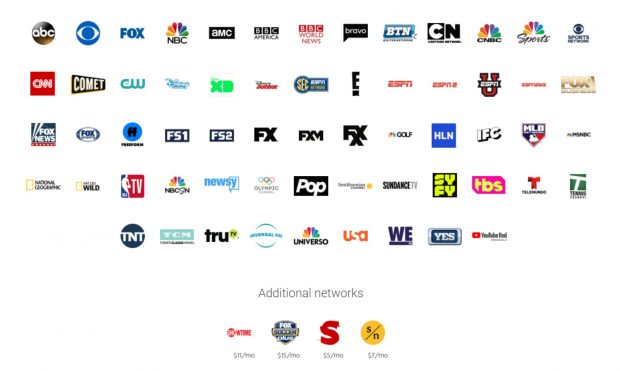
    How will people consume media in the future? What will their viewing/listening experience be like? A scan of services in the market gives us some clues. We are starting to see the growth of OTT content aggregator services which set out to give the customer the most content possible, when they want it. For example, YouTube TV (not yet available in Australia) is an example of possible viewing experience of the future. The service (currently $35/month) aggregates channels (and therefore content), much the same as a cable provider, offering additional subscriptions for niches (e.g. soccer fans). FetchTV in Australia also has a similar aggregation offer allowing it to remain content agnostic.

    Outside of the content offering, the interface for the consumer will also play a role for these services. An aggregator like YouTube TV could neatly tie into the Google Home interface where a user could simply ask ‘Hey Google, show me last night’s NBA game’ and the content would then be beamed to the TV or device. It is unlikely that one service will have all the content available for its basic subscription package, however you can imagine a world where a ‘micro subscription’ would be available for a user to gain access to content not on the platform: ‘I’m sorry, last night’s game is not available, would you like to purchase a subscription for the game and the rest of the game for the month?’. It is possible that we will see these aggregator services cut more deals with content providers or rights holders to enable content to be shown on their platform (for a price). This would lead to a situation when Amazon Prime shows all NFL games on its platform but on YouTube TV you cannot get all games for the basic subscription meaning micro-subscriptions are available for certain games/teams.

    Deloitte’s prediction is highlighting the growth in the number of subscriptions media consumers will have in the future. This aligns to the idea of a proliferation of micro-subscriptions to compliment basic OTT service subscriptions. For this to be true there will also need to be a growth in the ‘share of wallet’ subscription services command – how much a consumer is willing to pay for the content they wish to watch… watch this space!

  • Smartphone innovation: the invisible superpower

    Smartphone innovation: the invisible superpower

    This blog post is featured on Deloitte Australia’s blog in conjunction with the launch of Deloitte’s Global TMT Predictions 2018.

    As covered in our Global TMT Predictions 2018 report, the smartphone’s global success over the next five years will be underpinned by an array of innovations that are largely invisible to its users, but whose combined impact should feel tangible, in the form of greater ease of use, or improved functionality, for example for maps and photos.

    These invisible innovations should enable the smartphone to continue ‘absorbing’ the functionality of an ever-broader array of physical objects and to further displace the PC as the preferred device for a growing range of digital applications.

    There are three local trends that perhaps heighten the effect of invisible innovation on the smartphone in Australia. These include the strong penetration of high end smartphone devices in our market, the quality of mobile networks in Australia, and the already high adoption of smartphones for use in enterprise settings.

    Overall, expect to see alternate uses for the smartphone increasing in Australia.

    More and more gadgets are being integrated into smartphones, from apps that help us with day to day life-flow, or those that allow us to spend more time playing games or reading. Much as we’ve seen with the impact of Spotify and Apple Music on how we listen to music – reading and watching media are moving in the same direction. This is fostered by increases in screen size and improvement in network quality, especially as we move toward having more and potentially unlimited data, possibly making room for an increase in activities like watching long form video on our phones, where traditionally people would purchase another device.

    We’ll also see more smartphone activated Internet of Things (IoT) functions and work-flow based business applications. The enterprise will be well placed to see smartphone technology as a tool to support work agility and flexibility, giving people the confidence and ability to be mobile and do their work or training from anywhere. Small business can use the smartphone to do almost everything these days from placing orders to raising invoices or other random tasks. While sectors such as personal banking, home security and insurance will further capitalise on the smartphone to improve customer experiences.

    Strength in numbers

    Taken from our Mobile Consumer Survey 2017, here’s a numbers view of why the prevalence of premium phones with latest innovative technology will continue to be high here:

    • 88 percent of Australians now own a smartphone, up from 84 percent last year. Australia is likely to surpass the 90 percent penetration rate by end-2018, ahead of the global prediction of 2023.
    • Penetration rates for Australian under 55 years-old are already above the 90 percent mark and therefore the growth in penetration is likely to come from >55 age group. In 2017, there was a five-point increase for 55-64 year olds (77 percent to 82 percent) and a nine-point increase for 65-75 year olds (69 percent to 78 percent). This can be largely attributed to the decommissioning of the 2G network.
    • We’re starting to see growth (~50 percent increase 2017-2016) in the purchase of Internet of Things (IoT) that is cheap to install and smartphone activated – all enabled by smartphone apps.
    • 67 percent of Australians are using their smartphones for work. There’s only low use for submitting timesheets, expenses and accessing intranet sites, but expect this to increase as functionality becomes more useable.

    With these numbers in mind, telcos must look to maintain market share by providing Australians with the best phones on the best networks – they still need to be a focus on network quality. Other industries will look to further capitalise on the smartphone to improve customer experience, e.g. personal banking, home security, health insurance. And companies who target business applications (both small business and enterprise) should look to develop software that allows them and their employees to use simple mobile centric applications to run their business.

    Can smartwatch outsmart smartphone?

    With Australia reaching almost peak smartphone penetration, with one of the highest smartphone penetrations worldwide, we are big smartphone users.

    However, 41 percent of Australians adults think they use their mobile phones too much and 70 percent of Australian 18-24 year olds feel they use their phones excessively, with 50 percent trying to limit and half of them doing so successfully.

    Can the smartwatch assist here? We are seeing notable growth in the smartwatch (ownership almost doubled from five percent in 2016 to nine percent in 2017, according to our Mobile Consumer Survey 2017), and it’s likely to overtake the traditional fit bands as the price point comes down or as customers see more value in the functionality they receive for the price they pay. An increase in functionality is been driven by more powerful chips in wearable devices as well as the cellular connectivity.

    The beauty of the ‘smarter’ smartwatch means users can disconnect from their phone for many of the tasks they were previously relying on the smartphone for. People can use smartwatches to pay for things, contact people, and listen to music, while still being connected to the things that are critical such as call and text – but the phone stays at home.

    Organisations should keep this in mind when looking to create connected experiences for their users and how it may be transferred to a wearable format. There may be an increased opportunity to create new experiences whilst also supporting people’s smartphone usage.

    To find out more about TMT Predictions 2018 and view the other predictions, click here.

  • The 3 most influential TMT ideas in 2017

    The 3 most influential TMT ideas in 2017

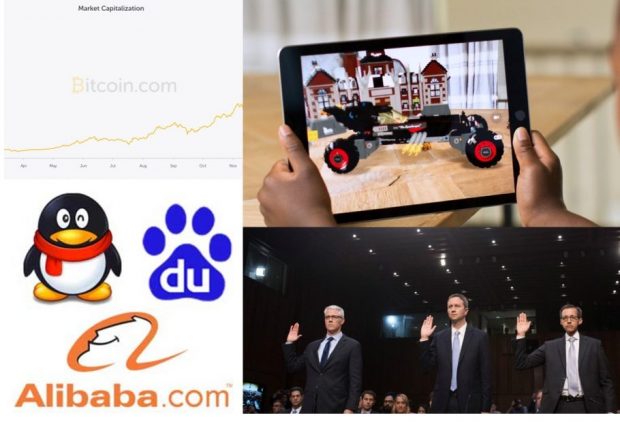
    2017 has been a big year for the Telecommunications, Media and Technology (TMT) industries – the iPhone’s 10th Anniversary, 5G standard approvals, the Disney and Fox deal, crisis at Uber, growth at Amazon, Snap’s IPO, Google in home and on the go (v.2), iPhone X/Watch 3 and the growth of Chinese Tech – Huawei, Baidu, Alibaba, Tencent. Last year I looked at the 3 most influential ideas of 2016 which were ‘Fake News‘, ‘Everything As A Service‘ and ‘Blockchain‘ (v.2 of the internet). The influence of these ideas continued to make an impact on the the TMT industry, politics and culture in 2017.

    ‘Fake News‘ became the frequent catch cry of the US president in an ongoing public battle (on Twitter and in public addresses) against mainstream media. It also led to Facebook, Twitter and Google being brought in front of a US Senate hearing on ‘Fake News’ connected to Russian meddling in the 2016 presidential election and contributed to the growth of news services like ‘All Sides‘ which allow readers to engage in different political angles for the same news stories. ‘Everything As A Service‘ as an idea continues to be extremely influential with TMT organisations looking for new services to provide to their customers. The concept of Artificial Intelligence-As-A-Service in particular has become mainstream in the last 12 months with the larger technology players like Google, IBM, Amazon and Facebook providing algorithms and databases as a service and niche players like Clarifai offering AI-As-A-Service to specific industry verticals. Equally, Blockchain has continued to increase in awareness in 2017. As far as cryptocurrencies go, Bitcoin, Ethereum and Litecoin have increased in market cap (Bitcoin up from $15Bn to $250Bn in 12 months) making people who missed the Mt Gox crash ~2013 who continued to own bitcoin very wealthy (almost overnight). Outside of the Bitcoin buzz, initial coin offerings (ICOs) raised over a billion dollars in funding in 2017 with mixed results – for example, the seemingly fraudulent like Plexcoin or the seemingly legit like EOS. Speculation aside, there are more and more use cases for blockchain being identified now than a year ago and 2018 may see some excellent examples of blockchain implementations.

    On to 2017…what were the most influential ideas in TMT in 2017 and why will they continue to shape the industry in 2018 and beyond?

    1. Augmented reality

    I know what you are thinking… ‘Augmented reality’ (AR) was so 2016, remember Pokemon Go? This is fair, but I believe that AR was a more influential idea in 2017 than 2016 for a few reasons. Firstly, investment in AR this year (leaving aside investments in Magic Leap in 2016) hit an all time high with US$1Bn invested in AR in Q4 2017 alone and over $2.5Bn over the year according to a Digi-capital report. Secondly, Apple, Google and Facebook each released their own AR developer tools (ARKit, ARCore and Camera Effects). The launch of these tools signals the start of opensource AR on the world’s largest operating systems which when paired with advancements in the world’s most powerful mobile hardware (e.g. iPhone X, Pixel 2, Huawei P10, Samsung S8) particularly the camera technology, there is tipped to be an explosion of new AR apps and games. Finally, AR made tangible steps into the workplace in 2017 particularly in the fields of maintenance, engineering and manufacturing. Productivity related AR applications received a large portion of VC investment and the world’s largest engineers like GE and Siemens demonstrated examples of work AR related productivity (e.g. GE technician wiring a wind turbine’s control box using the company’s current process, and then doing the same task while guided by line-of-sight instructions overlaid on the job by an AR headset. The device improved the worker’s performance by 34% on first use).

    Why is this influential?

    Deloitte TMT predicts that in 2018 1 billion smartphone users will created at least one piece of AR content (e.g. a video, photo or game) and the industry will generate US$100M revenue. Looking a bit further out to 2020, AR is predicted to be a $1Bn industry 10x that of 2018. These figures are not yet counting for the productivity gains more and more businesses (outside of engineering and manufacturing) will experience with AR or the new applications particularly in retail. Get ready for mainstream AR.

    2. Asia’s increasing influence on Telecommunications, Media and Tech

    As a region, Asia was often in the headlines 2017, mostly due to geopolitical reasons as North Korea and the US traded rhetorical blows, China held its first public test of the Belt and Road Initiative in May and the US signaled a move away from the Trans-Pacific Partnership agreement (a multi-lateral trade deal between Pacific-Rim nations). The TPP is likely to forge ahead (without the US) and Asia’s influence on TMT industries will continue. 2017 was a watershed year for Asia’s influence on TMT globally for a few reasons. Firstly, 2017 was the first year that the top two smartphone manufacturers were from the region. Huawei has now overtaken Apple to join Samsung as the world’s two most popular smartphone brands. To continue growth (and rival Samsung) Huawei will need to break into the US, South Asian and Indian markets. Secondly, VC investment in Asian startups maintained its high from 2016 with >US$12bn invested in both Q2 and Q3 of 2017. Behind the dollars were significant investments in AI particularly Facial Recognition ($410M raised by Chinese company SenseTime) and >US$4Bn invested by SoftBank Vison Fund in Indian Technology companies (e.g. Paytm, FlipKart and Oyo). Finally, in 2017 Asia is now the home to some of the most interesting technology innovations. For example, Japan became the world’s largest Bitcoin market in 2017 and has started to embrace the crypto-currency in regular ecommerce. Chinese Fintech companies like Ant Financial, 2Boss, Qdian and InsuranceBox are all geared at changing banking, insurance and finance with plans to move into overseas markets and smart cities like BSD City Jakarta or Cyberjaya in Malaysia are a first of their kind in supporting ‘digitally enhanced’ lifestyles.

    Why is this influential?

    The balance of global investment, innovation and new businesses growth is swinging towards the Asian region and this is forecast to continue. As part of this, Asian governments and private investors will continue invest heavily in TMT infrastructure, Asian tech companies will also play an increasing influence and the next global tech hubs will be in the region (e.g. Beijing, Bangalore, Singapore). Get used to hearing about Asian Telco, Media and Tech innovations, business, VCs and policies influencing the rest of the world.

    3. Social and political backlash against TMT companies

    Social backlash against the TMT industry was an umbrella topic in 2017 and played out in a number of ways. The #metoo (hashtag), started in October 2017 to route out misogynistic behaviour and sexual harassment in the entertainment industry, has led to a number of high profile resignations of men in positions of power. It has also spread to media, tech, government, academia and sadly, it is likely to be wide reaching. There have been some high profile examples of social movements in the TMT industries. The most high profile was the resignation of the CEO of Uber after employee Susan Fowler’s accounts of sexual harassment and inappropriate beaviour at the company. This prompted a social movement #deleteuber calling for boycott of the ride hailing app. Another example was James Danmore’s ‘Google Manifesto’ which was valourised by those that see diversity as ‘bad for business’ and demonised by diversity advocates. Google’s response was to fire Danmore but not before the memo went viral. At the backdrop social backlash on the topics of sexual harassment and anti-diversity has been a leading indicator of a trend towards reducing time spent on smartphones consuming media – the digital detox. Deloitte has identified that in 2017 globally >45% of people worry that they use their smartphones too much and in the coming years will try to limit their usage.

    Political backlash against TMT organisations has come from the overarching trend of governments trying to regulate Big Tech (e.g. Apple, Google, Facebook, Amazon, Twitter, Tencent, Baidu, Alibaba). There is a need for government oversight of technology but there is also a risk that political overreach may stifle the industry – so the right regulatory structure will be difficult to settle on. In Europe this year, Google was hit with a US$2.7Bn fine for breaching its antitrust agreement and cloud providers (e.g. Amazon, Google, Apple, Alibaba) will all need to comply with Europe’s new data protection regulations. In the aftermath of the ‘fake news’ incidents related to the 2016 elections governments are looking at how to regulate news/information aggregators like Facebook/Twitter/Google given the control they have over society’s access to information. Ultimately government policy towards tech needs to evolve inline with tech advancements but equally, these powerful organisations may need to think differently about their role in society and their products/services or face further backlash politically and socially.

    Why is this influential?

    2017 saw TMT companies publicly challenged at a viral scale on the issues of diversity, inclusion and the culture the industry sets for women to succeed. Politically, the question of how best to regulate technology companies, particularly the major platforms was brought to a head in a number of high profile cases. The effects of these events will be long lasting. We should expect TMT organisations to continue to adapt their approach to address the issue of sexual harassment and at the very least promote healthy awareness and debate on issues of diversity and inclusion. Politically, there does not yet exist an adequate regulatory structure that allows TMT businesses (particularly FANG organisations) to benefit from technologies without aggregating power and with it wealth to a monopolistic end. At the same time, industries are unlikely to voluntarily regulate.

    2017 has been a challenging year for the TMT industry. The pace of change in the industry is driving the need for a balance of business objectives and social objectives now more than ever.

    Thank you for reading strategy4telcomediatech in 2017 and happy new year!

  • The new Aussie battlers: The context and rationale for “challenger” strategies in Australia

    The new Aussie battlers: The context and rationale for “challenger” strategies in Australia

    This post is featured on Deloitte Australia’s Strategy blog. The blog is co-authored by Kate Huggins, Michael Chen and Samantha Twibill.
    Today, it is possible to interact almost exclusively with ‘challenger businesses’ in our day-to-day lives – we can fly with Jetstar (Qantas’ challenger business), connect with friends and family using Belong mobile or Belong broadband(Telstra’s challenger business), manage our finances with UBank (NAB’s challenger business), access entertainment content on Foxtel Now (Foxtel’s challenger business) and lease/buy property on domain.com.au (Fairfax’s challenger business).

    These are just a few Australian examples of market leaders who have launched separate businesses that operate alongside their core businesses; new faces for a new age. So what is behind this trend?

    The term ‘challenger’ is in vogue and has been used to describe anything from a low-cost brand alternative to a disruptive tech-enabled new entrant. We have defined ‘challenger businesses’ as offshoots launched by a market leader to operate in its core business but compete on a different basis. It’s easy to associate ‘challenger’ with ‘low cost’ – broader trends related to digital disruption have undoubtedly given rise to a new class of organisation that are leaner and more agile than we have been used to.  However, the desertion of the low cost and value segments from an incumbent’s core business may also be the canary in the coalmine that suggests a more fundamental shift in the economics underlying an industry.

    We have looked at several examples of market leaders that have launched/purchased a ‘challenger’ business to identify a potential set of strategic rationales for the incumbent business which can be broadly flagged as ‘defensive’ or ‘offensive’ plays.

    The defensive challenger

    As discussed in the ‘Innovator’s Dilemma’, new entrants (particularly those enabled by new technologies) will start off at the low-end of the market with a product that is just good enough. A ‘defensive’ challenger strategy for the market leader seeks to limit the ability for that new entrant to move up the market and into the core customer base of the incumbent business. When Virgin Blue entered the Australian domestic airline market in the early 2000s, amidst the collapse of Ansett in 2001, Qantas was faced with a competitor that was quickly gaining market share by undercutting on price. Once Virgin listed on the ASX in 2003, Jetstar became Qantas’ response; a low-cost airline which helped drive a wedge between the low and high ends of the market and allowed Qantas to maintain its premium position.

    The strategy also accelerated a choice for Virgin: should it stay in the low-end and compete with Jetstar or try and leapfrog Jetstar and compete with Qantas? The latter would have significant capital investment to be much better than Jetstar but also good enough against Qantas. As such, to be successful while protecting their core, Jetstar needed to play in a separate market to Qantas, confining its routes to domestic and then Asia-Pacific, while Qantas continued to perform its full service across longer leg journeys to Europe and the US.

    Outside of the airline industry, we have seen the defensive challenger strategy play out in telecommunications with the launch of businesses such as Belong in Australia and Skinny Mobile in New Zealand and in financial services with digital pure-play banks such as UBank. Next in line could very well be the energy sector, with consumer demand for cheaper, cleaner resources driving market leaders to question how to better serve this need, while maintaining their traditional offering.

    On the front foot

    Not all markets can support both the incumbent and new entrants amidst disruption. While, foreseeably, there will always be budget travellers and premium travellers, the same cannot be said of streaming video services and cable television services. When a market leader faces a fundamental shift in the economics underpinning the industry, a more ‘offensive’ challenger strategy seeks to use the privileged assets of the incumbent business to take hold of the revolution and lead the cannibalisation of the core business in order to retain market leadership in the new world. As uptake of streaming video services are expected to exceed the 30 percent ceiling for cable television, Foxtel has doubled-down on its Foxtel Now challenger business with a rebrand, new pricing models and new devices. Foxtel’s initial strategy, Foxtel Play, was heavily geared to video game consoles as the access point (a customer base with low cannibalisation risk to their core business).

    This was partly successful, but when streaming began to take hold of the mainstream market (given a nice little shove by Netflix’s launch in Australia), Foxtel launched Presto as a joint venture with Seven. Presto fell short of rapidly rising customer expectations on content and user interface relative to Stan and Netflix, driving Foxtel to buy out Seven, shut down the service, and relaunch Foxtel Play as Foxtel Now, making it available as a streaming service on any connected device, and slightly unbundling its subscription tiers to be more price competitive. The risk of cannibalisation was higher, but the competitive threat was higher still. Foxtel Now has repositioned itself to win on the basis of exclusive, premium content – something that leverages the traditional assets of the incumbent business to carve out a defensible position in the streaming video market against agitators such as Netflix.

    Accordingly, Foxtel Now takes advantage of Foxtel’s exclusive licensing deal with HBO, its range of local original content and its live sports licensing deals to offer a compelling customer value proposition for a new world for on-demand content that is detached from cable television.

    In summary, not every decision by a market leader to launch a challenger business is the same, it is not just about creating a low-cost offshoot because the incumbent business cannot support a cost leadership position in the market.  The strategic choices behind the challenger business should be informed by the answers to three key questions:

    1. What is the customer need and market this business will serve?
    2. How is it similar / different from the core business?
    3. How will it compete?

    By understanding the nature of the threat to competition faced by the incumbent, market leaders can determine the value of a developing a challenger strategy, and whether that strategy will be an offensive or defensive play.

  • The state of mobile in Australia: Highlights and implications from Deloitte’s Mobile Consumer Survey

    The state of mobile in Australia: Highlights and implications from Deloitte’s Mobile Consumer Survey

    2017 marks the 10th anniversary of the iPhone. Reflecting on the decade past, it is clear that Australians have enthusiastically embraced the smartphone and its many uses with consumers and businesses being the beneficiary of this era-defining technology. As mobility continues to mature beyond today’s smartphones into new more powerful devices or the mass adoption of wearables and drones it is important for businesses to stay across the trends in mobility and their implications for product strategies, innovation, customer experience, content and operations.

    Deloitte’s Mobile Consumer Survey, now in its fourth year, is a multi-country study of mobility around the world. The 2017 study comprises more than 51,500 responses across 33 countries. The Australian edition is based on 2,000 national responses from consumers aged 18-75 polled during May and June 2017. Special mention to the team that prepares this report in Australia led by Jeremy Drumm, Nick White, Morne Swiegers and Maggie Davey.

    This post draws out a number of the key findings from the 2017 Australian edition of Deloitte’s Mobile Consumer Survey and the implications for Australian businesses. The full report is insightful for those in leadership and management roles in Australia’s carriers/operators, RSPs or businesses looking to further understand how to capture the value of mobility to their organisation.

    ‘Silver surfers power smartphone swell’ (p.7)

    It may come as no surprise that smartphone ownership is on the rise for older generations – 78% of 65-75 year olds now own a smartphone which is up almost 10% on last years’ figure. With the decommissioning of the 2G network a portion of the population have left behind their feature phones and in 2017 88% of Australian’s own a smartphone. It is expected that in the coming 18 months 90-95% of Australian’s will own a smartphone as older generations continue to adopt and embrace this technology.

    Implications

    We are reaching saturation in smartphone ownership which means device manufacturers will need to continue to innovate to profit from replacement/market share vs growth from new adoption. For businesses looking to reach older generations, now is the time to seriously consider the mobile experience (sales/service) for the elderly.

    ‘A slice of Apple’s pie’ (p.8)

    Australians are Apple and Samsung junkies. We have the second highest % penetration of Apple and Samsung smartphones in the countries surveyed at 75% – only Luxemburg at 83% is higher. Interestingly, Samsung’s share has increased slightly YoY and Apple’s share has decreased by 2% all in a period which included the Galaxy note safety recall. The data in the survey correlates to users of Samsung Galaxy (S6-8) and iPhone (6-7) models. It will be interesting to see the change in next year’s data with the iPhone X (most expensive smartphone ever) and SIM enabled watch (Do i still need a smartphone?) adding new dimensions to smartphone ownership.

    Implications

    Australian’s are clearly premium smartphone buyers but we can expect the ~$AUD 2,000 iPhone X test Australian’s love for the brand as well as the growing number of competitive (tech and $ price) Android devices (e.g. Pixel 2, Huawei P10). I suspect this mix to change again next year perhaps with the non-Apple/Samsung smartphone brands gaining more mind and wallet share.

    ‘Demanding data divas’ (p.13)

    Australians are purchasing more data in 2017 than ever before – 60% of Australians now have a data limit 3GB or higher. Interestingly, those that have between 3-5GB plans are 2x more likely to exceed their data limit than those with 500MB or less. The report estimates those who exceed their data collectively to pay close to $30M per month or $313M per year for extra data.

    Implications

    Australians are data hungry. This is following a growing trend seen around the world. The obvious long term implication is that the operators that can provide the most data at an affordable rate will win and already a number of global carriers are offering unlimited plans. Operators will need to look to improve their cost base in order to remain competitive in an unlimited world. Equally, customer experience will begin to play more of a role as operators try to maintain quality connections across their network.

    ‘WiFi wins…this round’ (p.19)

    Australians are more likely to connect to WiFi in 2017 than 4G despite 86% of people being on 4G. This is believed to be the result of the current cost of mobile data plans rather than connectivity needs (e.g. speed) – only 40% of consumers identified that 4G is faster than their home speed.

    Implications

    This WiFi vs Mobile connectivity is a hotly debated topic in Australia currently. The reality is that it is more likely to be complementary rather that one replacing the other. The introduction of devices like ‘hybrid’ modems and ‘broadband plans’ to households are likely to reduce consumers concerns over the utility of one network or another. Bottom line, consumers and businesses want to be connected and to be able to access content, technology and services – in a world of ubiquitous connection, the type of network a consumer connects onto (e.g. WiFi, Mobile, Mesh) will likely be an afterthought.

    ‘High street hangs in’ (p.20)

    1 in 5 consumers visited an operator store in the last month and 3 in 5 in the last year. Stores are still important for operators especially for testing physical product and technical support. The cross channel stat – 23% of smarthphones (mostly by 35-44 year olds – 30%) were purchased online but only 3% of these were collected in the operator store – more scope for omni-channel experience.

    Implications

    Face to face and physical interactions with customers are still important particularly for operators – there is value in face to face exploration, sales, service and support interactions. Whilst there is a lot of information online and the channels to service customers the increasing pace of device innovation, new technologies and solutions is creating a complex environment for many to navigate. Stores will continue to deliver value particularly when aligned to a coherent and compelling omni-channel strategy.

    ‘Our homes are getting smarter’ (p.33)

    Ownership and access to connected devices in the home is on the rise. In the last year there have been increased purchases of cameras (9%), connected car systems (8%) and connected home appliances (5%). The popularity of home security systems seems to indicate consumers value connected home devices for increased security and convenience. There is also a clear preference for devices that are easily self-installed such as smart lighting.

    Implications

    These findings indicate that in the short to mid term bets in smart home IoT are best placed on products that have a clear customer benefit, short replacement cycle and are easily self-installed. More complicated home device set ups will require support to enable. Operators looking to provide consumer IOT solutions need to look carefully into the set up and support model (and cost) as part of the business case for mass-consumer IOT installations.

    ‘Seamless shopping on the go’ (p.44)

    Mobile payment solutions are up 14% from 2016 with over 25% of respondents suggesting they now use the mobile payment solutions. Pay Pal has taken a hit in this survey which is likely due to the fact that tap and go payments from the iOS app. Apple Pay is therefore increasingly popular accounting for 18% of mobile payments nudging out Samsung Pay at 12%.

    Implications

    There is still room for growth in mobile payments in Australia with solutions going beyond early adopters. There is increasing value in developers creating seamless experiences combining mobile applications and payments for fast purchasing on the go. App developers and online channels should look to include mobile payment options online and retail stores should look to include tap and go options where possible in the next 18 months.

    The bottom line

    Australian’s are high on the adoption curve for smartphones globally, we are consuming more data now than ever and we are using our devices everywhere and at anytime. Devices are becoming more innovative some innovations are getting our attention like fingerprint security (35% increase on 2016) and mobile payments (25% increase on 2016) but we still don’t care much (yet) for voice assistants.

  • Reflections on Tech in APAC

    Reflections on Tech in APAC

    On a recent trip to Singapore I was able to spend time with a few local and Asia Pacific (APAC) startup founders and the APAC heads of business in technology companies. These conversations were really insightful particularly with regard to the macro trends in the region. This post is my reflections from these conversations on doing business in Asia, the of growth and adoption of tech across the region and some opportunities Australia might consider to make a greater impact in APAC.

    Doing business in Asia

    Regulation for new, tech-driven economies

    Regulation plays such an important role in opening up markets to new technologies. In APAC there are some really interesting examples of progressive regulation which have allowed existing institutions and ‘startups’ to test new technologies. In 2016, the monetary authority of Singapore (MAS) launched a ‘sandbox’ which allows financial institutions to rapidly trial and test innovative financial services. Behind sandbox environments now in Hong Kong, Malaysia and Australia has been the recognition by regulators that there needs to be a balance of experimentation with new technologies and security.

    At the same time some regulators are supporting innovation there are also examples where greater scrutiny of new entrants is being applied. Deloitte’s APAC Centre for Regulatory Strategy identifies the major shifts in regulation that are occurring in APAC markets. Areas of changing regulation include e-money, data retention, privacy, regulation of new technologies and international entrants (i.e. ride-hailing) and cyber security. There are numerous examples where understanding the current regulations in local markets as well as the regulatory risks specific to the market can mean the difference between successful market entry, drawn out application processes and/or failure.

    The presence and influence of large conglomerates

    Large family-owned conglomerates continue to play a dominant role in many of the APAC markets. Presence and influence varies by market, however it is impossible to ignore these family businesses in Asia. Take for example the Widjaja family in Indonesia who own the Sinar Mas conglomerate. As of November last year, Sinar Mas had a total market capitalisation of ~USD$10bn in pulp, paper, palm oil, property, finance and urban development. If market capitalisation is an indicator of presence, influence may be indicated by something like BSD City which is a Sinar Mas owned development in Jakarta’s neighbor district Tangerang. BSD city is half the size of Paris and complete with hospital, housing, malls, telecoms, entertainment and transport. Whilst many of jurisdictions in APAC are looking to governments to help fund and experiment with smart city concepts (e.g. Cyberjaya in Malaysia), BSD City is an example of a smart city developed by a conglomerate a clear example of how conglomerates a shaping the future of living, work and technology adoption in Asia.

    Growth and adoption of technology

    Investment in new technologies

    In the last 3 years, APAC has consistently accounted for ~30% of total VC back companies globally (US ~60% and Europe 10%) with consumer tech/software particularly in China soaking up a lot of investment. In the 3rd quarter of 2017, 6 of the top 10 deals by size came from APAC with companies like TouTiao (a personalised information system) or SenseTime (facial recognition tech) receiving hundreds of millions in funding. This data shows the strength in innovation in new technologies in the region.

    Based on my discussions in Singapore, the trends to watch appear to be the growth in investment in AI as new opportunities to monetise are identified, electric/autonomous vehicles in China due to Chinese government directives to replace gasoline cars by 2030, transformation of payment methods in SE Asia nations (particularly Philippines and Indonesia) and transport tech including bikes and delivery services.

    China’s Tech giants going abroad

    Alibaba, Tencent, and JD.com are just some of the Chinese tech giants that are eyeing off global expansion. Specifically, they are looking to India and Southeast Asia to acquire talent and technologies to expand their reach. Investment in the Southeast Asia tech market has climbed to ~$5bn in the last two quarters of 2017 from ~$3bn in the all of 2016. These Chinese tech companies have been connected to a number of massive deals, including Alibaba’s $2 billion commitment to Lazada Group (an e-commerce start up) or its $1.1 billion investment in Tokopedia. Tencent has recently signing a deal with Sea — a gaming and ecommerce firm. Meanwhile, JD.com is working with Thailand’s Central Group on a $500 million joint venture. The activities by these tech giants reflects the growth prospects for tech in the APAC region – this at a time when other regions are experiencing a relative cooling off.

    What might Australia do?

    Greater connectivity to SEA, China and India

    The leaders I spoke to in Singapore all used the following phrase to describe Australia – Minnow Power. Australia’s economic ties to China, political ties to the US, natural resources, stable government, established banking system and education all seem to rate highly. However, there is a commonly held view that distance, cultural differences, small population and political orthodoxies mean that the growth of new tech economies in APAC may occur without involvement of Australia or Australians. Improving connectivity to Asian nations was an overall theme with some ideas:

    • Joint sponsorship of economic initiatives in the region by either government or private investors (e.g. APAC ‘future of work’ labs)
    • Australian government directives/subsidies for companies developing new technologies for Asian markets
    • More ‘landing pads‘ for Australian nationals in select SEA countries and hosting of APAC techology events

    Shenzen in Australia

    What is the Shenzen of Australia? This question was posed to me in Singapore. Shenzen (aka Silicon Delta) is China’s tech capital and a major part of the technology supply chain for the world. Everything from semi-conductors, robotics, smartphones are designed and manufactured in Shezen. Australia’s reputation in Asia for its fresh produce could be a clue. A Shenzen style hub for fresh produce/food including contract kitchens, food innovation, food tech, packaging etc. might be an opportunity to connect create the food ‘supply chain’ for the region.

    The growth of tech in the APAC region continues to go from strength to strength. The leaders I met in Singapore were very bullish about the region’s prospects and its growing influence on the global economy particularly in the form of Chinese tech giants, India’s digital development and major family conglomerates. Australia can play a greater role but this will only be possible through increased connectivity and investment in Asian jurisdictions.

  • Apple: The X Strategy

    Apple: The X Strategy

    In Apple’s most recent keynote on September 19th, the company announced the launch of a new generation of iPhone (the iPhone X) at the same time as upgrading their existing iPhone range with the iPhone 8. Underlying this move is an interesting strategy that I will investigate in this post focusing on how the iPhone X has (yet again for Apple) created segmentation in the market for an iPhone, the brand strategy underlying the X and how the launch of the X is a sign of the maturity of the mass production of smartphones and Apple’s response.

    Segmenting the iPhone market

    This is not the first time Apple has offered different types of iPhones in parallel with an upgrade to the existing model but it is the first time Apple has announced a more expensive, new design and a ‘full number’ upgrade at the same time. In 2013, the introduction of the 5C at the same time as the 5S or the introduction of the iPhone SE are examples of previous attempts to segment the market. In these instances the iPhone 5C, with an iPhone 5 design and plastic casing but iPhone 6 components, was a way for Apple to sell ‘no frills’ iPhones to more price-sensitive customers – thus segmenting the market at the ‘lower end’. In a similar vein, the iPhone SE allows people who want a decent iPhone to get one without paying top dollar (an upgrade on the 5C). This is particularly relevant to markets like China and India where the Apple brand has prestige but the price tag can be a barrier.

    The iPhone X represents a segmentation at the top end. It sells to two markets:

    • Those who want the most ‘prestigious’ phone on the market
    • Those who want the ‘newest’ and the ‘best’ phone

    The announcement of the iPhone 8 at the same time as the X is a new strategy which will test the strength and size of these markets for Apple. Some who would typically fit in these cohorts may opt for the iPhone 8 for a ‘good enough upgrade’ at $300 less, making the buyers of iPhone X relatively small. Apple’s first quarter results will show the outcome of this segmentation approach.

    iPhone X as a luxury brand

    The iPhone X will be the first smartphone to retail at USD$1000 – a premium pricing strategy. This is interesting strategically for two reasons. Firstly, over the past 10 years Samsung and Chinese device manufacturers like Huawei/LG have caught up to Apple in terms of design and technology. Their current smartphones have ~90% the same components/features (e.g. facial recognition) but for 30% less. Granted, Apple’s software/hardware integration may be worth a premium but this is an example of a strategy pushing for ‘good enough’ innovation at a premium price.

    Secondly, luxury goods are a comparatively faster growing market globally. In a recent Deloitte report Global Powers of Luxury Goods 2017, Deloitte highlights that luxury goods growth year on year is 6.8% with a CAGR of 5.2% (2013-2015), compared to a global rate of all goods of 1%. Entering the ‘luxury’ market for Apple and differentiating from its previous iPhone models is following the growth in this segment. In executing on a luxury strategy we may see Apple place more emphasis on marketing versus its core of product design.

    The iPhone and mass production

    A famous HBR case is that of Ford vs GM and the competing approaches to mass production (cost optimisation vs. flexibility). In short, Ford’s Model-T earned them the status of the dominant car manufacturer of the first three decades of the twentieth century. However, Ford’s focus on cost minimisation also led to inflexibility, allowing other manufacturers like General Motors to compete with newer designs and incorporate changing technology. The parallel here is that like Ford’s Model-T, iPhone design hasn’t changed greatly in the last 10 years. This has likely meant greater cost optimisation in Apple’s supply chain. The iPhone X represents a break away from cost optimisation with a new design (e.g. OLED Screens, edge to edge, new configuration of chips and cameras, ‘the notch’) meaning that Apple will likely oversee multiple supply chains for smartphone devices. This could be seen as a strategy to counter strong competition (i.e. the General Motors) from other manufacturers (e.g. Huawei and Samsung) which have multiple device designs in the market and could more easily adjust to changes in technology.

    At the macro-level, another ~1.7bn smartphone shipments are forecast by 2020. Some of these will be first time buyers of a smartphone whilst many will be replacements. Through its iPhone X strategy, Apple will hope to make millions of customers luxury device owners while also enticing those who might have settled for an SE or equivalent, the proud owners of an iPhone 8. A good test of this strategy will be to see whether next year, come September/October, Apple launches an X2, an 11 and/or a 9.

  • Apple’s WWDC and the state of today’s consumer tech battlegrounds

    Apple’s WWDC and the state of today’s consumer tech battlegrounds

    10 years ago Apple launched the iPhone, a product that has been at the forefront of the growth in mobility globally and an icon of the digital era – a major consumer technology battleground. The iPhone has positioned Apple as a leader in the Telecommunications, Media and Technology ecosystem along with its other offerings like the App Store, Apple Music, Apple TV, Watch and other devices.

    At the recent Apple developer conference last month (WWDC) there were a number of major software and hardware announcements made. Apple often uses the conference to showcase new products or product features as well as excite the developer community on how they might build (apps/services) on top of new hardware and software. Watching the event, I could not help but think about the messages of the announcements and what they say about Apple and the position of other players in the key consumer tech battlegrounds of today.

    This post outlines the some of the most interesting battlegrounds in consumer tech at the moment and what Apple’s messages at WWDC say about the competition for these domains.

    Battle for streaming: Winning in TV media is all about content (still)

    The first announcement of the conference was about Apple TV and the news that Amazon Prime Video will be available on Apple TV. This says a lot about the nature of streaming video/TV on demand and Apple’s role. Winning in this medium is not about the hardware or the software or even the integration of the two, it is about content which is something (at least in TV content) Apple has not been investing in at the scale of Amazon, Netflix and HBO.

    Battle for new content: Podcasts are growing in popularity for customers but not yet for advertisers… or Apple

    Apple announced iOS 11 their new smartphone operating system which could have made up the entire keynote itself. One of the features of the new OS is an improved podcast app allowing for greater functionality for users and analytics for podcast publishers. This addition speaks to the growing popularity of podcasts as a medium for Apple users and the growing demands of publishers. Despite growing over the past 5 years, podcast revenues are small compared to other content at ~$220M. This is relatively small if compared to other ad revenues Apple could be tapping in, which partially explains why podcasting has received little attention until now. Perhaps the changes Apple makes will increase the commercialisation of the content (e.g. visibility of listens, content changes).

    The battle for the assistant in-home: Apple vs Google vs Amazon

    The announcement of Apples’ Homepod has stolen a lot of the limelight post event with much excitement from techies and audiophiles alike. Like Amazon’s Echo and Google Home, Apple is now launching its own (belated) take on the home assistant. The focus of Apple’s unveiling of the Homepod showed how much ground Amazon and Google have made with their assistant products versus Siri with Apple making a big deal about the audio quality of the Homepod speaker firstly, the quality of the assistant (Siri) secondary and the price thirdly (>$100 more than the Amazon and Google assistant). If Amazon and Google have changed the game on Siri with the concept of the home assistant, Apple is trying change the rules by making the quality of the speaker the most important feature of the in-home assistant. It remains to be seen how many people need a home assistant and for Apple, one with an impressive speaker.

    The battle for the assistant on your wrist: Apple vs Google vs Amazon

    Siri also featured in the watchOS announcement with the introduction of the Siri watch face. This implies a broadening of the scope of Siri from voice commands to context based assistance when you need it. This may sound very similar to Google Now launched a few years ago the difference being that it is play to Apple’s main advantage over Google – integrated software and hardware. Google Now requires a different watch and phone entirely but Apple has this functionality on an increasingly popular watch that works natively with an iPhone.

    These consumer tech battlegrounds are interesting for the same reasons that the smartphone was 10 years ago (and continues to be) with the introduction of the iPhone. It is fair to say that the need for a home assistant or an assistant on your wrist is still not as great as the need for a smartphone, however how these battlegrounds change and the basis of that change will be of interest for the coming decade.

  • Technology and ‘me too’ strategy

    Technology and ‘me too’ strategy

    One of the strategy trends in technology that I find most interesting is the one of copying well – often known as ‘me too’ strategy. Technology innovation moves so quickly that companies are often left behind in the wake of technological change. However, technology in many cases can be easily copied and companies that follow well are often rewarded. In the short term the best ‘copy cats’ may not be the largest player in the market, however, they are often a close second. Equally, over time the ‘me too’ company may overtake the first to market by out innovating the company they began to copy in the first place. On the other hand, there are also some notable failures in ‘me too’ strategy in tech.

    The theory…‘Me too’ strategies tend to be deployed when there is a product that has successfully found ‘product market fit’ and where barriers to entry are low (i.e. copying the technology is sufficiently easy). It typically follows that a company introduces a new technology or product which is taken up by early adopters. As it crosses the ‘trough of disillusionment’ and reaches mass market, the copycats pounce to make their mark in the expanding market. ‘Me too’ entry at this stage is a much faster route to market than being a first mover.

    As more companies digitise, ‘me too’ strategies it can be argued, should be considered by more than just pure technology players. This article looks at 2 examples (one hardware, one software) of tech companies employing ‘me too’ strategies and the lessons learned for others looking to do the same.

    Microsoft Zune and the iPod

    Almost nobody remembers the Zune. And if you do, chances are you weren’t a ‘pod person’ during the height of iPod fanaticism. Launched in 2006, the Zune was Microsoft’s attempt to copy the success of Apple’s iPod which revolutionised portable music in 2001. Apple had been unrivaled with the iPod for 5 years so Microsoft sort to take a portion of a very large market with its own me too music player. The Zune was pulled in 2009 (3 years after launch) and 2 years into the rise of Apple’s iPhone launched in 2007. At the time Zune had 2% market share of portable MP3 players compared to the iPod’s 75%. The interesting fact was that 25% of the non-iPod market was up for grabs and Zune’s ambition was to take this and hopefully convert a few ‘pod people’ on the way.

    Lessons for ‘me too’ strategies:

    a) Following fast makes a difference: Microsoft was about 5 years too late into the portable music player market. By 2007 it was already developing a replacement in Windows Phone smartphones and the iPhone had started to remove the need for a separate music player device.

    b) Follow fast in a strategic domain: Microsoft at the time was a software company playing in a hardware battle. Pre-iPod touch, portable player software was pretty marginal and Zune brought the benefit of great software to the table. Keeping up with hardware requirements was not Microsoft’s core competency which made it difficult to convert great software experiences.

    c) Make a choice to follow and go hard at it: A few things about Microsoft’s approach to distributing and marketing Zune felt like they were ‘dipping their toe in the water’ – It was was only sold outside of the USA at the end of its life and its marketing was no match for the iPod fanaticism drummed up through clever marketing at Apple or the large effort put into marketing other Microsoft products like Bing or Windows 7.

    Snap and Instagram

    A different type of ‘me too’ strategy is currently playing out between Facebook and Snap Inc. In particular, Facebook’s photo sharing app Instagram is playing ‘me too’ to Snap’s flagship vanishing-messaging app and shows in Snap’s first quarterly earnings. Snap’s first quarterly report since their IPO was relatively underwhelming for low advertising revenue growth QoQ but moreover their lower than anticipated user growth. Snap struggled to maintain strong user growth 5% QoQ and 36% YoY which only just beat Twitter in its first quarter as a listed entity 4% and 30% over the same respective time frames. A big part of this is due to Facebook’s copying strategy. Through Instagram, Facebook has been quick to replicate features on Snap – Stories, interactive filters and messaging. Unlike the Zune example above, Instagram is making a different ‘me too’ play – a defensive one. It already has a 100 million active users (who do the same with Instagram as users of Snap – ‘kill time’) and has just started to increase monetisation efforts through advertising on the platform. With this number of users the strategy here is to not give any user a reason to want to use Snap. For Snap this makes user acquisition (a major determinant of success as a business) just that little bit more difficult.

    Lessons ‘me too’ strategies:

    You don’t have to be the challenger to employ a ‘me too’ strategy – Facebook/Instagram are the incumbent in this situation but it is clear they have kept a keen eye on the innovations made by Snap to messaging, photo filters, stories and advertising. In this case, ‘me too’ is being used by Facebook to protect the core (their network) against the challenger Snap.

    Defending a competitor employing a ‘me too’ strategy against you is hard if barriers to copy are low – In the case of Snap and Instagram the biggest barrier to copying is network. However, Instagram (and Facebook) have one of the largest networks in the world. The only major barrier therefore is software development. This however is a barrier easily overcome with Facebook’s ability to attract talented developers.

    A little more ‘me too’?

    The best copiers in tech (e.g. Samsung, Facebook) appear to have explicit strategic ambitions but use copying as a choice in ‘how they win’ in their chosen markets. Copying well requires the capability to keenly monitor innovations of others and produce (if needed) replicas to defend or grow in a category. With the pace of technological change, it is a wonder why copying well isn’t more prevalent in ‘pure play’ technology companies and those beginning to use technology to support their strategies.