Blog

  • Facebook’s strategy: Live and Connected

    Facebook’s strategy: Live and Connected

    There were two announcements at Facebook’s F8 conference back in April that tell us a lot about Facebook’s strategy. As a social media platform it has traditionally been a a digital ‘destination’. I’ve written previously about how platforms like YouTube and Facebook are winning your ‘boredom’ time (e.g. on the bus, in a queue). However, Facebook is moving well and truly pass just being a destination – it wants to be the internet.

    The company’s goal (under its purpose of connecting the world) appears to be that when you connect to the digital world you do it with Facebook whether through its platform (including commerce/bots), its mobile apps (Whatsapp, Instagram), virtual reality, instant articles (for news), Facebook Live for live events or further down the stack into connectivity assets (Terragraph, ARIES). It is these last two ‘where to play’ and ‘how to win’ choices that signify the change from destination to a full service ‘connectivity’ provider. This post looks at the strategy behind Facebook Live and Facebook’s connectivity assets and the potential impact to  the media and telecommunications industries.

    Facebook Live

    Facebook Live and relevance

    As far as live video goes, Snapchat, Twitter (to a certain extent) and YouTube were into live video streaming well before Facebook. Facebook Live, which allows you to view live feeds from your friends as well as celebrities and news organisations, is a response ‘me too’ offering in its basic form (it even looks and feels like Snapchat). Where Snapchat has been successful with ‘millennial’ audiences, Facebook is also trying to appeal to the next generations by adding this live video feature. In Mark Zuckerberg’s own words: “support whatever the most personal and emotional and raw and visceral ways people want to communicate are as time goes on”. Facebook needs to continue to be relevant to the next generations so expect more acquisitions or ‘me too’ products that appeal to next generations (e.g. a Facebook response to Pokemon Go!?).

    Facebook Live and the news

    Despite it being a ‘me too’ product, Facebook Live represents much more than this particularly when it is considered in concert with its publishing product Instant Articles. As part of its move from being a destination to being a provider of connectivity, Facebook is aiming to control more of the ways people experience the news. The destination websites of the past (e.g. publishers) are now being encouraged by Facebook to present their stories wholly inside the platform.

    There was recent news that Facebook is paying media outlets like HuffPost, BuzzFeed and publisher Condé Nast to post live video. It is also likely to get into creating content of its own. This presents an interesting relationship between Facebook’s business model and ‘impartiality’ in news. The risk is that Facebook’s control over what people see online (particularly news) is becoming increasingly strong. Before Live, Facebook could claim to be neutral simply by serving up 3rd party content. Now with live video, and users (and Facebook’s) ability to create content, it is no longer just 3rd party content it is serving up Facebook starts to become the news.  This is a strong challenge to Facebook’s impartiality in journalism.

    Facebook’s connectivity assets

    Google is building fibre assets and connectivity balloons and Facebook’s response is small cell wireless technology, antennas and satellites. For both companies these ventures represent attempts to own the ‘last mile’ of connectivity to users from high speed (>1GB speed) internet to the applications used on mobile devices (Facebook’s attempt at a phone was as successful as the Google’s Nexus). Let’s look at Facebook’s plans.

    Terragraph and ARIES

    According to Facebook Engineering VP Jay Parikh, the Terragraph system is a “multi-node wireless system focused on bringing high-speed (~2Gbps) internet connectivity to dense urban areas…(it is) a distribution network to replace fiber in these dense urban areas.” Terragraph transmits data in the millimeter wave spectrum based on the WiGig open standard. This allows third-party hardware to be built with Terragraph-friendly antennae (this could include cars and phones). Facebook is currently running tests with the technology (which requires line of sight to work) in San Jose along with its ARIES antennae. ARIES is a single-base station with 96 different directional antennae. It is able to pick up 24 different devices on each band of spectrum by eliminating noise. The implication is that it will be able to transmit far greater amounts of data on spectrum than current antennae.

    Connectivity asset implications

    Facebook’s connectivity assets have two major implications on connectivity markets. Firstly, if deployed strategically with broadband connectivity they could be disruptive in connectivity markets like Australia or emerging markets where GB speed internet is relatively uncommon or unheard of. Secondly, by being the ‘last mile’ it could subsidise connection to the higher speed by locking people into the platform for their connectivity needs – literally a ‘Facebook RSP/MVNO’. The one thing stopping GB speed internet from being in high demand is a high demand use case. Demand for GB speed internet has not hit fever pitch but the ‘killer’ use cases are likely to be in Facebook’s sweet spot including mainstream virtual reality (Oculus) and 8K video (Facebook Live). Facebook is positioning itself to be an enabler of these use cases in terms of connectivity and platform.

    Facebook’s strategy has moved well and truly beyond being just a digital destination. It is fast becoming a connectivity ‘one-stop-shop’ for the future. Its Facebook Live product and connectivity asset strategy set it up to not only own the ecosystem on your mobile but to be the news creator and aggregator (for your friends and the world) as well as the last mile of high-speed connectivity.
  • Voice control + AI platform: The future of the Internet

    Voice control + AI platform: The future of the Internet

    Smartphones are great devices, but not for everything. There are often times when having a device on you is the last thing you need, particularly if you are not using the screen. Amazon, Google and Apple are all betting that screen-less, intelligent, voice interaction will play a large role the future of the internet at least in the home (if not the office, the car etc.). This article looks at some of the trends and recent announcements that suggest that voice control interfaces linked to artificial intelligence (AI) is the future of the internet.

    There were two major milestones in the technology calendar this week. Firstly, Recode’s ‘Code Conference’ featuring Amazon’s Jeff Bezos and Tesla/Space X ‘s Elon Musk in fascinating interviews. Bezos spoke candidly about the company’s Alexa AI platform, the Echo and the future of retail. Also this week, Mary Meeker (from VC firm KPBC) released her yearly Internet Trends report which covers everything from device usage and sales to the uptake of ride-sharing globally. If you add in announcements from Google’s I/O developer conference last month about its voice assistant ‘Google Home’ and Tensor Flow AI platform, there are a number of points supporting the growing role of voice control and AI in the future of the internet.

    Smartphone growth and innovation cools off in 2016

    One of the interesting stats in the Mary Meeker report was the slowdown in the growth of smartphones globally. The device now has over 2.5BN users worldwide but usage and shipments slowed in 2016 – usage (’15 31% YOY vs. ’16 21% YOY) and shipments (’15 28% YOY vs. ’16 10% YOY). This is partly related to reaching a critical mass (particularly in mature markets) but it is also related to innovation of the form factor. At the Mobile World Congress this year it was evident that smartphone innovation has reached a peak. With the exception of LG’s G5 modular design there were only tweaks to speed, screens and cameras in phones. As physical form factor peaks we are set to see software and in particular voice recognition play a bigger role in device innovation.

    Touch is ‘tapped out’ – voice as the interface

    Voice control has a number of benefits over touch as a user interface. For most it is faster to speak than type and easier to do so. Voice is also more likely to be context driven and ‘in the moment’ as opposed to having to type into a small screen, or sit down at a PC to converse. There are also a number of unique qualities to voice control. Firstly, for queries it provides random access to a database as opposed to the user having to search for the website (e.g. Google, Yahoo) and then query – the interface takes care of that. Secondly, it is lower cost for the user as it is screen-less and can be smaller (i.e. it only requires, microphone, connectivity, processor). Finally, it requires natural language processing which has an application in textual inquiry but a broader application for voice. It is advancements in voice recognition and natural language processing that are driving greater adoption of voice as the interface.

    Advancements in voice recognition and voice assistant devices

    The Internet Trends report has some interesting information on the growing accuracy of voice recognition as well as the adoption rate. The report suggests that voice automation technology is “still [in] early innings.” That said, voice-controlled assistants like Apple’s Siri and Microsoft’s Cortana saw big jumps in use, from just 30 percent of its respondents in 2013 to 65 percent in 2015. Word accuracy is also improving with 90% accuracy being reported by Google and Biadu assistance which equates to ~10 million words recognised by machine.

    The growing popularity of voice assistant devices like Amazon’s Echo or Google Home is likely to speed up improvements in voice recognition over time. Since launch in November 2014, Amazon has sold 4 million Echo units with ~1 million shipments in Q1 2016 alone. This is a significant head start on Google and Apple with Google Home set for launch in US Autumn 2016. Amazon and arguably Apple are likely to have an advantage over the Google Home device in their ability to create a ‘command and control’ ec0-system around voice recognition. Google on the other hand is likely to be a very strong competitor to the Amazon and Apple as an AI platform supporting voice. There are a two major advantages – Google has the ability to scale globally (across languages) and Google has a huge advantage in Natural Language Processing based on its data platform (e.g. years of search queries, OK Google etc.)

    Improvements in AI platforms and developer kits supporting voice

    The AI platform supporting voice is a crucial to the success of voice as an interface. At the moment, the Amazon Echo has a lead over Google and Apple thanks to the surge in companies like Spotify, Uber and Domino’s Pizza  integrating their services or “skills” to Echo’s computer interface, which is named Alexa. Recent reports show that within nine months from September 2015 to May 2016, the skills that Alexa learned jumped from 14 to over 1,000. Amazon’s Jeff Bezos at the Recod Code Conference made some interesting comments about Alexa that show why the platform is so important:

    We expose two different SDK’s for Alexa. One is the Alexa Voice Service which lets you through a set of APIs embed Alexa in your own device or app and do with it what you want. So you could make an alarm clock and you could embed Alexa Voice Service in it. And then we have the Alexa Skill Kit which lets you teach Alexa new skills, and those two things work together.

    The point is… The Echo is the first, best customer of Alexa. Longer term, it appears the goal is to have Alexa everywhere. Like all of Amazon’s other businesses that get better with scale (e.g. AWS), Alexa — as is the case for all of these machine-learning based assistants — will only get better the bigger and more widespread it is. The question of competition against Google is whether Google’s vast AI Platform will catch Alexa – time will tell.

    The future is voice

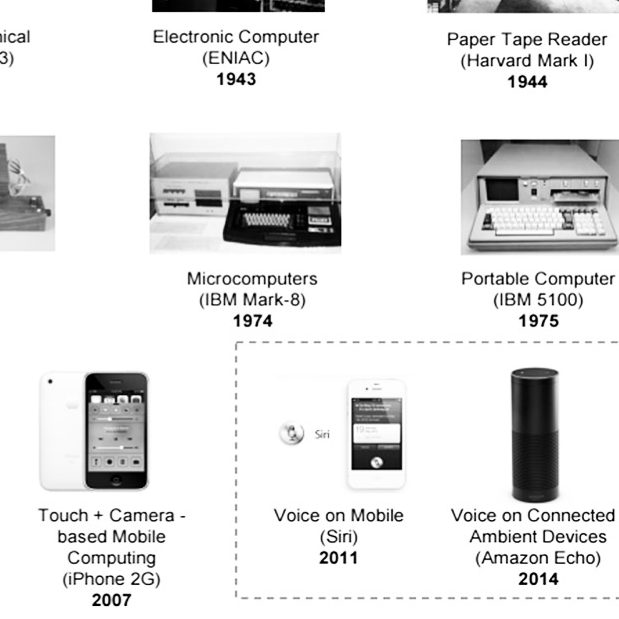
    Touch as the primary interface for computing and the internet has gone through many generations – cards, keyboard, joystick, mouse and smartphone touch. Touch will continue to remain relevant for many years even as Moore’s Law plays out – it is a very useful interface but not for everything. Voice on the other hand offers huge potential as a widely used interface particularly as word recognition, devices, device ecosystems and supporting platforms improve.

    Picture Credit: Mary Meeker Internet Trends Report

  • Strategy in the age of ‘robotic content’

    Strategy in the age of ‘robotic content’

    We live in a world of information abundance. The ability to create, produce, market and distribute content in almost any form has becoming very easy. So easy that a shocking amount of what we’re reading is created not by humans, but by computer algorithms – perhaps even this post ;).

    In the most recent post on strategy4telcomediatech I highlighted the need to consider the role that ‘bots’ play particularly in automating conversational commerce – ‘sales and service’. In this post I take a look at the use of ‘bots’ or algorithmic content in digital media, how it is shaping our consumption habits, content creation and some of the capabilities required in both traditional and new media organisations.

    What is robotic content?

    Algorithms and natural language generators have been around for a while. However, recent developments in computing power and increased access to big data have meant that they are getting better and faster. The sheer volume and complexity of the big data we generate calls for artificial rather than human intelligence to derive meaning from it all.

    Robotic content is content that is produced and distributed by artificial intelligence. Examples include Associated Press’s (AP)  Automated Insight’s Wordsmith platform or Narrative Science’s Quill platform which is used by Forbes publishing sites. According to reports, AP is creating more than 3,000 AI-led stories per quarter which includes everything from quarterly earnings updates to sports reports and weather. Robotic content however goes beyond news – there are books, edited videos and websites being produced by robots – rounding  out a good portion of the content we might view.

    The other aspect to robotic content that is important to understand is how it (and other content forms) are being distributed and consumed.

    Media consumption and robotic content

    Many people have moved on from linear viewing of content (e.g. Broadcast TV shows, Print news/magazines)  into on-demand (e.g. SVOD, SMOD) and increasingly on mobile devices. The places we now go to for content (e.g. Netflix, Twitter, Facebook, YouTube etc.) are even a step further from ‘on demand’ – they are ‘algorithmic on demand’ and offer the ‘next thing’ to watch or read based on your profile, friends, likes and dislikes. These algorithms help to find content to keep consumers on their platforms longer.  This makes sense in a world where there is so much information available – but it has some consequences.

    Last week there was a lot of press from a Gizmodo article about Facebook’s trending news feed. Facebook’s relationship with publishers continues to evolve. With more than a billion people on the platform and many using Facebook daily, Mark Zuckerberg wants Facebook Instant Articles to be the primary news experience for people to have. The controversy in the Gizmodo article was probably a little overstated (who reads the ‘trending news’ section of Facebook?) but it did highlight that Facebook (more than other platforms or publishers) is an extraordinarily powerful media gate-way and yes…algorithms aren’t neutral even if the ‘appearance’ of the platform is (ask yourself: ‘is Facebook conservative or liberal?’). Evidence of the power of the platform could be seen when earlier this year Facebook prioritised video in its feed which saw a drop in referrals to other media websites.

    We are well on our way to a world where a lot of content is created by robot and served up to us based on an algorithm. So what does this mean for publishers and content creators?

    AI-first content = AI-first capabilities

    Publishing and content creation has been transformed in many ways already – machines and automation already play a large role in modern media. However, as with a ‘bot strategy’ in e-commerce, taking an AI-first approach to media signals the need for new publishing and content creation capabilities. To maintain relevance and economic viability, publishers and creators should look to augment their content creation process with robotic content (increasing productivity), create content that is searchable by algorithms, manage alliances with platforms (e.g. mobile, hardware platforms) or create unique algorithms that serve up compelling content in new ways for viewers and readers in the mobile eco-system.

    An interesting example of a traditional digital media publisher going ‘AI-first’ is Quartz’s news app. Quartz is a news service (not unlike any other) but in March this year launched a mobile app for its content. The content in the app is served up like an mobile chat back and forth with a friend – a conversational style. This indicates a few things – its mobile, its a differentiated experience for the reader (aimed mostly at millennials), it is short snippets of content (probably robotic) and first and foremost it is learning what people like and don’t like – training an algorithm. It is possible that Quartz could run its whole service with a bot and algorithm it refines through the app.

    Narrative Sciences co-founder believes 90 percent of news could be algorithmically generated by the mid-2020s. This is just an indication of the kind of change to take place in publishing and content creation. Out of the change though, I hope that content becomes more relevant, interesting and we begin to see new innovative forms created.

  • Do we need a bot strategy?

    Do we need a bot strategy?

    Just last week a leader of a corporate digital function asked me:

    ‘Do we need a bot strategy?’

    Two things struck me about this question. Firstly, ‘bots’ have been around for sometime… why now? and secondly, is the ‘bot’ movement important enough to warrant a strategy for a large corporate? Before looking at these questions I want to clarify exactly what is meant by a bot.

    What is a bot?

    A bot in its most generic form is software that performs an automated function or task – think repetitive tasks but increasingly more complex ones. Bots, in the context of the question above, are used to do things like – add an appointment, take an order or make a reservation. These are tasks which can be automated by a bot and which are now appearing in the messaging apps that many people around the world use on a daily basis (e.g. Whatsapp, FB Messenger, WeChat etc.). This use of a bot is closely aligned to the rise of a movement called ‘Conversational Commerce’ which changes the dynamic of purchasing goods or services from a static ‘page based’ web experience to a ‘question and answer’ experience. These bots live inside your messaging apps and are designed to feel like you are chatting back and forth with a human.

    A relatively recent example of a bot is Amy from X.ai which is a personal assistant that can be used to manage the to and fro that occurs when trying to book a meeting. To the ‘untrained eye’ it feels like a conversation with a personal assistant. Although bots like Amy are relatively new, they have been around for some time. Twitter has had bots since its launch in 2006. For example – there are bots that tweets about weather or earthquake warnings. Recently Microsoft launched ‘Tay’ a ‘chatterbot’ supposed to mirror the tweets of a 19 year-old American girl. Unfortunately, Tay turned out to be (at least initially) racist, sexist and well just inappropriate as it used the feeds of tweets directed at it to develop its personality.

    Despite the many applications, commerce is most interesting. Bot integration into the digital customer experience can be a powerful enabler to reduce ‘cost to serve’ but also improve customer experience. Working with a messenger service and a large consumer business at ways to service customers through a third party messaging platform, a bot experience excels. A bot is able to handle a relatively large range of queries in the messenger where as previously, you might be directed out of the messenger into a mobile web-page or an app, thus breaking the flow and potentially losing a sale. Facebook is exploring how to enable this for its major customers but also a community of developers/ startups.

    Why Bots now?

    2016 is the year of the Bot and these are 3 major reasons why Bots (particularly in an e-commerce sense) are of significant important today.

    1. The Facebook effect

    There is no doubt bots are becoming more mainstream particularly in e-commerce sales and service. At Facebook’s recent developer conference F8, the company showcased a number of applications of chatbots on their messenger platform. Bot integration into Messenger is fundamentally driving mainstream adoption given that over 1bn people use the service at least once a day.

    By having bots in Messenger, Facebook is trying a number of things. Firstly it is solving many of the sales and service operations burdens for its customers that result from filling out forms or calling a call centre. Secondly, by bringing bots into Messenger it is allowing Facebook to ‘listen in’ on the conversations between retailers and customer and paint an even better picture of the user and thirdly it is setting itself up to be a commerce platform by stealth. It is not hard to imagine that once Facebook is the interface for all your sales and service queries, it could extend further in the value chain to offer logistics services…watch out Amazon.

    2. The global mobile-ecosystem effect

    Facebook’s announcement about bots is also aligned to its greater global ambitions to be the world’s social platform. In mobile messaging, companies like Tencent’s WeChat in China already have similar ‘bot like’ services through the 10 million brands on the platform that users can interact with to do things like buy food, pay bills, go to the movies or settle a tab. Conversational commerce is necessary to compete with the likes of WeChat or Line in Asian markets.

    3. Alternatives to the mobile app and mobile web

    It is arguable that the web and mobile web are in decline as users are spending more time on mobile devices, and more time in apps instead of web browsers. With this trend, Bots start to own space inside existing apps (e.g. Messenger, Whatsapp, Snapchat) in the mobile eco-system. In turn, they are likely to form the bulk of monetisable internet activity happening in apps. This is giving rise to the concept of ‘bot stores‘ to compliment app stores and an ecosystem of bot creators like Botapps.io.

    Do we need a bot strategy?

    The short answer is yes. We are at an inflection point with regards to machine learning due to advances in data analytics, computer science and the application of AI in business (be that in the customer layer or the operational layers). It is becoming not only a way to interact with customers but infused into products, services and operations delivered digitally. Many incumbents companies/organisations currently working out their response to digital technologies (e.g. cloud, social, mobile and big data) need also to consider how AI (aka cognitive technologies) fits into their strategy. Specifically, if you are an organisation with a mobile presence, developing a ‘bot’ strategy could help maximise value from existing apps (e.g. conversational commerce, operational improvement, customer satisfaction) or presence in a mobile app (e.g. new revenue, new service experiences).

    Finally, Google CEO, Sundar Pichai said recently on Alphabet’s earnings call:

    In the long run, I think we will evolve in computing from a mobile-first to an AI-first world

    …for the most part, I could not agree with him more.

    Picture Credit: botapps.io

  • What is Australia’s unique culture of innovation?

    What is Australia’s unique culture of innovation?

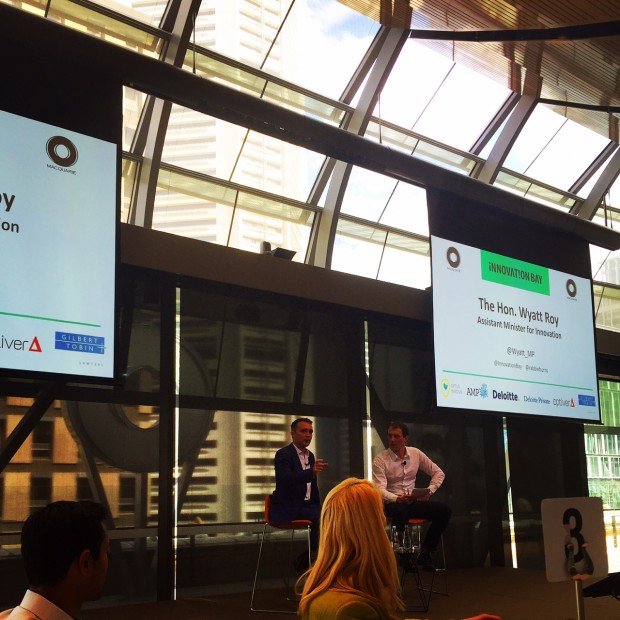
    Recently, the Australian Assistant Minister for Innovation, Wyatt Roy,  received some airtime (and with that scrutiny) on the Australian Government’s Innovation Agenda. The major points of contention lobbed at the minister were the inadequacy of the funding ($1.1BN over 4 years) compared to private sector investment and that the funding has been tied to university grants rather than private institutions – start ups and incubators. Both criticisms have led to the comment that the government is investing in ‘slow lane innovation’.

    Outside of the criticism, in both forums – ABC’s Q&A and at an event put on by the Australian Start up/Investor community organiser Innvation Bay – the minister talked about Australia creating a unique culture of innovation:

    “We can’t just perfectly replicate what’s happening in Israel or Singapore we have to create a uniquely Australian innovation ecosystem…” 

    This culture, according to the minister, could be based on the ‘bright talented people’ Australia produces (of which 20,000 are currently working in Silicon Valley), the lifestyle (e.g. beach, outdoors) we offer and Australia’s proximity to 1BN new consumers in the Asian middle class. Here, each of these aspects will no doubt play a role in the culture Australia creates around innovation. However, hearing the minister speak I was left wondering – what is truly unique about Australia’s innovation culture – the way Australian’s innovate?  

    Exactly replicating other innovation eco-systems is difficult, however it is worth pausing to reflect on what fosters the culture of innovation in a place like Israel – There are a few major drivers. Firstly, Israel has a small population (7 million) and few natural resources which necessitates an emphasis on the country’s ‘human capital’. Israel has an ‘innovate to grow’ mentality with investment  supporting education in technology innovation in particular, as opposed to relying on economic growth from agriculture, mining and manufacturing. Secondly, the geo-political situation in the Middle East inspires an ‘innovate or perish’ culture in the population. Being at conflict with neighboring states drives the need to ‘anticipate, defend and out-think’ in high pressure. Life or death situations have often been shown to be the most effective environments for innovation. Thirdly, being at conflict means that Israel enforces 18-30 months of national service (something in common with Singapore) for citizens aged 18+. The shared experience of national service and exposure to cutting edge technology, forms lasting bonds, communities and collaboration in a slice of the population most likely to innovate.  This is the culture that with support from the government, private investment and collaboration with the global Jewish diaspora that has developed innovations like flash drives, cardiac stents, instant messaging and shopping.com.

    A good starting point for a discussion on what could be Australia’s unique culture of innovation is a definition. Innovating according to innovation think-tank Doblin is defined in this way:

    “Innovating requires identifying the complicated problems that matter and working through them to deliver elegant solutions” 

    Breaking this definition down surfaces some elements that could be considered uniquely Australian.

    “Identifying the complicated problems that matter…”

    This part of innovating is about identifying the needs of humans (met and unmet) – the problems that currently have no solutions. Australians have a relatively wide-problem set to choose from. The traditional industries of energy and resources, agriculture, tourism and education all have complex problems that need solving be that developing renewable energy sources, sustainable mining techniques, preservation of environment or new forms of tourism. Australians are well-placed given the current expertise in these areas. Beyond the problem set, a unique culture of innovation requires Australian’s to have a unique way of identifying the ‘complicated problems that matter’. Here our best cultural asset is diversity.

    Australia is a country where First Nation cultures and the cultures of immigrants (over the last 200 years) meet. The lifestyle and environment of the country also play an important part in continuing to attract immigrants from around the world. Deliberately investing in and encouraging continued diversity (e.g. through First Nation support, better ‘innovation immigration’ policies, education support, collaboration in the APAC region) and therefore the ‘diversity of thought’ which is crucial to breakthrough innovations may well form the backbone of our unique innovation culture.

    To compliment diversity, a culture of openness (something that is counter-cultural in Australia’s history) needs to be encouraged. Where Israel draws upon its connections globally through religious affinity, Australia’s culture of innovation could uniquely draw upon the connections of our immigrants. Case in point, if you believe the rhetoric that Australia is well positioned to be an ‘innovation powerhouse’ for Asia, then fundamental to this is understanding the complicated problems that matter for people in Asian countries. This requires focused investment in onshore and offshore ‘innovation capabilities’ (e.g. universities, incubators, collaborations) that put diversity at the centre of the way problems are identified.

    “…working through them…”

    Australian’s have a rich history of doing more with less, exploring and pioneering – culturally, this is how Australian’s work through and solve the problems that matter. For example, Australia’s First Nation ancestors have used innovative techniques for to hunt, cook and survive for thousands of years – they are an exemplar of frugal or ‘Jugaad Innovation‘. Equally, the early colonialists (many who were British convicts) had to innovate to come to terms with life on a land completely different to that in their homeland. This included pioneering new farming techniques, investing in Spanish Merino sheep to meet the demand for wool, or creating low-tech ‘hacks’ like the Coolgardie safe (the prototype of the refrigerator) to cope with the conditions. Australia’s modern day innovators also show these traits –  people like Barry Marshall  – who proved a causal link between bacteria and peptic ulcers by digesting the H. pylori bacteria, monitoring his symptoms and performing endoscopy’s to understand the culture in his stomach. There is something unique in this cultural combination of frugal pioneering that mixed with diversity could lead to very practical solutions to the world’s most complex problems.

    “…to deliver elegant solutions.”

    Possibly the hardest part of innovation for Australians culturally is ‘the elegant solution’. Australia has a firm love of the ‘underdog’ and a dislike of ‘tall-poppies’. Elegant solutions are not ‘underdog’ solutions (e.g. ‘me too’ solutions) but if they are too good they could be considered ‘tall poppies’. Australia’s unique culture of innovation needs to overcome these social mores. Part of this is about more readily embracing failure but for the main it is about not being satisfied with copying other’s innovations (e.g. another Uber or Airbnb) and celebrating the truly original innovations in a way that Australian’s have not previously (e.g. perhaps innovation awards or grants for the most ‘elegant’, ‘breakthrough’ or ‘original’ solutions).

    The above gives some pointers to where our unique culture of innovation may come from. Yet, culture is a very difficult thing to define and even harder to shape. What is clear from the current discourse on Australian Innovation is that Australia has clean slate on innovation culture – if nothing else this is exciting! This means there is an opportunity to create a culture around innovation that is Australia’s own. This may take 5 years or maybe 20, whatever the time scale success will sound like – “that could only be an Australian innovation“.

  • The iPhone SE Strategy

    The iPhone SE Strategy

    This past week Apple launched the iPhone SE as well as an updated version of the iPad Pro. Both devices are interesting in their design and construction – the iPhone SE has the smaller design of the iPhone 5 (4″ screen) with the components of the 6S whilst the new iPad has a smaller 9.7” display compared to its predecessor (12.3”), half the RAM and a smaller processor (probably for cost reasons). Design choices aside, the strategic rationale for both devices in particular the iPhone SE was not clear from the launch event. This post will explore the strategic rationale (where to play and how to win choices) and what it tells us about Apple’s approach to the global smartphone market.

    Apple has previously launched ‘scaled down’ and cheaper versions of its iPhone – the iPhone 5C is a case in point. It is tempting to compare the SE to the 5C but it is different…subtle as it may seem on first appearances. The SE is a high-end phone in a slimmed down design for a cheaper price whilst the 5C was an old design (unapologetically plastic) with year-old components for a cheaper price. In fact, Apple published this quote on its website to distinguish the SE from its other smartphones:

    “To create it [the iPhone SE], we started with a beloved design, then reinvented it from the inside out.”

    This description is important to have in mind when making sense of the strategic rationale and the SE’s place in the global smartphone market.

    Today’s global smartphone market

    If you were following the news from the Mobile World Congress recently you would have seen and heard about a number of smartphone manufacturers developing relatively sophisticated devices at a very competitive prices. Xioami’s Mi5 ($550 AUD), targeted at the Chinese domestic market, uses commoditised components to achieve a lower price point for the millions buying a smartphone for the first time. Similarly, UK smartphone startup Wileyfox is offering affordable smartphones for ~$500 AUD reducing the upfront cost for a device which in turn allows consumers to avoid the need for a 2-year lock-in contract with their carrier. These are the offerings defining the ‘low-end‘ of the smartphone market…which is growing and innovating.

    At the ‘high-end‘, Samsung and Apple enjoy healthy competition in almost every major market in the world. In Australia, over 70% of smartphones are either Apple (41%) or Samsung (32%) – this is a very large market for high-end phones driven by carrier subsidies and lock-in contract models. Globally, what sets these two giants apart however is status. Apple, particularly as the brand relates to China’s growing middle-class, is considered a luxury brand (along the same lines as Hermes, LV, Chanel etc.). To own an Apple is on par with owning a $2000 LV handbag (better value if you ask me :)). But what about the ‘mid-market’?

    Extending the high-end

    A misconception that people will have about the iPhone SE is that is targeted at the ‘mid-market’. However, if you believe status is a major driver, particularly in emerging markets such as China and India, then it is better to think of the SE as an extension of the high-end. The quote (above) from the Apple website gives some clues as to Apple’s intentions – ‘a beloved design’ (it looks like an Apple phone people know and love) ‘reinvented from the inside out’ (with the latest technology features). Unlike the 5C the SE is objectively a high-end smartphone with a price tag of $399 USD – an extension of the high-end.

    So who is the market for the iPhone SE?

    The smaller 4″ screen will attract some smartphone users, although I suspect there are many who people who are now used to the larger screen size of the 6 and 6S. I don’t believe this is Apple’s target market – why give away margin to people who are likely to buy an iPhone anyway? Conversely, I think the market for the SE is two-fold:

    1) Late-stage adopters in developed markets: People in developed markets who are buying their first smartphone or their first Apple device. This market is concerned with their device ‘just working’ (much more that early adopters – who will forgive glitches for the latest technology) and almost certainly more price sensitive than early-adopters. The cheaper an iPhone is, the more people there will be willing to pay for it.

    2) Tech enthusiasts in developing countries: Probably a larger market than the first category, this comprises of people who simply don’t have the funds to purchase a 6 or 6S…but want the latest Apple smartphone. This group also doesn’t want hand-me-down phones, they want the best, they just need to be able to afford it.

    The iPhone SE with its attractive price, industrial design and top-of-the line components is aimed squarely at the tech-savvy in China and India. It is still expensive and will not compete with the Xiaomi or Micromax models, but it is an iPhone and one that is likely to expand Apple’s presence in these huge markets.

    As Apple extends its ‘high-end’, the response in developing markets from the ‘low-end’ device manufacturers will be something to keep an eye on  – the question is how far will either side go to capture the markets that are buying their first smartphone?

  • Mobile World Congress update – Wednesday and Thursday

    Mobile World Congress update – Wednesday and Thursday

    MWC is almost over – 94,000 people walked the exhibition halls, wore VR headsets, made deals, met clients and listened to thought leaders of the mobile industry. After the excitement of ‘Media Tuesday’, Wednesday and Thursday offered a look at some different aspects of mobility – in particular mobility in emerging markets and ‘cognitive technologies’ applied to mobility.

    Mobility in emerging markets

    Chinese start up Xiaomi launched the Mi5 the new and much-awaited flagship smartphone on Wednesday. The Mi5 is the company’s attempt to turnaround handset performance after missing target by 12% in 2015. The new model will be targeted at the Chinese domestic market which continues to grow, as well as international markets – India was called out specifically. Key features of the Mi5 include the 820 Snapdragon Chipset from Qualcomm, lighter weight than the iPhone 6s and a better screen to body ratio. The neatest user functionality of the Mi5 is the optical image stabilisation which reduces blur when taking photos. The phone’s proposition is unique for emerging markets boasting the latest design elements, technology hardware and for 1/3 the price of the iPhone or Galaxy.

    Companies like Xiaomi continue to impress with their design and ability to put commoditised components together at a cheap price. Looking at the growth still to occur in emerging markets for smartphones it is easy to see why they have been so focused on China and India. For Australians (and the US/UK for that matter…) don’t expect to see a Xiaomi available anytime soon.

    Another company addressing mobility needs in emerging markets is payments company Stripe. Patrick Collinson CEO of Stripe used his keynote on Wednesday to speak about Atlas, a beta product designed to help entrepreneurs based in developing markets “gain access to the same business infrastructure enjoyed by tech companies in Europe and the US.” All in all, Atlas allows companies in emerging markets that can’t access a bank accounting, legal advice, cloud storage etc. to sign up to Stripe and its partner group allowing them to accept payments in a matter of days. This will allow companies to charge customers from anywhere in the world making e-commerce universal.

    Cognitive technology @ MWC

    An area which I am currently working in was on display at MWC Thursday morning – namely applying cognitive technology to mobility. Cognitive technologies include things like machine learning, speech recognition, robotics and natural language processing.  This last technology (Natural Language Processing) was on display with a keynote address from Swiftkey, who had previously won most innovative app at MWC in 2012.

    Swiftkey provides processing of human textual interactions and predicts characters and words based on how you type. John Reynolds, Swiftkey’s CEO, spoke about his ambition to eliminate the need for a keyboard and how mobile devices of the future will be intelligent enough to predict communications based on touch or movement alone. Laying out the path for Swiftkey, he sees their mission as moving from character prediction, to word to whole concepts.

    That’s the wrap from coverage of MWC keynotes. I will be providing a summary of the major topics from MWC shortly. Hasta Luego!

  • Mobile World Congress update – Tuesday

    Mobile World Congress update – Tuesday

    After the announcements and keynotes of Sunday and Monday, Tuesday was always going to be a bit of a change of pace (if that is possible) at MWC. This is of course with the exception of some interesting media/advertising related panel discussions on ad-blocking, an announcement by Buzzfeed CEO Jonah Peretti of the launch of a video streaming service and panel discussions on user data and security.

    Ad-Blocking @ MWC

    Ad-blocking was a topic I wrote about last year in relation to net-neutrality as well as new business models in advertising. And from the tone in the debate between executives from Google, Yahoo and Shine’s (Israeli ad-blocking software) CMO, it will continue to be battleground in the coming years. Ad blocking software use grew 41 percent in the 12 months to August 2015 and there are now 198 million active adblock users around the world, according PageFair. The damage to the advertising business model? – Ad blocking was estimated to cost advertisers $22 billion last year.

    The debate at MWC centered on the idea that ad-blocking is a ‘blunt solution’ where a neater one will do. Benjamin Faes, managing director of media and platforms at Google, called ad-blocking ‘black and white think’ where a whole ecosystem is at threat. ‘More and more publishers just can’t afford to give their content for free…a user with an ad-blocker will keep running on websites who ask the user to pay for content then they unblock the ad-blocker and then see all bad ads anyway,” Faes said during the panel.

    Shine’s big argument in this debate is that tech companies are using “military grade” tracking, targeting and profiling of users. Shine’s CMO, Roi Carthy, is bringing this to the attention of users and opening new rules of engagement between consumers, advertisers and the platforms.

    The ad-blocking debate is not likely to end soon but not all advertisers are gloomy about it. There are clear gains to the user experience and it provides an inflection point for the industry to come up with new ways to engage consumers. In Australia we are yet to see the full effect of ad-blocking however a quick survey i ran today found that out of 100 people asked just over 50% are using an ad-blocker app of sorts. I suspect it wont be long until a carrier takes up a solution like Shine in Australia to compliment the updates in Safari (IOS9) and other ad-evading software.

    Buzzfeed goes to short form video

    Always wondering what to do with your downtime? The time you have on the bus, before bed, in the bathroom… There are many companies aiming to make you spend that time on their platform and Buzzfeed is one of them. In line with Zuckerberg’s keynote on Monday where he talked about the future of content consumption being video, Buzzfeed CEO Jonah Peretti revealed last night that his firm will be launching a mobile video app focused on “binge watching”. BuzzFeed’s audience has grown rapidly, from 100 million monthly content views in 2012 to six billion in 2016 and this is a play to continue this trajectory and compete against other short form providers (Snapchat, Vine, Youtube). Peretti told MWC goers, “Content has really become the exciting battleground in the mobile space…Increasingly content, and especially mobile video, are becoming a key part of the mobile stack,” he said. “It’s something that consumers care deeply about: the brand and the content they’re consuming on their mobile devices. It affects their decisions of which apps to use, which phones to use, and which content is increasingly becoming one of the major areas of competition in the mobile space.”

    It will be interesting to see how this battle for attention shapes up with mobile video (short and long form) content being the major attention grabber for a number of platforms.

    User Data and Security

    Rules supporting data protection are slowly catching up with the technology. At a panel on Tuesday discussing privacy, security and user control, Telefonica’s director of research and innovation called attention to this issue. Pablo Rodriguez said security and privacy “are becoming part of dinner table conversation. Consumers are frustrated with the plethora of trackers and malware that leak people’s data and risk their privacy.”

    This is a huge issue for consumers as it is for businesses. In a recent meeting with Australian TMT leaders a few examples were shared of the effects of malware on their businesses including fraudulent emails which looked like company emails being sent to CFO’s asking for large sums of money to be transferred. Telefonica believes there is an answer to this an it is by providing users with greater transparency of how their data is used. They have set up a ‘Data Transparency Lab’ which is in partnership with MIT Media Lab and Mozilla which will produce tools and applications that show how personal data is being used to personalise websites or why some ads are being shown.

  • Untitled post 331

    What a fantastic first day at the Mobile World Congress! This was a day when many leaders in mobile technology, telecommunications and media took to the stage to share their views on mobile connectivity, disruption resulting from mobile and connectivity innovation and mobile and the media. I will cover two major themes here but you can watch all the action via Mobile World Live.

    Mobile Connectivity

    Facebook founder Mark Zuckerberg took the stage late Monday afternoon for the 3rd year in a row to update the world on his plans to connect 4Bn unconnected people (through Internet.org). As I write this, the number of people who are connected in 2o15 is ~3bn and this has grown by about 200M. If we are to make greater leaps a catalyst like Internet.org or Project Loon is needed but on what terms? Zuckerberg addressed recent setbacks for his project telling the audience that “Facebook isn’t a company that hits a roadblock and gives up…We take the hits that we get and try to learn from them and just do better.” He also address the industry fixated on connecting ‘things’ to consider ‘connecting humans’ first. I would say the same thing if I were the leader of a media company the size of Facebook.

    Zuckerberg offered up two new pieces of information. Firstly Internet.org is going the way of Project Loon but in stead of balloons they looking to use solar-powered drones with laser technology to provide internet access.  Secondly, he announced the Telecom Infra Project, a newly-launched engineering initiative designed to bring  operators, infrastructure providers, system integrators and other tech companies together to develop new approaches to infrastructure. This second announcement is interesting in that it is Facebook’s response to “slow moving” telecommunications carriers. The founding members include Deutsche Telekom, EE, Globe Telecom, Intel, Nokia and SK Telecom and together may come up with some disruptive innovations. I suspect we will continue to see more partnership models like this one set around defined ecosystems (in this case Telecommunications Infrastructure) where the problem is to big to solve for one organisation.

    Mobile Innovation

    Product innovation in mobile is a theme year in and year out. For smartphones, 2016 may be the year that innovation has slowed. The industry as a whole is dealing with the dual objectives of mass commoditisation on the one hand and device innovation on the other. As such, the tier 1 players are all trying to add new bells and whistles while the low end of the market learn how to mass produce them. In panel discussions on Monday with tier 1 and low-end players including Samsung, Motorola/Lenovo and Wileyfox,  chipset maker Qualcomm, Cyanogen, and mobile operator Telefonica innovation was discussed in a number of contexts. For some VR is where mobile innovation is heading and for others like Stephane Maes, VP of product management and planning at Motorola, building features that meet customer needs (like an unbreakable screen) superbly is of highest priority.

    UK smartphone startup Wileyfox provided an interesting perspective arguing that business model innovation not product innovation is where smartphones are headed. Wileyfox is offering affordable smartphones, using cheaper, commoditised components, which allow consumers to avoid the need for a 2-year lock-in contract. CEO Nick Muir said on the panel:

    “More and more people are beginning to see the cracks in the standard model – and that standard model being you have to pay for a two year contract to be able to afford the device you want… I know that the bill of materials allows us to be able to sell the device at a reasonable price and the reason we can do that is not enormous scale, it’s not just tier one components, it’s around the fact that we don’t have any sporting contracts, we don’t have legacy pensions, we don’t have glass offices, we all travel by EasyJet and we stay in Airbnb. We are a low cost organization and that low cost gets passed on to the consumer – and that’s part of it.”

    That is lean start up at its best…

    The Australian market for smartphones is still dominated by Tier 1 devices – Apple and Samsung. However, going with Muir’s philosophy and extending it to the broader trend of commodity vs innovation, it is possible to see MVNOs like Amaysim start to offer ‘reasonable quality’, low cost devices attached to larger data plans with no-lock-in to go head to head with traditional mobile business models.

    That’s my take on two major themes from Monday at MWC. Day 2 will showcase mobile security, mobile and the media, industrial IOT and a topic I have recently written about – diversity and inclusion. Enjoy!

  • Mobile World Congress update – Sunday

    Mobile World Congress update – Sunday

    In its 15th year, the Mobile World Congress kicked-off in Barcelona yesterday with a flourish of announcements. This year the event is expected to pull 94,000 people from telecommunications, media and technology industries and their adjacencies. Over the next 3 days I will cover off the major topics discussed each day and identify implications for the Australian market.

    Before outlining the major news from Sunday, there a few articles worth reading to get you up to speed on mobile:

    1) What happened at MWC last year?

    2) Ben Evans history of mobile and the industry/market assumptions that could not have been predicted…without hindsight

    3) The Economists 2015 articles on “Planet of the Phones” and “Telecoms and Society”

    4) Deloittes 2016 TMT predictions

    5) Mobile World Live – which provides live streaming of the event including keynotes

    On to the news from the pre-event… There was one major topic from events on Sunday at MWC – New devices…

    Samsung – Samsung again put forward a claim for the smartphone crown launching its Galaxy S7 and larger sized Galaxy S7 Edge. The key features of the new smartphone include a more advanced camera, ‘always on display mode’ for a ‘zero-touch experience’ and a hybrid SIM card tray for dual SIM and extra storage. The devices will be available mid-march and will perhaps be indicative of the technology we will see from Apple with the iPhone7 launch later this year.

    LG – Not to be outdone by Samsung, LG gave its G5 smartphone a big push yesterday. CEO Juno Cho showed off the device saying in his address ‘Is the era of the smartphone over? We think the best days are still ahead.’ LG has designed the G5 to be modular in its hardware design allowing for battery exchange and the ability to attach accessories (like a VR head set and a rolling bot… yes a robot that can monitor your home, take pictures and play with your pet.)

    Huawei – Huawei launched the Mac… no… MateBook (which should have appeal in Australia…) targeting enterprise users. It smells like a Surface Pro running Windows 10 and rivals an iPad Pro for looks. It includes fingerprint encryption, MatePen (a high precision stylus) and 29 hours of battery life.

    Day 1 (Monday) will see a number of keynote addresses from leaders in mobile technology including one from Mark Zuckerberg. It will be interesting to hear how he addresses recent criticism of Facebook’s Internet.org a perennial topic for the Facebook boss at MWC. There will also be discussion on 5G technology (from carriers and technology companies), IOT (expect automotive to play a role), Security, Identity and Media.

    Stay tuned for tomorrow’s update!