Blog

  • The Strategy of Alphabet (née Google)

    The Strategy of Alphabet (née Google)

    It is fair to say the world was caught off guard by the major reorganisation of Google last week to a holding company structure under the new name ‘Alphabet’. The move sees the company formerly known as Google now referring to just the core businesses of Search, Android, YouTube, and a handful of others, led by Google’s head of product Sundar Pichai. The non-Google part of the business looks more like venture capital than a company, with Google Auto, Google X, Nest and other R&D ventures falling under its remit. Whilst this may all come as a surprise, strategically this move makes a lot of sense.

    In my recent article ‘Where was Strategy at Google IO and Apple WWDC‘ I highlighted a number of major inconsistencies in the messages presented by both companies at their respective developer conferences in relation to their strategic intent. Google’s mission to ‘organise the world’s information‘ fits nicely with its Search, Android and Youtube businesses but starts to get lost as the company invests in moonshots like Project Loon and driver-less cars.

    So what is Alphabet’s strategy and what can we learn from it? 

    Public markets respond well to strategic clarity

    Companies that appear to have lost strategic direction often suffer in public markets. The change to Alphabet could be seen as placating Wall Street analysts who have often questioned Google’s moonshots and raised objections about the incongruence of R&D project spend with objectives of Google’s core business.  Alphabet is a sign that Larry Page and Sergey Brin will not be backing down from these projects but provide a more consistent market narrative and greater transparency to their business segments.  According to the SEC release Google will start reporting  separately on Google and Alphabet segments as early as Q4 FY16… Let’s see how the market responds now.

    It can be very difficult to innovate without strategic freedom

    From IBM to GE to AT&T to Microsoft or Australian companies like Telstra, incumbent tech companies are looking for ways to avoid complacency and business model disruption. Google is no different. In the recent past it has tried with Google X, now it’s trying Alphabet. Google could very easily fund ambitious projects through Google X, but launching those projects into a standalone business or Google division has proven problematic.  The Alphabet holding  company structure suits organic growth and aggressive acquisition strategies in a way the Google structure could not. A moonshot will be given more space to grow and focus with more funding options available at maturity.

    An example is Google’s driver-less car program which has little in common with Google’s core business but could be extremely profitable some day. Through Alphabet, Google Auto can receive outside funding in exchange for an ownership stake or even consider an IPO to reward Alphabet investors.  This was not readily available under the previous structure.

    Talent are attracted to a more focused and culturally aligned organisation

    The new structure gives Alphabet and its many organisations more management and talent scale. Firstly the incentive of a potential IPO for the moonshots will serve Alphabet to keep top talent within the group. Secondly, the moonshots can start to build their own culture and incentive programs without the pervasive effect of the core. We may see moonshots adopting more ‘non-google’ like behaviour than the core business in order to achieve objectives which are separate from the core.

    In an organisational and strategic ‘gear shift’ there are choices – winners and losers

    In spite of the strategic clarity Alphabet will bring, some of Google’s business ventures could lose out in the organisational and strategic shake up. Of note are Google Fibre or Project Fi which are more ‘adjacent’ than core and certainly not moonshots. They are downstream to Search and additive to the advertising business (e.g. Cheaper broadband access = more Search eyeballs + more users for Google’s core (Youtube)). In this new model they may not have the attention that the core advertising business has and underperform. Google has had some success with Fiber already, it will be interesting to see if this continues under the new structure.

    The success of Alphabet will be closely monitored – How does Search profit from renewed focus? When will the first moonshot IPO occur? I also look at this move as predictor of the ‘new’ structure of a technology/media conglomerate (core + moonshot) and can’t help but wonder who is next. Perhaps we will see Facebook or Amazon follow a similar strategy providing strategic clarity to their core and freedom to their many acquisitions and innovation plays.

    This article is featured on strategy4telcomediatech.com.

  • Netflix in Australia: A drama unfolding

    Netflix in Australia: A drama unfolding

    Netflix launched in Australia on the 24th March 2015, just over 4 months ago. In Netflix’s Q2 earnings call it identified that it had added 0.9 million members in the US and 2.4 million members internationally. A large portion of the 2.4 million international members have come from Australia and New Zealand which are already achieving profitable contribution according to Netflix. This post explores the market’s expectations before the Australian launch, the prevailing results of Netflix’s first 4 months and provides some ideas on where Netflix is headed in its home and international markets.

    Expectations before the Australian launch

    Expectations of Netflix’s Australian proposition before launch in March this year followed three major themes.

    1. Australians already use Netflix – so it will have a flying start:

    Netflix’s popularity was already evident in Australia prior to launch. At the end of 2014, even before announcing its intentions to enter the market it was reported that Netflix had ~200,000 Australian subscribers to its US service (using local VPN to access). In terms of market share, Netflix had ~27% share of the subscription TV market behind Foxtel (49%) and Rentals/Quickflix making up the rest. This already strong position has been a base for the Australian service to grow and potentially points to the new market entry strategies (by stealth) of digital ‘game changers’ (think: Spotify, WhatsApp).

    2. Broadband speed will hamper viewing experience:

    ADSL2+ runs at a theoretical max of 24MBps and cable/NBN services can achieve up to 100MBps. The reality is that speeds are lower than this. With the greater portion of Australians currently running on ADSL2+ it has been thought that Netflix’s longer term sustainability depends on improvements to network speeds, bandwidth and cost of connection.

    3. Netflix will be complementary to existing cable and FTA TV services:

    It was reported just after launch that the Netflix Australian catalogue included up to 7,000 fewer titles than its US counterpart. The service comes with access to Netflix’s original series (e.g. House of Cards) and ‘quality content tailored to the market‘. Exclusivity of content is a major driver of whether Netflix is a ‘cord cutter’ or not. Without access to sport in particular it was expected that streaming will complement other viewing services.

    Netflix – The first 4 months and the market responses

    The expectations prior to launch have certainly been addressed. Netflix popularity has buoyed its first 4 months results but over 70% of households still do not pay for TV which is partly cost, partly content and partly internet speed.

    Roy Morgan started measuring Netflix take-up in April this year. The first numbers showed 755,000 Australians had access to Netflix. By May the subscriptions were 1 million and by June it was reported that subscriptions were over 1.42 million (~400,000 homes) – a growth rate of ~300,000 subscriptions per month. The most recent press on a report by Citi has shown that Netflix already has 1.6 million active users; with 900,000 of those paying a subscription fee (the first month is free).

    In the backdrop of this meteoric rise have been the strategic responses from other Streaming Video on Demand (SVOD), Cable and Free to Air (FTA) players.

    Streaming gets attention and price of basic cable drops

    Australia’s other streaming services (Stan, Presto, Fetch) have been buoyed by the attention on Netflix but are behind in terms of subscribers with Stan (Nine + Fairfax) in 2nd place with 332,000 sign ups and about half as many paying customers. Foxtel, Australia’s major cable company, has dropped its basic entertainment cable + stream offering to $25/month (Netflix is $9-$15) in an effort to remain relevant to SVOD price points and offerings.

    Alliances formed but Free to Air is likely to suffer most in the short term

    Strategically, alliances have been formed between Free to Air, Cable, Telco and media companies (Stan – Fairfax and Channel 9, Presto – Foxtel and Seven, Fetch – Foxtel, Optus, iinet) and Foxtel is awaiting approval for its proposal to take a 15 per cent stake in commercial television broadcaster Ten. IT is an explosion of content consumption and these alliances point to the future of TV viewing in Australia. Current reality is that ~70% of households still do not pay for TV, but any time spent watching Netflix or SVOD services is time not spent watching traditional TV.

    Where to next for Netflix?

    Netflix now has 23.3 million international subscribers – out of a 65.6 million global total. International revenue rose 48% year over year to US$454 million, but is still recording losses (US$92 million). Reviewing their financials, the aggressive expansion plan contributed to a continued drop free cash flow and debts – driven primarily by an increased investment in original programming. Like Amazon, Netflix’s plan appears to be one that continues to sacrifice profit in the interest of growth – but why is this so important?

    When it comes to the TV value chain, it is highly differentiated content creators that retain the most power. The winning SVOD business models are those that invest millions of dollars in new TV shows to drive growth, and have reruns and old movies as filler. Netflix is essentially HBO with a unique delivery system and customer experience. Netflix faces strong competition for attention from traditional pay-TV, Free to Air, as well as Amazon Prime, a revitalized Hulu, and HBO especially in the US. And although Netflix’s hit rate is improving HBO continues to be must-see TV.

    This Hollywood Reporter article provides an interesting comparison of HBO and Netflix and highlights the integrated nature of a company like HBO (content to delivery) compared to the modularised nature of content creation at Netflix. People turned off the queue at HBO for their hit show are being picked up by Netflix who are taking advantage of this bottleneck. Netflix, like other exponential companies (e.g. UBER, Airbnb) is addressing an old content creation model and its own issues in a new way.

  • A Virtual SIM: Implications for Hardware, Consumers & Carriers

    A Virtual SIM: Implications for Hardware, Consumers & Carriers

    Your mobile SIM card will soon disappear. If you read the tech news this week you probably would have seen a headline similar to this – espousing the death of the physical SIM card. The SIM card (as we know it) is such a fundamental part of the cellular business model that a change to that construct has far-reaching implications for hardware developers, consumers and carriers.

    What is a virtual SIM or e-SIM? 

    The concept of replacing a ‘physical SIM’ for a ‘virtual’ or ‘e-SIM’ is not new, but in the last 6 months hardware developers (Apple and Samsung) and carriers have  come to the table to plan its implementation. As early as March this year, as part of the Mobile World Congress (MWC) in Barcelona, it was announced that the GSMA (the association that represents carriers) is working  to create a common and global specification for the remote over-the-air provisioning and management of connectivity to consumer devices. A long list of mobile operators (including AT&T, Etisalat, NTT DOCOMO, Orange and Telstra) provided comment on their commitment to the new SIM format.

    Specifically, an e-SIM card is built into the phone and is not tied to any single carrier. This makes it far easier and far faster for subscribers to switch carriers – something that consumer electronics manufacturers are also keen to adopt for connected items around the house as part of the Internet of Things (IOT). The information on the SIM will be compliant with all operators, meaning a user can decide to change operator with a change in settings. There will also be no physical swapping over required by the user and new SIM will not be required, nor should there be any time delay in switching the e-SIM to its new purpose.

    What are the major implications for Hardware, Consumers and Carriers?

    Hardware developers

    Blackberry, through Movirtu and Apple with its ‘Apple SIM‘ have already started to trial the virtual SIM concept allowing users to select between multiple carriers. The major implications for hardware developers are:

    Global deployment: Hardware manufacturers will have the ability to deploy their mobile hardware anywhere in the world without concern for SIM or carrier specifications. This will help to streamline design but may also remove market barriers for new mobile hardware.

    A standard for IOT  devices: A common standard for e-SIM removes at least one more barrier for manufacturing IOT devices. It can enable multiple devices (or things) to access customised network connections rather than setting up with multiple physical SIM cards.

    Consumers

    Many of the benefits of an e-SIM lie with the consumer – More choice, greater options for connectivity and a seamless customer experience. There are many implications for consumers but the top few are:

    Choice of providers: One of the main benefits is choice of providers. As e-SIMs are rolled out, consumers will have access to any connection at anytime through whichever network they choose. It may even be possible that software will eventually automatically choose the network based on speed or spot price.

    Global roaming: Ever waited in a queue in the airport at another country to pick up a local SIM? A virtual SIM would eliminate this experience potentially boiling it down to a one-click new country activation. A truly mobile experience plus no more global roaming charges.

    Multiple numbers: For some consumer’s the ability to have multiple numbers has meant switching SIM cards on phones or carrying multiple devices. A virtual SIM opens up the possibility to have multiple numbers on a single device which could create identity options for consumers.

    Carriers

    On face value, carriers will face the most change from a virtual SIM environment. It removes yet another layer of consumer dependency on operators helping to create conditions for even greater commoditisation of the network.  That said, representatives from carriers like Francisco Montalvo of Telefónica Group are embracing the changes a virtual SIM will offer:

    “Remote SIM is a natural evolution in our industry. Making the right choices now in terms of technology, usability and user experience will ensure our consumers a successful transition without compromising the quality of service that they expect from the mobile network operators”

    This evolution is likely to lead to the following major implications for carriers:

    New pricing mechanisms: With a lower barrier to switching carriers devices will become ‘carrier agnostic’. To counter this,  Operators are likely to embrace new contracting methods like ‘pay to play’ or models not tied to data usage. Lengthy contracts are going to carry less weight as consumers have more incentive to bring their own device and ‘shop around’ for the best carrier deals.

    Changes to operations: The process of provisioning a service can be quite cumbersome and take up to 2 days for many carriers. Virtual SIMs will put pressure on carriers to provide near real-time provisioning of services out of the virtual environment – a capability many carriers do not have today. At the MWC Shanghai this month Gemalto, a leading SIM provider, has been demonstrating “remote provisioning of consumer devices based on GSMA architecture”. It is an example that other non-carriers may start to own this part of the carrier operations.

    New security and privacy concerns: A virtual SIM adds extra complexity for security and privacy protection for customers. For example, as customers ‘carrier switch’ to find good deals, carriers will need to be able to offer customers real-time protection and privacy. For many carriers this may be a difficult service even as customers are on 1-2 year long contracts.

    New revenue streams and differentiation: New revenue streams such as those relating to Internet of Things, OTT services or device sales are likely to appear as a result of virtual SIMs. Virtual SIM will enable more devices to connect to carrier networks but OTT services will lock customers in. Without differentiation it may be a ‘race to the bottom’ in terms of price.

    A Virtual SIM is an exciting step for the telecommunications industry. It offers up the potential for simple and seamless interactions between carriers and consumers as well as opening the barriers for growth in new device categories. Although many carriers are championing the change, they stand to lose the most from removing this customer dependency. They will need to respond with new charging models, transforming their operations and developing new ‘sticky’ revenue models.

  • ‘WiFi First’ – Just Thin Air?

    ‘WiFi First’ – Just Thin Air?

    In the week after Telstra launched ‘TelstraAir’ – Telstra’s venture into shared WiFi for its customers and the public – it is perhaps appropriate to look at the concept of ‘WiFi First’. Going “Wi-Fi first” was pioneered in 2012 by French mobile operator Free to fill the gaps in its cellular network. The idea has since been advanced by three American start-ups: Republic Wireless, Scratch Wireless and FreedomPop who have received increasing attention of the news media and incumbent communications companies. FreedomPop raised $30m in financing last month with plans to move into Europe and signup its first customers in Britain this month. A big part of the hype around FreedomPop has been its technology which allows it to keep continuity between WiFi networks. As the signal of one network diminishes, FreedomPop’s technology finds another network and transfer’s the call to it seamlessly. So how does WiFi first compare to Cellular first?

    ‘Cellular first’ vs ‘WiFi first’

    A WiFi first approach relegates the cellular network to backup or cuts it out altogether. To do this successfully requires a proliferation of WiFi hotspots and the technology to switch between them. This approach has not been possible until now but as user habits move to using WiFi ‘on the move’, infrastructure is set up (like TelstraAir or Fon) and security of public networks is improved WiFi is gaining in relevance.

    For the traditional mobile business model tied to cellular plans this changes the cost dynamic. Cellular infrastructure comes with ongoing maintenance cost (so will WiFi first networks) but with customers opening up their own household or business WiFi connections as hotspots there is the potential to remove fixed costs to providing coverage and access.  Freedompop et. al are able to offer a single plan at a fraction of the cost of regular cellular plan in exchange for less coverage flexibility outside hotspot areas.

    The drawbacks of WiFi First

    There have been a number of cited drawbacks of going to WiFi first. As TelstraAir matures it will be interesting to read into customer feedback of the service in these areas:

    Coverage

    Obviously, coverage is a drawback of WiFi first and in a country like Australia where the tyranny of distance reigns. A pure WiFi only offering is unlikely to be as popular as it is for the city dwellers of Manhattan or Sydney. How Telstra and other Air-like providers price Cellular back up services will support the use case for a combine Cellular WiFi offering.

    Dropped connections and battery life

    In reviewing FreedomPop feedback, some users have grumbled about dropped connections and bad customer service. In both cases subscribers need to keep their handsets’ Wi-Fi connections permanently switched on, which is a drain on the devices’ batteries. Battery-life of devices and power required to connect to WiFi signals is likely to improve in the next 2-3 years but until then this is an impediment to an experience on par with cellular first mobile.

    Competing with low-cost Cellular first providers

    Wi-Fi-first subscriptions appear to be tough sell particularly if you compare to services like Amaysim or Dodo in Australia.  Rates are already low with generous monthly packages from around $20 that a lower cost WiFi only provider may not add much value beyond this. A more fundamental problem may be that Wi-Fi-first startups, like all MVNOs, depend on the willingness of incumbent carriers to let them use their networks as stopgaps at an acceptable price which is likely to taper off as the startups grow. Sprint (America’s third largest operator) supports both Freedompop and Republic … but for how long.

    Where does WiFi first go from here?

    With the possibility of 5G networks on the near horizon, the notion of WiFi first may only be a blip in the lifetime of access trends. Boasting features like very high speed, lower latency and reduced strain on battery life 5G may even eclipse the efforts of the NBN in its ability to enable trends such as Internet of Things.

    Before 5G arrives, I am interested to see how WiFi first evolves. It has the capability to spawn new revenue and business models opportunities  including supporting wearable technology and pioneering new ‘share-telco‘ constructs.

    This post is currently featured on Strategy4TelcoMediaTech.com.

  • Democra-tech is leaving the lab.

    Democra-tech is leaving the lab.

    There was a time when societies had less access to information. There used to be a small minority of influencers who had strong sway on people’s opinions. But times have changed. Technology has empowered more individuals to have stronger voices and make them heard, whether through blogs, online communities or crowdfunding. And whilst many ’cause-based’ and ’cause-funding’ platforms exist such as Fundly, Go Fund Me and Change.org, combining opinions and direct action on a single platform in an engaging and interactive way has been a challenge.

    Enter Brigade. Last week saw the launch of Brigade (in Beta), a platform backed by Silicon Valley heavyweights Ron Conway and Marc Benioff and Sean Parker that has been dubbed the ‘Tinder for politics‘. Brigade allows people to easily share their beliefs on any issue, influence policy and organise with others (supporters) to take action. At its core, Brigade aims to bring to civic life into the realm of engagement that other social platforms have in our lives – Facebook for friends, Twitter for interests, LinkedIn for work, Brigade for politics. This will be no small feat as James Windon – President at Brigade has pointed out from his experiences with Causes.com:

    Civic duty is the brussels sprouts of the internet. Everyone knows it is good for them but most people don’t like the taste.

    How does Brigade work?

    Brigade is addictive. Spend 5 minutes on the platform and you will understand why.     It starts by allowing users to track trending topics, express opinions on the topics they are interested in and compare opinions with friends and supporters. For example I have been following the recent discussion about ‘Internet Policy’ on the platform where opinions like “Comcast and Time Warner should be allowed to merge” or “The FCC should regulate the internet as a public utility” are divided as to whether people agree or disagree with these positions opinion.

    It also allows users to create their own opinions and ask supporters to take a position. Very quickly you can see where you stand on popular topics like immigration, discrimination, drug policy, gun policy and health care. The ‘Tinder-like’ feature comes into play as you scroll through other users and see how similar your positions are – (e.g. I share 75% same view on topics as Ron Conway).

    A new business model for democracy

    Politics is big business particularly in the US. Billions are spent on campaigns and electoral process. The Economist published a piece last year highlighting that the 2012 US elections including congressional races cost up to $7Bn. US elections are expensive because the US is a big, rich country and reaching a population of 300 million in competitive markets costs a lot. Even in Australia where it is compulsory to vote, the 2013 election cost almost $200m. Brigade offers the ability to short-cut the information disequilibrium between constituents, lobbyists, political parties and politicians. Think of Newspoll or Gallop poll on steroids, your local politician being able to poll constituents on local issues or never having to recieve a political flyer in the mail again not to mention enabling voting. What it comes down to is – how much would a politician or lobbyist pay for information on how key constituents might vote on their proposed legislation?

    Democra-tech and organisational governance/culture

    The acts of sharing opinions, taking positions and organising action is very similar to governance in organisations. Whilst enterprise social media (e.g. Yammer) has prevalence in many companies, often these platforms focus on social aspects of the workplace rather than decision making. A ‘Brigade for work’ may have the effect of matching employees to decisions, interest groups, polling opinions of parties with interests in strategic or operational decision making and increasing productivity (we could all use few less meetings!). It may also provide a unique view of organisational culture.

    The future of Democra-tech

    A new form of Democra-tech is leaving the lab. In addition to Brigade there are other platforms aiming to bring democracy to the fingertips of citizens such as DemocracyOS. Whilst these platforms represent strides toward an ideal of E-Democracy particularly in terms of engaging citizens on civic issues the true test will be whether Democra-tech can achieve sustained engagement like its social media counterparts. As Millennials become politically minded it may just stand a chance of engaging them an new generations in the issues they care about and how those issues impact their communities.

  • Where was Strategy at Google I/O and Apple WWDC?

    Where was Strategy at Google I/O and Apple WWDC?

    Much has been written about the outcomes from both Google I/O and Apple WWDC, the companies’ respective developer conferences held in the last 2 weeks. There were many interesting developments including Google Now updates (on tap!), the release of new android software ‘M’, Google’s ‘Moonshots‘ or from Apple new insight into iOS9, OSX, updates to the watch experience and the launch of Apple’s music streaming service – Apple Music.

    Through all the displays of gadgetry and keynote pageantry I watched both events with an eye on the strategy of these two companies and here are my thoughts:

    Mission: Just do everything for everyone… that’s what big companies do

    Google I/O: Organise information…but do everything else for everyone too

    In terms of mission as a foundation for strategy, Google’s developer conference was a tale of 2 halves. The first half could be neatly described as ‘Google serving everyone with everything’. Google showcased a full-sized buffet of features and programs that seemed to exist simply because a company of Google’s size ought to do them: Android Pay, an operating system for the home, an IOT language etc. None of these appeared to have a unifying vision – just a sense that Google ought to do them because they’re a big company that ought to do big things.

    The second half was redeeming. Sundar Pichai’s demo of Google’s natural language processing power brought it right back to Google’s mission: ‘Organize the World’s Information and Make it Universally Accessible and Useful‘. The ability to search photos (tree frogs!) through speech recognition is exactly what Google was created to do and its business model of Cloud + Software + Advertising and software capabilities helps them to continue to do this very well.

    Apple WWDC: Sell integrated hardware and software… and other things like music

    For Apple the event was the opposite way around to I/O. The first 90 minutes were very tight around Apple’s purpose of ‘making the personal computer ever more personal‘. Displays of the improved search on iOS9 and OSX, and Ipad and Watch updates speak to the sleek integration between software and hardware that Apple brings vs Google’s more horizontal approach as a Cloud/Software company. This reinforces Tim Cook’s and Steve Job’s mantra which Cook spoke to at the Goldman Sachs Technology and Internet Conference earlier this year:

    We are the most focused company that I know of, or have read of, or have any knowledge of. We say no to good ideas every day. We say no to great ideas in order to keep the amount of things we focus on very small in number, so that we can put enormous energy behind the ones we do choose, so that we can deliver the best products in the world…

    The second half then focused on Apple Music. Despite dominating music for a relatively brief period of time through iTunes and the iPod, Apple’s launch of a new music streaming service is about 5 years too late and runs somewhat counter to its mission (perhaps a reason it is 5 years late). And like Google, this feels like a case of offering everything to everyone because they can. There is streaming music and curated lists and BeatsOne radio and Connect and all with no cogent thread to tie them together beyond the assumption that Apple must do a music service because that is what they do…and that’s what big companies do.

    Strategic choices: The difference between Cloud+Software and Hardware

    Starting a business today… would you rather be a cloud+software company or a hardware company? There would be arguments for both (e.g. differentiated hardware is still very profitable) but increasingly the lure of being a hardware focused organisation like Apple (monetising primarily through sales of devices) is less attractive. As hardware interfaces become a smaller part of user engagement and as intelligence becomes more important it is cloud+software that brings new possibilities not hardware – and Google I/O did a very good job at highlighting this (see Now on Tap).

    Apple’s core problem space is shrinking

    Apple has some tough choices to make in the coming years like – where next to apply its core capability of making integrated hardware and software? The watch was a further personalisation and it has been rumoured that the car may be next. The caution here though is where is the car going in the future? – Driver-less, not user-owned, not personal. The problem set by which Apple can apply its how to win (integrated software/hardware) aligned to its unifying ambition is diminishing it would seem.

    Photos are the new lock-in factor – Google knows it

    Both Google I/O and Apple WWDC highlighted the shift in platform ‘lock in’ that has taken place in the last few years. With the advent of music streaming services music is longer the ‘lock-in’ factor it once was (e.g. purchased songs/albums) although Apple perhaps still sees some promise in Apple Music. Google’s advanced search with Google Photos has unveiled a new reason to use Google/Android products. As photos are large in size and organised according to Google’s software it will be increasingly hard for users of Google Photos to switch photo service providers (many Terra-Bytes to move, customised photo information). Apple will need to choose whether to strengthen its iCloud photo capability/software to compete – possibly a better choice than Apple Music.

    The privacy dilemma for Apple

    From comments made in the lead up to WWDC, Apple is clearly teetering on making a distinct choice on privacy for users of its hardware – in stark contrast to Google and others. At EPIC’s Champions of Freedom event, Tim Cook was honored for his commitment to privacy. His speech included quotes like this one:

    Like many of you, we at Apple reject the idea that our customers should have to make tradeoffs between privacy and security…You might like these so-called free services, but we don’t think they’re worth having your email, your search history and now even your family photos data mined and sold off…

    Cook’s speech is getting a lot of praise around the web. Whilst Apple’s current business model does not survive on collecting, mining and ‘selling’ user data, it relies on user data to refine software/hardware to make it more personal and offer cloud services. Apple needs to choose which side of the privacy fence it sits on. A sufficiently narrow view of privacy could see hardware like the Watch (which requires the cloud) becoming a very poor second cousin to Android’s predictive Google Now features as showcased at I/O.

  • Who owns the internet now? Ad-blocking and Net Neutrality

    Who owns the internet now? Ad-blocking and Net Neutrality

    The news last week that Telecommunications companies in Europe are looking to activate ‘ad-blocking’ software for customers on an opt-in basis has serious implications for digital media that monetise from advertising. It also presents a challenge to the concept of ‘net neutrality’ as a carrier could determine what a user does and does not see (e.g. strip out advertising from 3rd party/publishers and replace with their own).

    ‘Net neutrality’ what is it and why is it a big deal?

    ‘Net neutrality’ refers to the idea that all internet traffic should be treated equally by service providers (Telcos) and that there should not be any ‘fast lanes’ or other biases that give preferential treatment to paid or other types of content. The two sides of the debate include content and application providers (e.g. Google, Amazon, Apple) who are in favour of net neutrality and communications service providers/operators claim that they have invested massive capital into their broadband networks and that they should be allowed to recoup that investment by offering some form of prioritisation to their customers – and accuse content providers of seeking a ‘free lunch’ at their expense. In the US context, the proposed ad-blocking measures by operators in Europe would be considered a violation of FCC regulation which mandate that broadband providers may not:

    1) “block access to legal content, applications, services, or non-harmful devices,”

    2) “impair or degrade lawful Internet traffic on the basis of content, applications, services, or non-harmful devices,” including throttling

    3) engage in paid prioritization, where they “favor some lawful Internet traffic over other lawful traffic in exchange for consideration.”

    But these formal regulations do not exist (yet) in most European countries or other parts of the world.

    The European context

    In Europe, both electronic communications providers and end-users face inconsistent rules on net neutrality. This leads to uneven levels of protection and a variety of diverging rules in different Member States. The European commission has written:

    There are no clear rules on net neutrality today at EU level, leaving 96% of Europeans without legal protection for their right to access the full open internet.

    In this environment, ad-blocking measures by telcos could be effective without any legal ramification. If wholesale ad-blocking measures are taken by operators it is likely to have the effect of bringing ‘net neutrality’ to the top of European regulation agenda.

    The Netherlands has already instigated its own changes to net-neutrality laws with minimal impact on consumers, media or operators. The Dutch rules also allow for some premium deals between operators and services like Netflix. These agreements are supposed to be tightly restricted under the new FCC regulations in the US. One of the factors called out in studies of the ‘Netherlands experience’ is the competitive nature of the operators that serve the broadband market. This competition, more than ‘net neutrality’, has forced companies to compete solely on price and speed — and not on which services that come bundled with monthly cellphone or broadband packages.

    Implications in Australia

    In the Australian context, ‘net neutrality’ has some nuances that don’t exist in other parts of the world (e.g. Europe). For example there exists a wholesale pricing mechanism, transparency of network traffic due to the NBN/Telstra wholesale arrangements, consistent consumer protection laws and higher levels of competition. This is not to say that the concept of ‘net neutrality’ won’t be tested. And in reality… it already has.

    There are many examples of ‘Zero Rating‘ in Australia where Telcos offer free data for certain sites (e.g. ABC iView) which is a form of preferential treatment of content. In recent times, Optus and Iinet have allowed customers to gain 6 months access to Netflix for free subsequent to Optus (Australia’s second largest carrier) considering offering OTT players like Netflix preferrential treatment on their network for a fee to ensure higher quality standards for the Netflix content.

    These ‘Zero Rating’ measures push the edges of ‘net neutrality’. Wholesale ad-blocking by Australian carriers will no doubt ask similar questions of the stance on ‘net-neutrality’ by the government and consumers.

    Who owns the internet now? 

    The answer in Australia is that it is precariously neutral (for now) – a delicate balance between users, content providers and content distributors. In an ‘ad-blocking’, content deal and ‘zero rating’ world, neutrality is likely to swing in favour of operators (the distributors). If this is best for users and for innovation net neutrality protection and regulation may take sideline to outcomes driven by competition and user demands.

  • Telco ‘ad-blocking’: New business models for digital media required

    Telco ‘ad-blocking’: New business models for digital media required

    It is difficult to remember the internet without advertising – probably because it has never been that way. The news out of Europe this week that several mobile operators plan to block advertising on their networks is setting the stage for a battle between carriers and digital media companies like AOL, Yahoo and Google or publishers who depend on advertising revenue (mobile advertising spending is set to more than double in the next 5 years from $69bn to $195bn) to monetise their content (think Mumbrella in Australia). This comes in the wake of news last week of AOL and Verizon’s merger which is for the most part driven by the desire to more succinctly target users on AOL’s publisher sites and compete with the likes of Google (Project Fi) and Facebook (Instant Articles) for digital advertising dollars.

    What is ad-blocking?

    Ad-blocking is not new – there are some 144 million active ad blocker users around the world (predominantly on desktop), a number that grew 70% between 2013 and 2014. There are numerous software products available to install on your browser to block advertisements on the sites you visit and these have been around for years.

    So why all the fuss now? The FT reports that one European wireless carrier has installed blocking software (Shine) in its data centres and has plans to turn it on by the end of 2015. Shine believes that users will opt-in to ad-blocking services in their millions if they are offered by their mobile carriers.

    Who wins and what is to be gained?

    Communications service providers have the most to gain from offering ad-blocking services:

    1. Advertising has an impact on mobile infrastructure by producing background signalling. Advertisements from a standard app or website ping antennas up to 50 times a minute. A reduction in background signalling could lead to noticeable increases in bandwidth, which is an expensive component of infrastructure.
    2. Carriers are likely to ask for a share in advertising revenue from digital media companies like Google in return for allowing advertising to pass through to consumers. One carrier is considering the tactic of an ad-blocking ‘bomb’ to bring media to the negotiation table. This sounds absurd but there is already a precedent where Google, Amazon, Microsoft and Taboola paid the German company behind Ad-Block plus software (the most popular ad-block software in the world) to allow advertising on their sites.

    Consumers are also set to gain from the ad-free services:

    1. It has been argued that advertising can use up to 10% of a users’ monthly data allowance in pinging mobile infrastructure. Ad-blocking would reduce this ‘wasted’ data usage not to mention precious battery life.
    2. Ad-blocking would arguably improve the user experience on the sites and apps visited.

    Whilst I believe there is much to be gained from a user perspective, I am also hesitant. The advertising-content business model is fundamental to the quality of content and innovation in digital media and other digital services. Google and much smaller publisher sites are well-placed to argue that the services that consumers use require significant investment on their behalf and only exist because of advertising. Without advertising, they may not exist in the future.

    So are there other business models for digital media?

    In the event that ad-blocking becomes the norm there are other business models that digital media companies can turn to in order to monetise. Some clues exist already in media companies like Live Nation or Spotify. Monetising through paid content, subscriptions or services such as paid research, consulting and conferences are notable alternatives. Perhaps these will be more lucrative for niche or industry-specific verticals where broad-based media and news are likely to be less successful. For broad-based media, Facebook’s Instant Articles comes to the fore. Shine and other ad-blockers are not able to block advertising that is native to the app or website because this sits within the CMS not a third party.

    It is possible, in the event of an ‘ad-blocked internet’, that Instant Articles becomes not only an inevitable option but an invaluable one for many publishers, particularly broad-based digital news and media.

  • AOL/Verizon – a new world order in digital advertising

    AOL/Verizon – a new world order in digital advertising

    In the last 3 weeks… Google launched Project Fi, Facebook released Instant Articles and an AOL and Verizon merger was announced. Though different on face value, these latest ventures in the Telecommunications, Media and Technology industries represent a new wave of integration between distribution, advertising and content.


    Over the past decade internet advertising has been at an inflection point with (ever) increasing ad inventory and commoditised rates for undifferentiated spots. The best response is one that provides better ad placement, measurement and well… better advertising. A new world order.

    The transition of the advertising locus: Desktop, Mobile Device, User

    Desktop advertising has changed with the use of cookies which make tracking easy. Ad networks (like those that AOL own) set a cookie in the browser of the desktop computer that collects the browsing history of the person(s) who use the computer. This has advanced to the point of creating very precise profiles based on a mix of browsing history and offline data (e.g. other point of sale histories, loyalty data). Advertisers can reach people based on their profiles through automated advertising exchanges that use auction pricing and serve up ads in real-time. This enables advertisers to collect almost real-time campaign feedback, allowing for rapid iteration of the campaign – this is called ‘Programmatic advertising’.

    But programmatic advertising is not perfect. It is questionable how well it works in practice and it is particularly difficult to rely on in a Mobile environment where many apps don’t share cookies (how to build a profile?). For mobile to work effectively it needs a unique identifier. 5 years ago it was thought phone unique identifiers could be used but it turned out to be a privacy disaster and Apple and Google banned UDIDs offering IDs that could be reset by users.

    The reality is that the focus of tracking and measurement for advertising is actually not a desktop computer nor a mobile device but a user. Someone who uses multiple devices – and Facebook, Google and AOL/Verizon know it.

    What does this all mean?

    Facebook Instant Articles and Google’s Project Fi

    Facebook has a lot of information about you (e.g. name, birthday, history, address, friends, likes) and what you do on your different devices. With the power of this knowledge it prefers to advertise (profitably) off its own platform. This is very much the impetus behind the release of Instant Articles which is removing the publisher (large news houses) from monetising on their sites (with poorer targeting) and bringing their content to a highly targeted and measured environment.

    The same can be said for Google. Though different to Facebook (perhaps not as successful at Social), Google has maintains IDs across all its properties which do a very good job at ensuring users are logged in all the time. Project Fi as addition allows Google to begin to collect network data about users allowing for offline and unique identifiers on location and habits. Like Facebook – Google prefers to monetise on its on platform and Fi could be its most targeted and measurable offering yet.

    Whilst Facebook and Google have 3rd party advertising offerings they are primarily focused on their own sites. There are a number of fragmented 3rd-party advertisers and ad-tech (e.g. Buddy, Wildfire, Admob, Quattro etc.) but there may now be a very dominant player for advertising on the ‘rest of the web’ in AOL/Verizon.


    AOL/Verizon

    A merger like this would have seemed unusual in the TMT industry 10 years ago when core competency mattered, companies stuck to their swim lanes and ‘eco-system’ was a buzz word (still is?). But in this day in age it has logic – at its core AOL has a large ad network and owns content from ~300 sites including Huffpost and Techcrunch. Advertising in a mobile age has been hard given that tracking and measurement is unable to be as specific as Facebook or Google putting a cap on potential earnings. Verizon is able to solve this problem.

    As paid service Verizon knows a lot of personal information including credit history and social security and as a Telco it knows location – which is useful for serving and tracking effectiveness of advertising. It doesn’t need a cookie identifier to target users as it is an ISP which can set up a ‘super cookie’ to track everything users do online. AOL provides the technology to target individuals instead of content, and Verizon the ability to track those individuals.

    A new world order

    Describing these three ventures is like looking at the new world order for internet advertising. One that does not include traditional publishers (be that print or TV). Its possible that most pblishers will be increasingly reliant on programmatic offerings that value the sites ability to attract a specific type of user (because of the content) that and advertiser has bid on. This is a fast route to a very miserly existence.

  • Project Fi: Just another MVNO?

    Project Fi: Just another MVNO?

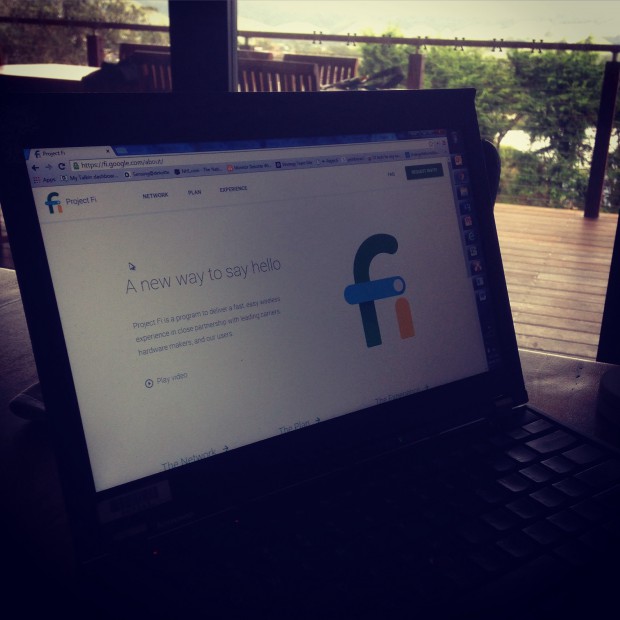
    This week Google announced the launch of Project Fi. I have written about Google’s plans to launch as a mobile virtual network operator (MVNO) and the implications for Australia – this is the realisation (v.1) of that concept. Google’s description gives some clues into their strategy centred around their nexus hardware offering, android software and partnerships with MNOs to change the connectivity experience:

    ‘That’s why today we’re introducing Project Fi, a program to explore this opportunity by introducing new ideas through a fast and easy wireless experience. Similar to our Nexus hardware program, Project Fi enables us to work in close partnership with leading carriers, hardware makers, and all of you to push the boundaries of what’s possible. By designing across hardware, software and connectivity, we can more fully explore new ways for people to connect and communicate.’

    What is the offering?

    The Project Fi value proposition has some interesting features:

    • Automatic transfer between the T-mobile, Sprint networks and over a million hotspots
    • Simplified pricing: $20 for service, $10 for every GB of data – data is prepaid and unused data rolls over to the following month
    • A cloud-based phone number that enables talk and text from any laptop, tablet or phone

    This last feature is a reincarnation of ‘Google Voice’. Voice from the beginning has been a cloud-based phone number that works across devices. Paradoxically the worst part of Google Voice has been its poor integration with your actual mobile phone; the latter has always been developed with the assumption that a phone number and an actual phone are for all intents and purposes the same thing. Project Fi explicitly unbundles them.

    How is it different from other MVNOs?

    MVNOs exist because the mobile network operators (MNOs), whose networks MVNOs sit over are unable to reach profitable market segments the MNO cannot. While it is the same as other MVNOs in this respect, in other ways it is very different.

    1. Unbundling device from carrier: As with Google Voice which is unbundling the phone from the phone number, Project Fi is unbundling the device from the carrier. The ‘automatic transfer’ makes T-Mobile, Sprint and Wi-Fi mere implementation details which are hidden from the user. In addition, Project Fi users (at the moment) can only connect through a Nexus phone seemingly allowing Google to control the connectivity experience and the preference between WiFi/Network. This, of course, makes connectivity a commodity – literally a ‘dumb pipe’.
    2. Google is a media company: Extending Project Fi further there are other differentiating features. Google clearly wants to incentivise usage of Google’s services and thereby capture more information about its users, improving its algorithm. One could see Google offering free data for streaming on ‘Google Play’ or bundling other Google services like Google cloud or Nest. The more people it connects to the internet (take note, voice is less important here), the better. Simply… other MVNOs are not as interested user’s data as they don’t sell advertising.

    How is it similar?

    Despite these differences there are at least two main similarities which are also limitations of MVNOs:

    1. Pricing: Project Fi is not that much cheaper than other plans. A comparison of similar plans shows that if you use a lot of data you typically pay significantly more than the major carriers and with a number of conditions. The reason is that MNVOs are dependent on the MNOs they operate on and the MNO has little interest in allowing an MVNO to undercut it on price.
    2. Network Coverage: MVNOs are only as good as the networks they are on. Project Fi runs on T-mobile and Sprint which are the smallest of the US carriers and despite the alternating technology coverage is still likely to be limited.

    Will it succeed?

    I’m sceptical about Project Fi having a meaningful impact on the US or global market in the near term – I don’t think Australia is a priority market (high iPhone penetration a major barrier). MNOs have big budgets for advertising and retail distribution which is not Google’s competency. This may be why the launch has received little fanfare from Google and is also called ‘Project’. I am more interested in their Fibre offering or if they were to buy T-mobile as these strategies indicate real ‘skin in the communications game’.