Blog

  • How to compete in a FANG world.

    How to compete in a FANG world.

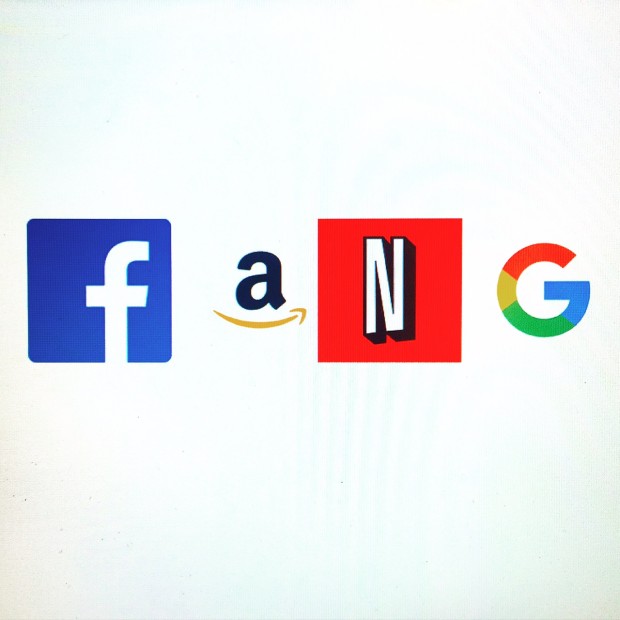
    The FANG companies (Facebook, Amazon, Netflix, Google), a term coined by ‘stock jock’ Jim Cramer,  are grouped because they are the best performing technology stocks on the NASDAQ in recent times. Despite the relatively poor performance of Tech stocks in the last 3 months (GoPro -60%, Tableau -60%, Fitbit -60%, LinkedIn -56%, Marketo -46%, Twitter -44%, Fireeye -44%, Splunk -40%, Hubspot -40%) the recent Q4 earnings calls for Facebook and Google have been positive (both reporting record profits and revenue growth – Facebook – $1BN Profit, 52% Rev growth; Google – $2.8BN FCF and 18% Rev growth). These companies are consistently meeting or beating market expectations.

    In this post I explore the underlying similarities between the FANG companies, beyond market out-performance, and pose some ideas on how to compete with these giants of the internet.

    They each have a similar origin story:

    Each of the FANG companies started off as gateways to existing infrastructure, albeit in different domains. Facebook was an entry point to the social lives of a pre-existing network of college students at Harvard. Amazon started its life as a digital portal to a network of booksellers, preferring not to own inventory but to order off this network. Netflix began with physical DVDs and the US postal service providing consumers “on demand” access to movies delivered to your doorstep. Finally, Google created (through page rank) a new and very much improved way to search existing webpages, so good that it became the ‘start line’ for most people’s internet journey.

    Instead of recreating the valuable underlying assets, the FANG companies have made the underlying assets in their domain easier to access. As the world has moved to digital, distribution has become very cheap (free in most cases) and the FANG companies are now the major points of distribution with significant power and monetisation potential.

    They have subsumed their respective incumbents:

    Each company now controls, to varying degrees, the entry point for customers to the category in which they compete. Facebook has handed advertisers much more targeted access to consumers of media content than traditional online publishing and in doing so is now becoming a preferred media platform. Amazon’s e-commerce efforts are growing (in addition to AWS) providing not only buyers but 3rd party merchants with access to search and fulfillment of pretty much any consumer product imaginable. Netflix’s meteoric rise is due to its access to exceptional content (and some less compelling content… but that’s the business model). This content is the same that major TV networks (like NBC in the US) have used to monetise in the past, but Netflix is now the entry point. Google, is similar to Facebook in that any company that wants to be discovered by a potential customer has little choice but to promote themselves through Google (there are many SEO businesses built around this fact alone).

    This power over the customer gateway, by extension, gives the FANG companies power over the companies actually supplying the valuable assets – media content, videos, goods, insurance, houses etc.

    How to compete in a FANG world? 

    “Why would I do that?… Google could easily do that…” is a phrase often adopted by incumbents or startups looking to compete with the FANG companies. And it certainly seems that way on the surface. By owning the consumer gateway the FANG companies have been able to modularise,  commoditise and, where necessary, augment (e.g. Netflix Original series) their supplier base – whether it is content producers, suppliers, merchants, publishers… basically anyone who can be found on the internet. But don’t despair… there are a few ways to compete:

    1) Build new consumer audiences to side-step the ‘FANG entry point’

    There are many examples of businesses already doing this in a compelling and creative way. They typically focus on niche verticals such as property or auto or accommodation and offer a creative way of configuring the underlying assets. In Australia – think of companies like RealEstate.com, Cars.com and globally AirBNB or SnapChat.

    2) Build new consumer audiences tapping into device functionality

    Messaging, email, sensors, pedometers are potential entry points that are available on today’s smartphones but (with the exception of the mobile OS) represent opportunities to build new audiences. Whatsapp and WeChat have done this but equally, Strava and FitBit are doing the same.

    3) Build enterprise audiences through integration into existing enterprise processes/workflow 

    FANG has only partially penetrated the enterprise. Yes, there are enterprise equivalents (e.g. Yammer) but there are also options to create new entry points bringing Artificial Intelligence, Natural Language Processing and Machine Learning to enterprise-level users. Think of copying in an ‘intelligent calendar assistant’ to your email to organise your next meeting or creating workstreams for your project on Slack. While there is potential for this entry point, FANG companies are also building open AI platforms like Google’s Tensor Flow or Facebook’s open sourced hardware behind its AI technologies. This may mean companies focused on enterprise will become reliant a part of FANG stack – a dependency that will be difficult to shake.

    The Next FANG(s)…

    The FANG companies aren’t just the incumbents in a digital world – where web and now mobile scale has brought billions of people to these entry points- they are also relatively young. They have dynamic leadership, they hire the best talent in the world, they are agile in their approach to executing their strategies and they have a lot of cash to invest in the latest technologies. Today, there are a number of companies that could be the next letter in FANG… AirBNB, Slack, Alibaba, Uber… all will be revealed in good time. Perhaps it will be a company that becomes the entry point to a network of intelligent machines? Or the organisation that cracks autonomous navigation? Some things are certain – it will be global, not parochial and it will most probably be started by somebody from the FANG ecosystem.


  • The inevitability of a driver-less future

    The inevitability of a driver-less future

    When analysing the Telecommunications, Media and Technology (TMT) industries it is rare to be thinking about the strategies of the automotive industry. However, it is too difficult to ignore them particularly with the rise of software-based companies like UBER, UBER’s Rivals and Tesla, General Motors (GM) acquisition of ride-sharing service SideCar and the increasing presence of the automotive industry and CarTech at traditional TMT industry events like CES and MWC.  These signs stand to reinforce that fundamental change is coming to the world of transportation.

    What is interesting about the change in transportation is that it is arriving from a number of corners. For example, the growth of UBER and GM’s ride-sharing investment is about the shift from individually owned and operated transport to ‘transport-as-a-service’, while the cars on show at CES this month (like the Chevrolet Bolt) are challenging how cars are made. In parallel, Tesla, Google and UBER are working on removing the need for a driver at all (in their own unique ways). Put simply… the future of transport is changing in terms of the how, the what and the where.

    The inevitability of a ‘driver-less’ future

    Many are already predicting a future where these trends intersect: electric self-driving vehicles, summoned by our smartphones taking us anywhere we want to go. These three trends reinforce each other.

    • Electric vehicles are designed with a higher fixed cost and low marginal costs which is perfect for ride sharing vehicles with high utilisation and a low cost per ride. The shorter range of electric vehicles is still a downside.
    • A simpler drive train construction in electric vehicles (like Tesla’s) rearranges the parts so that what matters (e.g. PEM/Motor/Gears) in the engineering of the car is more easily serviced via a software update rather than a mechanical servicing. The link to software here is important as software companies are in many ways better suited to developing self-driving capabilities than traditional car manufacturers
    • Finally and most importantly perhaps, a driver-less car by definition removes the driver. This is the largest cost for any ride sharing service. As people give-away driving cars this will reinforce the need for a ride-sharing platform like UBER

    The future looks pretty set when you consider these factors. However there are a few valuable considerations to the feasibility of a driver-less future – the most interesting being when can we expect this future to arrive?

    When can we expect a driver-less future?

    There is an interesting parallel to be drawn to the PC/Mobile substitution trend we are currently witnessing (PC sales fell 10.6% in the last Quarter). However, the trend to ‘transport as a service’ is the exact opposite – car and truck sales are on the rise. Car and Truck sales in Australia were a record 1.6M, and each of China (21.1M), India (2M), UK (2.6M) and USA (17.5M) all experienced record sales years thought growth was stagnant in the US. These stats point to the fact that transportation won’t be changed overnight. So when can we expect a change?

    Each of the three trends above have their own challenges which mean the when may be further out than we expect. Electric cars have been difficult to sell (except if it is a status symbol like Tesla’s high-end range) mainly due to the people buying based on the upfront cost rather than a total cost of ownership. And with oil prices at a low for the foreseeable future the total-cost argument remains a difficult sell.

    Driver-less technology has 95% of the problem solved with highways/special ‘driver-less’ cities already showing promise. It is the 5% which is the hardest – the nuanced travel in existing towns and coping with road changes that still make complete autonomy a difficult proposition. In fact, regulators in California late last year publish regulatory guidelines that infer a ceiling on autonomous driving requiring all vehicles to have a specially-licensed driver capable of taking over a self-driving car in an emergency. This is a far-cry from Google’s vision of a fully autonomous vehicle.

    Finally, ride-sharing has its own challenges – regulation, legality, consumer demand, consumer backlash and probably the most important cost per ride. The service is still too expensive to replace cars for most people, but were UBER or its equivalents ever to swap out drivers (the highest cost) the cost of going ‘car-less’ could be competitive far more quickly than anyone expects – particularly if you don’t yet own a car.

    A driver-less future is inevitable but when is a little less certain. In some respects, it may only take the change of a regulation (e.g. Governments ruling that driving in the city limits of Sydney, Manhattan, London etc. be autonomous) to accelerate the change. In reality, like PC/Mobile or TV/Netflix substitution, the change is likely to be gradual – first hybrid cars, then assisted parking, followed by high-end electric cars that feel like the ‘real thing’ and next the ability to remove your hands from the wheel on major highways.

    What continues to intrigue and requires a separate post is – who will be the leaders in a driver-less future? As outlined above – many of the players are making a claim from their own patch. The conditions appear to be in favour of the business(es) that can drive adoption of ‘transport as a service’ fastest with direct access to as many people as possible – in this respect “the future is already here, it’s just not evenly distributed“.


  • What is going to happen in TMT in 2016?

    What is going to happen in TMT in 2016?

    I have often found that predicting the medium to long term future is a little easier than forecasting 12 months ahead. In fact this article should probably be called – what might happen in TMT in 2016… Case in point – we are likely to see driver-less cars on our roads in the next 5 years, biotechnology that can predict illnesses and tell our doctors in the next decade and human-like AI in the next 20 years. These advances are coming and soon. But what will happen in 2016? That’s a bit trickier but i’m going to take some shots in the post.

    1. This is the year Virtual Reality goes commercial

    The initial commercial versions of VR will likely underwhelm because of the hype surrounding them and the price – but 2016 will see Oculus ship the Rift and games and VR apps to go along with it. Games are likely to be the most prominent use of VR in 2016 with mass appeal growing only when more natural uses of the technology become available.

    2. Apple may falter in 2016

    Apple is very good at designing and launching products – this is its core competency. 2015, it has been argued, was a year Apple launched ‘beta products’ as it has done so in the past only to improve on them in the following year. However, there are two issues that face Apple which I think will come to the fore in 2016. The first being Apple’s ability to make money from services associated with its devices.  No product captures the tension between Apple’s product skill and service shortcomings more than the Apple Watch released last year. The Watch’s integration with Siri or other service platforms and therefore the cloud is an important factor in Apple’s ability to rival the services that Google can provide through it’s Google Now applications and improve its product proposition. This leads to the second point, technology cycles are starting to trend more toward services than devices. As connected device proliferation occurs it will be providers of services into these nodes that gain a larger share of profit (until the cycle swings back to devices…). Apple is currently getting by on the bets made between 2007-2011 – 2016 is a big year for some new strategic bets.

    3. A new form of wearables will take off

    2015 was certainly the year of the watch and the wrist will continue to be a source of growth for wearable tech in 2016. However i can help but think that wearables will move beyond the wrist into other parts of the body like the ears, feet, clothing or perhaps another go at eyewear. I am keenly watching the CES and MWC conferences to see this trend appear – there are already a few contenders: connected shoes, translators on your neck

    4. Publishing in social media will go badly for a high profile publisher 

    Last year – Facebook launched instant articles, Apple launched Apple news and SnapChat took on media publishing. This model shows promise as a new way to monetise content which reaches specific audiences based on their social graph. However, I believe the upside is likely to be weighted more to the social media properties than the publisher. In 2016, we will see the initial results of this test and they may not be good for publishers.

    5. HBO will go it along and rival Netflix in SVOD

    2016 will be the year that HBO is spun off from its parent company to create an SVOD competitor to Netflix. Netflix revenues grew 134% last year which has made it a darling of Wall St. This also signals that there is still room for new competition in the SVOD market and HBO would make a formidable competitor particularly giving its content production talent. In other quarters – it will be interesting to see where Google takes YouTube this year after its launch of YouTube Red late 2015 – my pick is an all in one multimedia player (music, video, long form exclusive content, live stream, gaming).

    6. Facebook’s next evolution – Messaging innovation

    2015 was unquestionably the year of Facebook with Whatsapp and Messenger allowing the social media giant to take a greater hold of the mobile eco-system. Founded in 2004… it could be called the decade of Facebook. But what is next? Facebook has a conundrum that it will overcome in 2016 – the fundamental premise of Facebook (like Twitter, LinkedIn) has been broadcasting but this is not necessarily where the long term value lies. The work on Messenger and Whatsapp is the most critical thing happening at the company and I suspect we will see new innovations in messaging (e.g. payments, B2C service queries, Facebook App Store).

    7. Amazon takes on logistics and the last mile in earnest

    If the broader technology cycle is moving toward services then Amazon is well positioned as a seller (the preeminent seller?) of the infrastructure those services run. Equally, if technology is disseminating from pure software to affecting the physical world, then it is definitely good to be building the most impressive logistics network that anyone has ever seen. Moves during the 2015 Christmas period give some insight into what may be the year Amazon takes on the global logistics players – see the neatly named ‘Project Aerosmith’.

    8. A virtual SIM in mass market devices

    I wrote about this last year and this prediction might be a year early but I suspect we will see (perhaps at MWC) the first devices with inbuilt SIMs that are able to switch between networks. We have already seen the Apple SIM in iPads but not not the Smartphone and not with mass market take up. Iphone 7 may offer this feature and the question will be whether carriers will accept the new SIM format (they may have no choice) – what changes will we see to carrier business models?

    Like in many articles that you see around this time of the year of some these predictions border on ‘the fiction side of non-fiction’ – and that is intentional. However, there is an element of truth in all of them.

    Happy new year and best wishes to everyone for a healthy and happy 2016.

  • Top 5 stories in Telco, Media & Tech in 2015

    Top 5 stories in Telco, Media & Tech in 2015

    It is that time of the year – a time to reflect on what has been a fascinating year in the world of Telecommunications, Media and Technology (TMT). 2015 was a year in which the digital era technologies (cloud, social, mobile, big data) matured a little further with growth of wearable tech, messaging apps and unicorns appeared (and died). Equally, exponential technologies (AI, IOT, 3D printing, Blockchain, Connected cars etc.) have come to the fore with more and more (viable) use cases being explored than in any other year such as cognitive automation, drone technology, Tesla’s power wall and more examples of smart cities. In a breakthrough year, what were the most interesting news stories from the world of TMT and why?

    Smartwatch revolution and Apple Watch

    This was the year of the ‘smartwatch’ as the new form of wearable technology. Fitbit evolved, Pebble grew up, Garmin stepped into device syncing and a number of companies released low-connectivity watch/fashion pieces. And then there was the Apple Watch. The ‘Watch’ represents a new chapter for Apple as it starts to plan an exit from the narrowly-defined smartphone market into playing an increasingly important role in every aspect of consumers’ lives.

    There was (is) so much commentary on the Apple Watch – What will it look like? Will anyone buy it? Have Apple tried to do too much? Have they not developed it enough? As the dust settles from the Watch’s introduction I believe the continued success of this product and other smartwatches depends on three things: the physical design, the interaction model with the user, and how it interacts with its environment. The verdict? The Apple Watch is probably on track.

    Ad-blocking, instant articles and the death of publishing sites

    Ad-blocking is not new but 2015 was a year that apps like ‘AdBlock’ received a significant amount of attention. One European Telco was even reported to be creating its own ad-blocker for its customers to use against sites like Google or publishers. The reason for the focus this year has been ad-blocking’s threat on traditional web-publishing sites (e.g. Newspapers, specialty content) as they struggle to maintain and grow their share of advertising dollars.  At the same time Facebook advanced its platform through Instant Articles which for advertisers offers a much more targeted and cookie independent way to reach their intended audiences.

    This will continue to be an important topic for the next year to 18 months. Mergers like the one between Verizon (Telco) and AOL (owner of many publishing sites) announced this year provide a glimpse into what is to come for publishing sites as their business model is disrupted by social media on the one hand and ad-blocking on the other. Expect more deals like AOL/Verizon, expect more news on ad-blocking and expect a lot more noise from publishers as they try to evolve to these market conditions.

    The rebirth of Google as Alphabet

    Google announced the creation of its parent company Alphabet in an attempt to reduce the strategic confusion between its moonshot businesses and its core business of ‘organising the world’s information’. Larry and Sergey, the founders of Google, put out a characteristically ‘Google’ statement about the intent of Alphabet  highlighting that Google does not intend to become a conventional company.

    This story is significant in many ways – it is a moment of strategic clarification for Google who had been receiving criticism from Wall St for their ‘shotgun’ approach to their investments, it is allowing room for new Google businesses to flourish outside the core and it also represents the start of Google’s business transformation. Google needs a new cash cow as search advertising plateaus – Larry and Sergey are betting on it coming from one of their moonshots or a refocused core. 2016 will be an interesting year (again) for Google.

    Convergence continues: Project Fi, Google Fiber, Apple Care

    This year media and device companies continued their quest for greater power in the content delivery value chain with offers that attempt to relegate broadband providers into obscurity. Project Fi (an MVNO) is Google’s attempt to offer a mobile product to users of its Nexus hardware and Android software and Google Fiber is Google’s own cable broadband service available in several US towns. Apple recently launched Apple Care which is a financing service for Apple Users who want the latest devices but don’t want to deal with their mobile carrier.

    The moves by Apple and Google continue to put pressure on the business models of incumbent telecommunication’s operators. Apple Care is effectively ‘unbundling’ carriers’ mobile plans and Google Fiber and Project Fi are removing the reliance on a carrier all together. The next 18 months will continue to see mounting pressure on the incumbent telecommunications market particularly as ‘e-SIM’ devices are launched and become mainstream.

    The Death of 90’s internet: Internet Explorer and Yahoo

    2015 may be the year the ‘dinosaurs’ of the internet finally die. Microsoft announced that it would be discontinuing its Internet Explorer brand and Yahoo at the turn of the new year has a very uncertain future. The driving force behind this is the continued plateau of search related advertising spend as smartphones begin to dominate the world and the ‘internet of old’ (PC/browser driven usage) gives way to mobile-centric, app-based use. Yahoo’s core business (e.g. Yahoo Mail and news/sports sites) which is based in the ‘old internet’ is likely to attract private equity firms or perhaps a Telco like Verizon.

    The mobile internet is here to stay for the time being and 2016 will reveal more winners and losers. The TMT organisations best attuned to the mobile eco-system stand the best chance of prospering from the growth in the new ‘mobile’ internet.

    That’s a wrap on 2015…What a year! Thank you to all who have read, liked, commented and shared my posts from strategy4telcomediatech in the last 12 months. Hope you have a fun and fulfilling 2016.

  • New News: Shoot Footage, Get Paid

    New News: Shoot Footage, Get Paid

    What makes information ‘news-worthy’? Every photo or video you take will not fall into the ‘news-worthy’ category of information. However, it is not hard to imagine that you might just be in the right place at the right time to snap a photo or video of a hazard, a celebrity or an event of significance which could be considered worthy of broadcast or distribution. If you can’t be there to take the footage yourself, you could hire someone to be your ‘stringer’ (camera operator).

    News-worthy ‘user-generated’ content is potentially ubiquitous in today’s digital world but a value exchange (besides social value – a ‘like’ or a ‘re-tweet’) or monetisation attributed to the ‘person off the street’ for their content is relatively rare. Stringr, a media start-up in the US, aims to bring this value exchange to life through its platform by facilitating ‘news footage’ capture, content sale and distribution.

    How does Stingr work?

    According to Stringr’s CEO Lindsay Stewart:

    “It’s a marketplace where our media customers can come in, drop a pin, give a deadline, say what kind of footage they want and then it goes out to our community of highly-responsive videographers”.

    Footage is then uploaded to the platform for media customers (e.g. traditional media) to search and then payment goes to the videographer next day. Stringr is currently in 10 markets in the US and claims to have about 4,000 videographers on the service since launching in San Diego last year. It has also reportedly pitched to UBER on the idea of having their drivers make use of their downtime by doubling as roaming journalists. The startup plans to release an app in next month and eventually let subscribers buy video of “anything, anywhere” within an hour through its online and mobile platforms.

    Why is this disruptive to the news media?

    In news media, whenever there is a breaking story or an exclusive there can be a scramble for the footage. Anyone who has ever worked at a news organisation has seen the deals made on the spot to get exclusive footage – sometimes reaching the $5000 mark – or the cost to scramble a team to capture the story. Given high-quality cameras are now ubiquitous, a higher proportion of this footage is  being taken by ‘by-standers’, ‘citizen journalists’ or freelance stringer organisations rather than your traditional news crew. A platform like Stringr opens up the market for news content to the world offering anyone the opportunity to have their exclusive footage paid for.

    Extrapolating further… controlling a greater portion of ‘news-worthy’ content is a powerful position to be in. It begins to call into question the role of the traditional news media organisation particularly if Stringr opens up its platform to the public for on-demand, searchable viewing – just add a subscription for a revenue model and you have a paid platform for news cutting

    Other valuable digital content being left on the table?

    People freely post photos and videos that carry a ‘newsworthy’ value in the same way that we give our data to digital organisations (e.g. Google, Facebook) in exchange for use of their digital services (maps, email, connecting with friends). Like Stringr, it is possible that we will see in the near future an increase in the number of organisations/digital platforms that put the monetisation of personal digital assets back in the hands of the user. After all, why not ‘get paid’ for your personal data, your home data, your media, your tweets, your likes, your… LinkedIn posts 😉

    What is considered ‘news-worthy’, who generates news content and where the public access news media are all changing. Incumbent news media organisations continue to differentiate by being the ‘trusted and reliable’ sources of news. However, in a world where 80-90% of content is user-generated from organisations like Stringr, this distinction is no longer compelling. The difference will then be the journalism, the story-telling and curated content – which are arguably up for grabs too.

  • Music streaming: Future business models

    Music streaming: Future business models

    This past week saw RDIO, Spotify’s major rival in streaming music, file for bankruptcy. RDIO was arguably a superior service to Spotify in terms of user experience and music catalog but has failed to capture the market in the way Spotify (20M paying subscribers), Apple Music (6.5M subscribers) and Pandora (81.5M active listeners in 2014) have. The latter has been reported to be acquiring the ‘key assets’ of RDIO for $75M allowing Pandora to build a stronger, ad-supported radio service experience. Pandora’s management believes: “The result will be the industry’s best combination of streaming radio and subscription songs on demand.”

    So…another music streaming service bites the dust. This despite streaming becoming the fastest growing segment of the music industry and the form that most industry leaders and pundits believe is the future of listening. Despite the popularity of the concept (renting, not owning music), it is clear that the business model of streaming is still in its infancy.

    RDIO’s departure could be the first of many for streaming platforms. If this is the case, what is to become of streaming music as a business model? This post explores some of the possibilities for streaming business models and highlights those players best placed to capitalise on growth in streaming service demand.

    Windowing – streaming as a secondary market

    The current and most well known services like Spotify, RDIO (RIP), Apple Music and Google Play take a one-size fits all approach to music. You pay a subscription (~$10/mth) to have the privilege of listening to whatever you want in a catalog of (hundreds of) millions of tracks. One of the problems here is that music is treated like a commodity – all music is the same. For subscribers, there is no discretion regarding to which artist your $10 is paid (the majority may go to artists you don’t listen to) and for artists the rewards are small. The business model of pure streaming as evidenced by RDIO’s bankruptcy and Spotify’s inability to turn a profit is on shaky ground.

    Windowing, a common practice with movies, allows artists to release their new albums to a market that is willing to pay for it directly (>$10) then after a period the music reverts to a streaming service for listeners on subscriptions. Arguably, Apple Music is best placed to capitalise on this model – with iTunes/Apple Music integration. A number of major artists are already beginning to use this strategy – Taylor Swift, Beyonce and this week Adele.

    Enforcing scarcity on infinitely copyable media is a difficult task but not an impossible one. Swift, Adele and the other artists successfully employing a windowing strategy are already big. These artists don’t need to worry about selling out their concerts or reaching new listeners. However, it is a different situation altogether for musicians starting out, and the situation is particularly nuanced for artists in the middle for which windowing may be better. Those looking to get bigger could adopt streaming for free as a primary approach.

    Niche/Exclusive streaming – streaming of niche content for enthusiasts

    The ‘all you can eat’ streaming model has the downside of not being particularly attractive to artists and squeezing the profits of the streaming service and label. Niche services that specialise in a genre (e.g. classic, jazz, hip-hop) or a label (e.g. Blue Note, Columbia) which contain a deeper but smaller catalog of music may emerge as a profitable and viable alternative for many music lovers.

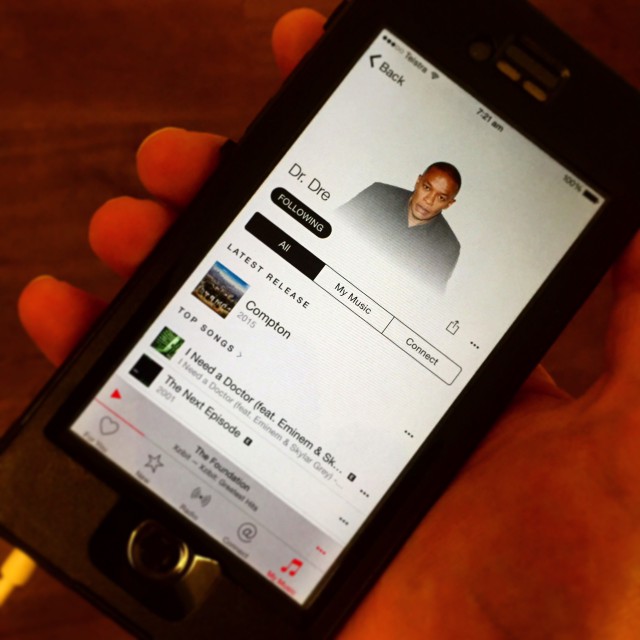
    Equally, video streaming services (e.g. Netflix) offer clues for exclusivity in streaming. Apple has already begun to dabble in ‘exclusive’ content with Dr. Dre’s new album launching exclusively on the service and “Beats radio” and curated stations offering a compelling reason to join or pay a premium in the future.

    Music plus – streaming as a bolt on

    Access to music as part of a subscription to something else has yet to see huge success but there is potential in this model. Amazon Prime is the best example of this but other companies like DropBox, Ebay or Facebook could offer streaming music in this way.

    Amazon Prime affords Amazon customers same-day delivery on all products, e-book rentals, cloud storage on photos etc. Bundling music into this service helps to create stickiness for Prime also offsetting the profitability issues seen by the major streaming services. Currently Prime members get access to 1 million tracks, which would not be considered a serious proposition for music lovers. Whilst this model is potentially more profitable, it is still treating music as a commodity and without the variety and depth of tracks probably best suited to the casual listener.

    Multimedia streaming – cross-media streaming

    Bundling of different content (e.g. music, video, live entertainment) is emerging as a new business model and potentially a very dominant one. As discussed in my last post, Google is uniquely placed to provide a multimedia proposition through YouTube Red. Although currently limited to U.S. users, YouTube Red includes unlimited access to Google Play Music and its supply of 35 million tracks. Google Play plus YouTube Red could make a phenomenal proposition for streaming overall.

    We are at an inflection point for music streaming. Streaming as a concept has won the format battle but the business models that began the new form of music delivery are starting to feel the pressure from subscribers, labels and artists. New business models which balance the demand for music with artists’ needs (e.g. exclusivity, reach) as well as users’ preferences (e.g. niche, ‘all you can eat’, casual) or which smartly package music with other services or media offer new sustainable options for music streaming. The question is which streaming services will win the war.

  • Why people will pay for YouTube

    Why people will pay for YouTube

    YouTube, Facebook, Snapchat, Vine (etc.) have one undeniable thing in common – these are the places on the internet (particularly mobile internet) that people go to when they are bored. However, at $120 per year ($9.99 US per month) being YouTube Red bored comes at a price.

    YouTube Red (Red) is YouTube’s new ‘pay-to-remove advertising’ business model which simply promises no ads for the same YouTube videos. This proposition raises many strategic questions like – why would YouTube, who generate billions from advertising, seek to cannibalise their main revenue stream? or how will YouTube compete with other subscription services vying for peoples ‘spare time’? These questions are worth posts on their own. However, the most interesting question to address is – Will people pay for YouTube?  

    Reasons why people will pay for YouTube

    1. The rise in popularity of YouTube stars

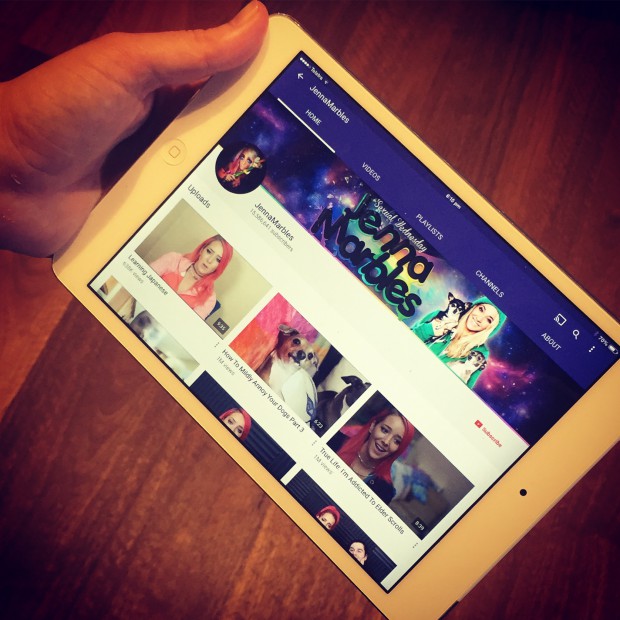
    YouTube is incredibly popular owning in part to the rise of self-made YouTube stars. These include stars like gamer/commentator PewDiePie (40M subscribers), comedian Jenna Marbles (15M subscribers), pranksters BFvsGF (7M subscribers) and Minecraft guru StampyLonghead (7M subscribers) who have risen from obscurity to virality to be household names. In relativity, these stars in a YouTube sense are ‘bigger than Bieber’ and are exclusive to YouTube. They have most appeal with millenials (who are arguably the advertisers’ target audience – particularly brand advertisers…) and loyal fans could be expected to pay a fee to get ad-free access to their stars’ regular content updates. The strategic juxtaposition here is that the people who are most likely to be willing to pay to remove ads are predominantly same people advertisers most want to reach. This fact alone could bring YouTube undone.

    2. Online video advertising is immature and annoying

    Let’s face it… YouTube advertising is annoying. YouTube is the ‘Free to Air’ (FTA) TV of the internet but unlike FTA advertising has yet to evolve much beyond 30sec-5min video-advertising before a clip starts, ‘skip’ options, poorly integrated in-content video advertising and pop-up links. FTA TV has matured over time to seamless advertising in-content and perfectly timed ad-breaks (e.g. prior to suspenseful moment) to ensure viewers resist channel surfing. The hindrance of YouTube advertising alone could be a reason to sign up for YouTube Red but if advances such as greater content integration of advertising or product placement mature, the FTA option may still appeal to the majority of viewers.

    3. New exclusive content and the rise of YouTube as a destination site

    YouTube Red appears to offer the same videos for a price but Red could become much more. The appeal of YouTube is that it is an excellent mobile product (one of Google’s best) and therefore in its current form is more suited to short-form video to fill in downtime (on a bus etc.). The future of Red could be to compete in longform with Netflix et al., in music with Spotify/RDIO including offline content, in live video against Periscope/Meerkat or as a live sports destination. It could be the killer app for all-round media consumption. In this way YouTube Red represents more than a new business model ‘having a go’ at subscription pricing –  it is a full scale transformation of YouTube as a destination site.

    Reasons why people won’t pay for YouTube

    1. YouTube is the Free to Air TV of the internet

    YouTube is so compelling as a free product that paying a substantial fee of $120 per year is likely to be on the expensive side for a good number of the viewer base.  Many viewers are probably already paying for cable, Netflix, Spotify etc. – another subscription may mean some viewers are paying $100+ per month for entertainment. In press releases surrounding the Red announcement, YouTube has openly said it still believes in its advertising business and so its free content should still remain compelling. With UX improvements to support advertising and free content there may be little impetus for the average user to pay – ever.

    2. You wouldn’t pay for Facebook…would you?

    The scenario I opened with (paying for something you use to stem boredom) is a not-insignificant factor in the appeal of YouTube Red. For many YouTubers watching a clip here and there could be substituted with a Facebook update, a Vine binge, a SnapChat, a Yik Yak, a Tweet-storm etc. Would you pay any significant amount for any of these boredom breakers? Arguably, Facebook rates highest for many in the boredom breaker category but competition for this type of attention is so hot that a premium boredom breaker would need something differentiated.

    The online media industry will be watching with great interest (particularly players like Facebook, Spotify, Netflix) to see how YouTube Red performs. At best, a strong take up of subscriptions could transform YouTube into an ‘all-round media’ destination. A bad outcome could be leave YouTube with a less attractive advertising platform by virtue of the most attractive customers having self-selected out of ads, but not enough of them taking up Red to make up the difference. The worst outcome for YouTube would be that in trying grow both the subscription-based and advertising-based business model simultaneous could lead YouTube to being inferior at both.

  • Competition & Innovation in a Platform World

    Competition & Innovation in a Platform World

    It was reported this week that Google is yet again under the competition microscope, this time in the USA. The claim that the tech giant is stifling competitors’ access to its Android mobile-operating system was neatly covered in this Bloomberg article. This is only the latest claim in a string of many against Google regarding anti-competitive behaviour.  You may recall the leaked allegations in Europe against Google’s Shop search or in India, all of which point to Google ‘abusing its dominant position in search’.

    There are definitely interesting views on both sides of this debate. Google is not the only search tool, but it is by far the most dominant. It provides billions with access to information every day and it makes money from associated advertising. In an unregulated environment it has a lot of power and from a consumer’s perspective… other search engines are just not as good. So should it be penalised? Many commentators believe so. I believe there needs to be more thought for how platforms with monopolistic dominance, like Google, are regulated. The competition laws from the ‘physical’ world may not apply to an era of open innovation, rapid innovation cycles and technological change.

    Below are some considerations about monopolies and competition in a world where ‘software is eating…everything’ and platforms are becoming the norm.

    1) Monopolies are uniquely constrained in their actions

    Peter Thiel’s core thesis in his book ‘Zero to One’ is that entrepreneurs should seek out niches and monopolies, not heavily competitive markets, as they are most profitable and relatively easy to defend. This is true but equally, as a monopoly, you are uniquely constrained in how you act. If you own the market, agency over the whole market is difficult because you need to cater for consumer needs, government regulation etc. A company like Apple, who is in a highly competitive market, conversely can exert as much control on its own platform as it likes. The allegations lodged against Google are a response to the company trying to control its platform more tightly. If these allegations are found to be true – they will have a large effect on Google’s business both financially but also in how it defends it business model in the long term.

    2) Antitrust action and remedies tend to be backward looking and expensive 

    In Microsoft’s famous antitrust case (1989-2002), action was taken against the company for preferring their search engine over others on new computers with Windows software. The cost of the case has been estimated in the hundreds of millions and provided for a competition remedy which was backward looking. Microsoft had to include alternate browsers in Europe. The question is – for the amount spent on allegations and defence of the case, what difference did it really make?…Not much. The change that brought Microsoft down a peg was actually the growth of the internet as a software distribution channel and mobile as a dominant device…innovation.

    3) Innovation is the friend of competition and the enemy of monopolies

    EU competition commissioner Margrethe Vestager has said of the action against Google:

    What we’re aiming for has nothing to do with Google as such — it has to do with the market allowing innovation

    Google’s dominance in search is inevitable no matter how the Federal Trade Commission or the European Commission may or may not act. The thing that will disrupt Google’s dominance is exactly as Vestager says – innovation. This could come in the form of platforms that overtake Google’s share of revenue or new devices like the Apple Watch or disintermediation by services like Siri, IBM Watson or vertical search engines like Trip Advisor or Yelp. Microsoft found itself in trouble with the FTC because the incentives driving their business model (computer on every desk with Microsoft software on it) perpetuated a monopoly. The same could be said of Google (the structural change to Alphabet is perhaps an acknowledgement of this). The interesting strategic conundrum for Google and Microsoft is that those same  incentives are ones that ill-equip monopolies for the future (i.e. miss out on the future by focusing on the present).

    There is definitely a place for regulation of monopolistic behaviour, in fact it is essential. But, in a world where innovation cycles are shorter and shorter the best regulation of monopolies may in fact be the funding for and promotion of innovation – as opposed to investing millions defending backward-looking penalties and remedies.

  • Apple’s iPhone Upgrades: Unbundling Mobile Carriers

    Apple’s iPhone Upgrades: Unbundling Mobile Carriers

    Apple is officially entering the market for smartphone finance with the announcement of its iPhone upgrade scheme last week. The iPhone upgrade premise is simple – pay a monthly fee ($32 USD or~$45 AUD) for a new iPhone each year which is unlocked (so you can choose your carrier) and includes Apple’s insurance service ‘Apple Care’. This comes at a time when the narrative of ending subsidies has been pitched against device makers mainly because of the high up-front cost for consumers. There are strong indications that lower upfront costs are indeed driving high-end smartphone sales.  For carriers, though, it is device makers like Apple entering into financing and ‘rapid upgrades’ that puts at risk the lock-in, contract-based business model carriers have been seeking to maintain.

    Handset subsidies as a business model are as old as the history of handsets themselves. These are prevalent in most Western markets. In Australia, all major mobile carriers offer some sort of subsidy which can be up to $400 off the price of a top end smartphone, with some like Telstra offering a 1 year exchange (rapid upgrade plan) for a new phone (‘New Phone Feeling‘).  However, this latest announcement from Apple, in line with advancements toward a virtual SIM, start to paint the end-game for the mobile device value chain and the evolution of new business models.

    This post explores the major strategic implications to device makers (e.g. Apple, Android etc.) and carriers of device makers moving into smartphone financing+upgrade offerings bundled with device sales. 

    Device Makers

    Device makers have much to gain from bundling device sales, finance and upgrades. Here are the major strategic implications.

    Increased brand loyalty/reduced churn of smartphone provider

    Apple experiences less ‘device churn‘ than other device makers and many people who own an Apple device are fiercely loyal. However, under the current subsidy/24 month contract models there is a re-contract moment that gives a consumer the choice to switch device. For a mobile carrier, installment and rapid upgrade plans are a way to prevent churn off the network, for device makers they are a way to stop churn from iPhone to Android. In the former your next ‘free’ smartphone might be an Android or an iPhone. Under an Apple subscription, it will be an iPhone – a new level of loyalty and elasticity.

    Second-hand, emerging market opportunities

    What happens to all the rapid upgrade phones? They are typically refurbished and sold in second-hand markets. As device makers take on refurbishment and resale as part of offering financing and upgrades they are likely to end up competing with new devices in mature markets. This opens the door to selling in emerging markets. Whilst the lower-cost iPhone 5C has not had success in these markets a 1 year old, refurbished second-hand high-end iPhone 6 may – market entry by stealth. It could be expected that emerging markets will have a higher portion of second-hand older devices than brand new devices (per capita) thus representing a growth in market size for Apple.

    Value added services at the device not the carrier

    Like Google’s Project Fi, offering subsidies and upgrades is another case of device makers moving into the carrier’s domain. Apple has been rumoured to be looking at setting up an MVNO (like Google) – this article makes a pretty interesting case for why it should. But it’s not just the possibility of being an MVNO or access provider, there are other value added services in the carrier’s wheelhouse that device makers could offer like professional installation, entertainment packages and adjacent service offerings (e.g. health, fitness).

    Mobile Carriers

    The implications for mobile carriers are bleak. As noted, subsidies+upgrades from device makers are yet another case of the diminishing influence carriers have over their customers.

    Carriers left with nothing but access and service

    Previously, Apple sold the device while the carriers bundled financing and service; now Apple is bundling financing and the device leaving the carriers nothing but service. Add to this virtual SIMs, like the Apple SIM, and Apple is exerting total dominance over carriers. Granted, this is not an overnight conclusion but the road is mapped.

    Reduced customer reliance on carriers

    By eliminating re-contracting at the carrier, one more contact point between customer and carrier is taken away. Customers will have to choose which carrier to access but in a virtual SIM world (carriers will have to be open to this) this will be done through software on the device. Even as part of the iPhone upgrade plan, the iPhone is unlocked allowing conscientious users to access their carriers of choice or use multiple SIM cards. The future will be much simpler for users and carriers will need to rethink the value they add at each customer contact because there will be fewer.

    These changes will not happen overnight. We are still at least 12 to 24 months from the Apple SIM or standardised virtual SIM and people adopting it could take months or years after. As for financing and upgrades, most people will still buy from carriers for several years to come, and anyone already on an installment plan from their carrier will find it challenging to switch. However, the market power shift from carriers to devices continues (as it has done since the first iPhone release 8 years ago), unbundling carriers’ offerings piece by piece.

  • Apple: Strategy vs. Original programming

    Apple: Strategy vs. Original programming

    Dr. Dre hasn’t released an album in 15 years, and Apple knows it. Coinciding with the launch of Apple Music last month, the hip hop veteran (whose ‘Beats’ electronics and music service were bought by Apple last year for $3Bn) released his new album ‘Compton’ exclusively on the new music service. Add this to the ‘Beats 1’ radio channel and ‘curated’ playlists (which are actually very good, if you are a music buff) and you have the start of something that looks like original or exclusive programming. This week in Variety there were reports of a larger foray into content. Apple has been rumoured to be doing the rounds of Hollywood studios and even put a bid in for the Top Gear team who eventually went to Amazon for $250M (could have been a nice content synergy for the Apple car release?…).

    Although these may just be rumours,  they represent more substantial content ventures for Apple. This begs an interesting question – how does Apple producing original content work with Apple’s strategy of designing and selling hardware with integrated software?

    In the aftermath of Apple’s developer conference (WWDC), where the Apple Music service was launched, I wrote a post describing the challenge of aligning a music streaming service (largely undifferentiated) with Apple’s strategy. Apple’s strategy and business model is designing and selling ‘ever more personal’ devices with integrated software. In that post I explored the idea that Apple’s problem space is shrinking (i.e. how many more devices can you make ever more personal?) so moving into platforms, cloud and possibly content are new ways for Apple to grow its bottom line. Like music streaming however, original content development has its own strategic challenges and here are 2 ways to view this:

    1. Apple wants to create original content to increase Apple device sales

    It is possible that Apple is exploring content creation in very much the same way companies like Amazon or Facebook have been exploring ‘proprietary’ hardware sales (e.g. Amazon Fire and Facebook Phone) to support their underlying business model. Original content could be a way to drive their underlying business model of selling devices at a high premium. Apple’s products already command a significant mark up through integrated software, customer/user experience and hardware design but content would add another element of differentiation – high quality video. If the Top Gear rumour is true, it fits well within this context. A show with the popularity of Top Gear in a very defined demographic (Male: 18-50) could contribute significant sales to IDevices and AppleTV.

    This is an optimistic view. If the Amazon and Facebook analogies are anything to go by, then there is a bad precedent. That said, if anyone can give it a shot (Apple has the funds to do so) Apple probably can.

    2. Apple wants to take on Netflix et al in their own patch

    This scenario looks very similar to Apple Music. In a scenario where Apple creates their own content (Movies, TV) and serves it up through an Apple Music (type) platform they are getting into the realm of taking on Netflix on their own turf.  Apple Music walked right into a crowded and established music streaming market (e.g. Spotify, Rdio, Pandora, Soundcloud, Tidal etc.) with a relatively undifferentiated service (bar Radio 1 and curated playlists).  This strategy would do little to further Apples business model and may leave them with a low margin undifferentiated SVOD platform.

    Looking at these views side-by-side, 1. Apple creating original content to sell devices or 2. Apple creating content to take on the Netflix platform, it is hard to like either option strategically. The first may help to differentiate devices but content will be subsidized by the hardware it is differentiating. For this to work Apple will need to beat HBO and Netflix etc. in attracting the best talent to create their original programming which is likely to be difficult for a device and software maker (Amazon has the same problem with Hardware Engineers).  The second just feels like Apple would be doing it because they can. This unfortunately may mean they won’t be magically better than their competitors in an already crowded (and sticky) market for SVOD.

    An original programming strategy is interesting for Apple but it is challenging when compared to its current strategy and business model. In many ways this is the strategic challenge for all Technology, Media and Telecommunications incumbents as convergence continues to push the boundaries of their traditional core competencies and competitive advantage. Apple may be better placed to capitalise on the fact that they are already a platform of sorts (a device and software one not a Netflix/Spotify one). By taking an approach that allows HBO, Netflix, Spotify, Rdio and other players in the streaming services market to offer the best service they can on Apple devices creates differentiation and utilises Apples core competencies.